Author: misschryss

Ejo #144 – “A Family Guide: Herbal Remedies” by Maria Stathopoulos

So it’s the last day of the year.  Time to pay the piper.  As you may recall, earlier this year I laid down a strongly worded promise to my Mum, in addition to a few other shitkicker goals that I’d hoped to have completed by the end of this year.  In other words, today. 

To recap, the first goal was to learn all the words to the eight minute rap song, The New Rap Language.  It brings me no joy to report to you that while I did learn the first few stanzas, there were another 45 verses that I didn’t quite get around to.  Bummer.  I also wanted to learn how to pick locks.  Sadly, no-one will be calling me to take part in any craftily planned heists any time soon.  Zero progress.  Bummer.  As for my goal to put together a fabulous death party (also known, by more basic bitches, as a funeral), I have managed to put together a list of some pretty kick-ass ideas, so I am happy about that.  But these promises were all secondary to the one that I made to my Mum that I would translate her book of herbal remedies into English. 

So, how’d I go?  Well, technically the promise has been satisfied.  I have, with some help from google translate, made a rudimentary translation of every single chapter from Greek into English.  And the reason I say “technically” is that google translate isn’t great at translating nuance, so I need to go through the entire text word by word with a dictionary to ensure the veracity of the translation.  And I’m not that great at translating Greek, so it’s a slog.  And I am nowhere near a final draft.  So technically, yes, it is something I can tick off, but it almost feels like a hollow victory.  In my mind, when I said that I’d translate Mum’s book this year, I’d idealistically imagined that I’d be holding a printed copy, hot off the presses, in my hand right now.  And that definitely isn’t the case.  And I am disappointed. 

My Mum isn’t alive so I don’t know how she would feel about it, but I do like to think that she would be forgiving, sympathetic and understanding.  Because that’s who she was.  And instead of beating myself up about it, I think I should also be forgiving, sympathetic and understanding towards myself.  I have resolved to get my Mum’s work out there in one form or another.  And I will.  Whether it’s an actual physical book, an e-book or even perhaps a website.  Her wisdom must be shared, and it has to be me that makes that happen.  Because I said I would do it. 

When I started doing the painstaking, word by word translation I learned things about my mother that I had never known before.  Can you believe that I had never even read the introduction to her book?  Why would I?  It was in Greek!  Ugh, I’m definitely not proud of that.  Regrets, I have a few.  But in translating the introduction, I found that I was bringing my Mum, through her words and through her experiences, back to life.  The urge to call her, to talk to her, was overwhelming.  It felt like she was right there. And I have so many questions that I wish I could ask her.  I would have loved nothing more than to work on a translation together with my Mum, as a team, and I know that she would have loved it too.  That’s no longer possible but I am going to stick to my promise.  I will find a way to print my Mum’s work in a way that pays tribute to all her knowledge and all the hard work she put into her learning, into her garden and into this book.

Below, I am publishing my English translation of the introduction to “A Family Guide: Herbal Remedies” by Maria Stathopoulos.  Our writing styles are very different so I have made a great effort to remain faithful to Mum’s voice, and to not imbue it my own tone.  It has given me unparalleled joy to open my mother’s book, take out the words she wrote and be able to publish them here. It feels like I’ve unearthed some long-buried treasure for you all. Please enjoy, and I wish you all a healthy, happy and wonderful new year ahead.  🎉

____________________________________________________________________________

The author. ♥

My name is Maria Stathopoulos née Roumelioti.  I was born in 1947 in Ancient Korinthos, a beautiful village at the foot of the mountain castle Akrokorinthos.  I lived there until I emigrated to Australia in 1965.

When I was a young girl, my village didn’t have its own doctor, but a doctor did visit once a week and we would go and see him if we weren’t well.  When that doctor wasn’t available, we would have to travel to New Korinthos, which was a one hour donkey ride away.  The long distance was always a problem and many times it prevented us from travelling at all, which is why we only made the journey in cases of serious illness. 

At that time, the elderly women of most small villages in Greece used herbs as first-aid for many different ailments, helping those who were in need.  I watched what they were doing with fascination, curiosity and awe for their methods, and for the ease with which they would mix the herbs when making medicines.  I wanted to be like them when I grew up.  The fact that they were always willing to help anyone who needed it was also a reason I was interested in studying botany.  As a young girl I kept detailed notes about which herbs were used, and how they were applied.  I always dreamed that, one day, I too would specialise in the use of herbs.  

Anyway, the years passed, and I grew up and came to Australia, like so many others.  In Australia I worked hard and started a family.  Everything was going well until I suddenly became very sick with chronic internal infection and bleeding, blood in the urine and terrible pains in my abdomen.  I remembered the herbs of my childhood and decided to experiment with my own treatments.  But I discovered that everything I had seen, heard and learned in my village was useless to me, because I did not know the names of the herbs in English.  The knowledge I had was insufficient to help myself.  The horrible pains forced me to go to the doctor many times, and after undergoing the appropriate examinations without being able to find the cause of the problem, they referred me to another doctor, who also found nothing and referred me to a specialist.  The specialist, despite conducting many tedious examinations, could also not find the cause of the problem and sent me to another doctor who in turn sent me to another specialist.  One specialist sent me to another.  And then they would refer me to yet another.  I felt like a tennis ball, bouncing from doctor to doctor, from examination to examination, from cauterisation to cauterisation and from surgery to surgery, all to no avail.

At that time I was a mother of three small children and many times I remember having to crawl on my hands and knees to do the housework and to look after my kids.  This went on for 15 whole years.  The doctors prescribed, and I took, every antibiotic and every painkiller available on the market, all without any relief.

Desperate, I stared truth in the eye and decided that in order to get better I had no choice but to become my own doctor.  The treatments I had undergone with synthetic drugs had not helped me at all.  They just created new problems for me, and increased my suffering.  Fifteen years of necessarily excessive drug consumption had also resulted in chronic nephritis and a very dangerous penicillin allergy.  “Only a miracle can save you”, I thought to myself.  A miracle to rid me of all the pain and suffering.  I threw away the drugs and looked for treatment elsewhere.  In my despair, I once again remembered the herbal remedies of my childhood and decided to try again.  I started reading books about my problem, and how herbs could treat it.  Timidly at first, I started experimenting on myself, and very quickly I realised that I was doing something right, because the pain started to diminish so clearly.  I continued the treatment.  My pain and symptoms subsided continuously and I felt better every day.  Using herbs on a daily basis I regained my health and eventually became completely well.  The problems that had tormented me for 15 years just disappeared, and have never returned.  The miracle I had hoped for actually happened. 

I had solved my problem, but ultimately that was not enough for me.  I wanted to know why, when and which herbs act positively on which diseases.  So I decided to enroll in a botany class at the local college, which has a dedicated horticultural department.  That’s where I learned the names of herbs in English, their uses, their structures, their healing properties, what each plant contains within it, and how and when to use them.  Although I got the result I wanted for myself, I did not stop studying.  I continued reading, and learning more every day. What I remembered as a child and all that I learned at school, I write about in this book, to help as many people as I can.  To help those who wish to no longer suffer needlessly, as I did.  They will realise, as I and so many others have realised, that herbs bring balance to the body.  Their healing substances help to heal our shocked health and strengthen us because, like them, we also belong to nature.  A nature so powerful that she provides us with everything we need in the form of food and medicine.  All you have to do is reach out and take what nature offers to us so generously. 

It’s a shame that humans have created a world of our own making, in which our own synthetic substances sicken and kill us every day.  We refuse to abandon them because they’re convenient and comfortable.  But this convenience makes us unable to see that we are losing what is most valuable to us; our health.  Unfortunately we have become what we eat; foods full of poison, toxins, chemicals, preservatives and artificial colours that are harmful.  Will we ever understand that the foods containing these ingredients should never be eaten? The human body endures to a point, but then begins to react, giving us danger signals that we sometimes recognise, but not always.  We breathe polluted air, exhaust fumes, industrial waste and more.  We eat inappropriate food and drink dirty water.  And the danger lurks.  Our only shield is to add herbs to our diet and to make better choices about what we eat.  It is only then that we may be able to avoid the diseases that threaten us every step of the way.  Everything we eat, everything we drink and everything we breathe is reflected in our health, whether we like it or not.  The time has come to realise that without health we have nothing.  Who knows, if I had continued taking the pharmacological drugs that did me so much harm, I might still be sick and running from doctor to doctor.  Fortunately, I stopped in time.  I searched for a cure in nature, and I found it.

In herbs we discover beneficial and healing properties that give us confidence over time, because the more we use them the more we realise and understand that they protect us and help us.  I am not a doctor, nor do I try to present myself as a doctor.  But I was suffering and I speak from experience.  I tried the herbs and I know they work.  For my problem, which was internal infection, bloating and blood in the urine, I eliminated from my diet white bread, white flour, peanuts, mushrooms, yeast, tomatoes, dry figs and dairy of all kinds except plain yoghurt for six months.  I did herbal treatments every day, and after six months I reintroduced everything except sugar. 

After going to hell and back, I was finally able to solve the problem that had tormented me for 15 years by using humble but powerful herbs.  That’s why I’m proud of, and want to share, what I know with those who are interested to learn.  With herbs I did something that the doctors I’d visited hundreds of times could not do, because they believed only in chemical treatments.  Before readers conclude that I am against orthodox medicine and its doctors, let me assure you that I firmly believe in them, and in science. We need doctors for diagnoses, surgeries, etc. but we do not need to ingest chemicals for minor conditions, and I do not believe in the way, or the ease with which, drugs are prescribed to us. 

Nature has provided our planet with all the herbs to treat every disease, and a natural bounty with which to live comfortably, free of health problems.  We were not given chemicals or fast food.  These were created by us, and as a result we all suffer issues with our health.  So it is time to take the steering wheel of health in our hands and turn it towards mother nature. She has provided us with the medicine for all our ailments.  These are found in various types of food, containing ingredients suitable for the proper functioning of the body and with no side effects.

In order to be worthy descendants of the ancient Greek philosophers and herbalists Socrates, Dioscorides, Aristotle and Galen, we must believe, as they believed and taught, that in order to cure a disease we must cure the whole body and not only the symptoms.  These great sages, writers and doctors of antiquity posited that food be our medicine and medicine be our food.  In other words, what we eat should not only satisfy our hunger, but also heal us.  If we can truly understand the depth and the meaning of these words, we will forever hold onto these useful, tried-and-true herbal remedies.  Everything I have learned through personal study and diligence, everything that I have put into practise, I have recorded for you in this informative book which was written with patience and love.  It is my hope, my wish and my belief that one day the doctor’s office and hospitals will all be emptied of patients.  

Ejo #143 – It’s My Body, And I’ll Cry If I Want To (Part 2)

Trigger warning: Rape and Sexual Assault, Child abuse/paedophilia

Just over four years ago Alyssa Milano tweeted a hashtag that had first been used by activist Tarana Burke more than a decade earlier, and in doing so, kickstarted a movement many more years than that in the making.  Hashtag #metoo blew up and I remember seeing it on Facebook where it was used 12 million times during the first 24 hours.  That’s a lot of me too’s.  I debated whether or not to join the wave of people announcing that they too had experienced sexual abuse or sexual harrassment.  I mean, yeah I had actually experienced it too.  But was I obliged to go public with that information?  In the end I did join in, posting #metoo on my Facebook timeline.  No details, just the hashtag.  I was swept up in the sense of connection, supported by strangers whom I suddenly shared a grievous bond with.  It was quite empowering to be a part of that.  But I didn’t feel comfortable sharing details.  Not then.  But things are different now.  

The first time a man indecently exposed himself to me, I was around eight years old.  Our young family of five were living in a two bedroom flat in Elwood, which wasn’t ideal, but it was all we could afford.  The gentrified version of Elwood that exists now was not the Elwood that I grew up in.  Back then, the streets of the bayside suburb were seedy, dodgy and inhabited by homeless people, thugs and junkies.  It was a pretty rough place to grow up.  So much so that my parents slaved for years to move out of there, transplanting us all to the peaceful, leafy suburb of Mt. Waverley just in time for me to start high school.  Which was a huge relief because I’d been dreading graduating to Elwood High, where it was rumoured that all the new kids were welcomed by having their heads flushed down the toilets on the first day of school.  I don’t know if that was actually true, or not.  But I do know that it might have been true, and the idea absolutely terrified me.  

So, despite being a ghetto neighbourhood, it was still the copacetic 70s, so our childhood was pretty idyllic.  We were wild children, spending hours outside playing with the neighbourhood gang of feral kids, only heading back home when the chorus of parents calling their children in for dinner started echoing around the back lanes.  We had some pretty interesting neighbours in that block of flats.  There was the surly teen who spent hours pounding a tennis ball against the brick wall of the flats.  We felt each reverberation like a booming metronome in our living room.  His mum, who we all speculated was a sex worker because of the way she dressed and the hours she kept, melodiously yodelled his name every evening at dusk, “Ashley, Ashley, Ashley” until he finally picked up his ball and went home.  Before long we would hear the clicking of her heels marking her departure into the darkening night.  There was the old guy with one arm and a wooden leg who lived upstairs from us.  He’d get home from work every evening and empty his colostomy bag against the wall in front of his yellow Holden.  And of course there was Mrs. Goldberg, the landlord of most of the flats, who used to yell at us to stop roller-skating on the driveway because we were making cracks in the concrete.  We’d just laugh and skate even harder.  

And then there was the bum I accidentally came across in the back lane that one time, shocked to discover that the reason he was so curiously hunched over in the corner was that he was masturbating furiously into our rubbish bin.  I stopped in my tracks, eyes widening, my fingers tightening around the bag of rubbish in my hand.  Mr. Wanky turned to look at me and continued to beat off without breaking his rhythm, completely unperturbed.  Our eyes locked, and I detected a hint of a smile.  And he just kept on slapping that salami, almost defiantly, a man on a mission.  Like I was the villain in this scenario.  Not truly understanding what was happening, but having a very strong sense that it wasn’t a good idea to stick around, I flung the rubbish bag in his direction and briskly walked the hell out of there, intent on erasing the image of what I’d just seen from my mind.  But I couldn’t.

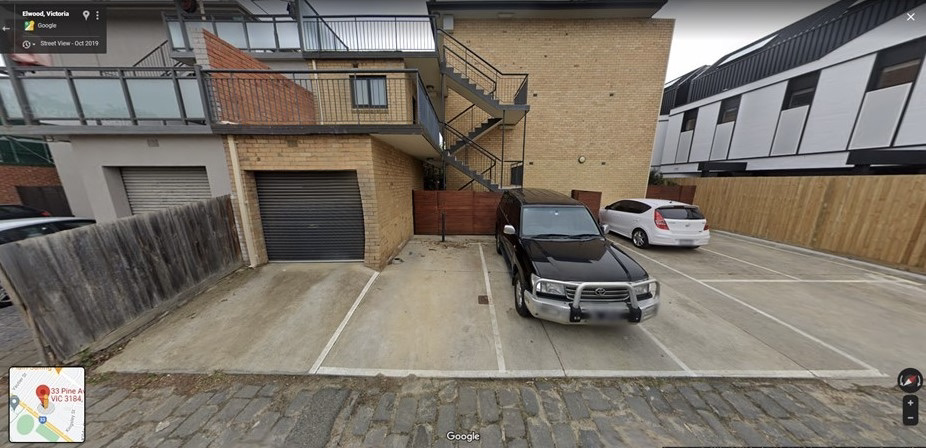
The scene of the crime. The building has changed quite a bit from when we lived there but the yellow brick wall was where Ashley would take out his frustrations against our living room wall. Under the stairs is where our old neighbour would empty his bag full of stale piss. And the area in front of the garage is where there used to be a semi-enclosed rubbish bin area. That’s where Mr. Wanky decided that he simply had to scratch his overwhelmingly libidinous itch into our rubbish bin.

That was the first time a man indecently exposed himself to me, but it certainly wasn’t the last.  The next two times were in Brunswick, on our cousin’s turf.  Elwood might have been a bit rough around the edges back then, but Brunswick was immigrant rough.  Populated mostly by down-at-heel, working class Greeks, Lebanese and Italians it was always a little bit scary and a little bit intoxicating to go and visit our cousins, which we did often.  Vicki and Peter, were a few years older than us and seemed so sophisticated and street wise compared to us coddled beach bunnies.  Spending time in Brunswick expanded our minds and broadened our horizons.  Unfortunately not always in a good way.  

My youngest sister Pieta was five years old and I was ten, when we were cajoled, as we frequently were, into walking to the corner store down the street from my auntie’s flat to buy cigarettes.  The good old days, am I right?  On the way back, a guy in a Datsun that was parked on the side of the road rolled his window down and beckoned us over.  Naively, we approached the car, and were treated to an eyeful of the dude’s extremely hirsute coat of strawberry blonde pubes.  I’m talking Wookiee level hairy. When he was certain that he had our attention he grabbed his dick and pointed it in our direction, begging us to look at it.  Nope.  Pieta and I ran as fast as we could back to my aunt’s flat and reported the situation to the grown-ups who put together a posse to sort the guy out, though by the time they got there he was long gone.  I wonder what Red’s doing now.  

Another time we were playing a game called rocks on our cousin’s massive driveway with some other kids from the ‘hood.  A guy walking by saw us, and thought that we might enjoy an anatomy lesson.  He jumped up onto the brick wall at the bottom of the driveway and very nonchalantly pulled his pants down to flash us all, swivelling his hips like some kind of pervert lighthouse.  We stopped what we were doing and stared, but this time we didn’t run away.  If I had to guess how many times a man flashed his genitals at me when I was a kid, I’d say about a dozen.  Maybe more.  Did I want to see any of those penises?  No, I did not.  

I remember the first time I was sexualised as a child.  My Dad’s best friend Manoli, someone he’d grown up with and known for years, used to be a regular visitor to our house.  He’d known me my whole life and I felt very comfortable around him.  One time, when I was 13 years old and my parents had left the room, he called me over to the couch and showed me a little picture of a woman’s face that he’d taken out of his wallet.  He handed me the photo and told me that he thought I looked just like her and that I should be flattered because she was so beautiful.  I couldn’t see the resemblance, but a surge of endorphins rushed through my body nonetheless.  He then told me that he’d cut the picture out of a Playboy magazine, punctuating the revelation with a knowing wink.  When my Dad found out, he absolutely lost it.  He completely cut ties with his friend and we never saw him again.  I felt kind of guilty about that, as victims often do, but I also felt gratitude to my parents for how they handled it.  Their zero tolerance for his inappropriate behaviour taught me to respect myself.

That was the first time I was sexually objectified as a minor, but it wasn’t the last.  Between the ages of 13 and 18 I played competitive tennis every weekend at Mayfield Park Tennis Club.  Sometimes I’d get a lift home, but more often than not I would walk the 2.5kms between the club and my house, carrying my racket and wearing my tennis gear.  Despite Mt. Waverley being a peaceful, leafy suburb, every single time I walked home I was honked, catcalled and whistled at by men driving past.  Mostly men who were old enough to be my father.  As a shy and self-conscious teen I dreaded the unwanted attention, but also felt a strange and unfamiliar sense of burgeoning sexual validation.  I was becoming inured to the reality that once a girl hits puberty she suddenly becomes visible to men and their rapacious appetites.  And she has no choice about that.  

When #metoo happened, I started processing all the times I had been subjected to a man’s unwanted attention, every time I’d been inappropriately touched, every time I’d felt frightened for my safety.  And I realised that I had actually amassed quite a few of my own “me too” stories.  Stories that I’d internalised, because I had no other choice.  As a woman, you just normalise these events, because they are in fact normal.  Because they happen all the time.  But that doesn’t mean that they should.  

I started thinking back, and remembered the guy at school, who had a crush on me. He would give me gifts that I didn’t want and follow me home from school, disquietingly hanging around our street long after I’d gone inside.  I remembered going for a walk with another guy at a party one night when I was seventeen.  He was really drunk and really big, and in the dark back streets of Mt. Waverley he suddenly turned really gropey.  In a diary entry written the next day, 1st July 1989, I wrote that he “could very easily have raped me”.  Realising that I was in a potentially dangerous situation, and scared for my safety, I managed to coax him back to the party, his arm uncomfortably slung over my shoulder. When we got back I said I needed to go to the toilet and sought refuge in the crowd.  It might not sound like a big deal, but that night I was actually concerned about the very real possibility of being raped.  By a friend from school.  I realised that I could no longer feel safe in public spaces.  An awareness that I think almost every woman eventually comes to understand.

I thought back and remembered the two times I’d trusted guy friends to sleep in the same bed with me.  I’ve shared a bed with dozens of friends over the years.  But that trust was betrayed twice, when I woke up in the middle of the night having to fight the guy off.  And you know what?  I refuse to blame myself for allowing a friend into the sanctity of my bed.  Because what I did was not wrong.  What they did was wrong.  Even today I’d be fine with sharing a bed with someone I know well.  Because it should be OK.  Because I refuse to allow the shitty actions of a couple of rogues to change my paradigm of how friends should behave towards each other.  And I refuse to react to the lowest common denominator.  

I remembered Patrick, the senior staffer from my work at the Department of Defence, offering to drive me to the Christmas party but pulling over about two blocks away from the venue to have a “chat”, before leaning over me and forcing his fat, turgid tongue into my mouth. I didn’t have the courage to push him away.  I was too shocked and polite and intimidated to say no.  So I just pretended everything was cool and convinced him that we should get to the party or we’d be late.  

I recollected all the times I’d been groped by faceless lotharios in busy nightclubs and bars.  From something as innocuous as a hand brushing up against my waist, to a squeeze on the bum, a pinched nipple or, as has happened more than once, a hand shoved up in between my legs in a quick and rough attempt to manhandle my private parts.  Turning around to protest this violation would, of course, reveal nothing.  Just a sea of artless faces, like nothing had happened at all, as though I’d just imagined the whole thing.  

And then I started tunneling deeper, unearthing real traumas.  I’ve been raped twice in my life.  The second time I was 21 years old.  For a long time I didn’t even call it rape.  Because that is such a big word, and I didn’t want it to be that.  But that’s exactly what it was.  Dictionary.com defines rape as “unlawful sexual intercourse or any other sexual penetration of the vagina, anus, or mouth of another person, with or without force, by a sex organ, other body part, or foreign object, without the consent of the victim”.  So yeah, it was rape.  

I was going out with my first love, Allister.  Despite being madly in love, we probably weren’t a great influence on each other.  It was a time in my life when I was a little bit wild and a little bit out of control.  I attribute my current alcoholic tendencies to that time in my life.  Allister and I both drank in order to get drunk, enabling each other, and almost taking pride in how shitfaced we’d get.  I frequently polished off an entire bottle of Jim Beam in one night.  All by myself.  I can’t even touch the stuff now but back then I chugged it like water.  Like I was training for the alcoholic Olympics, and going for gold.  

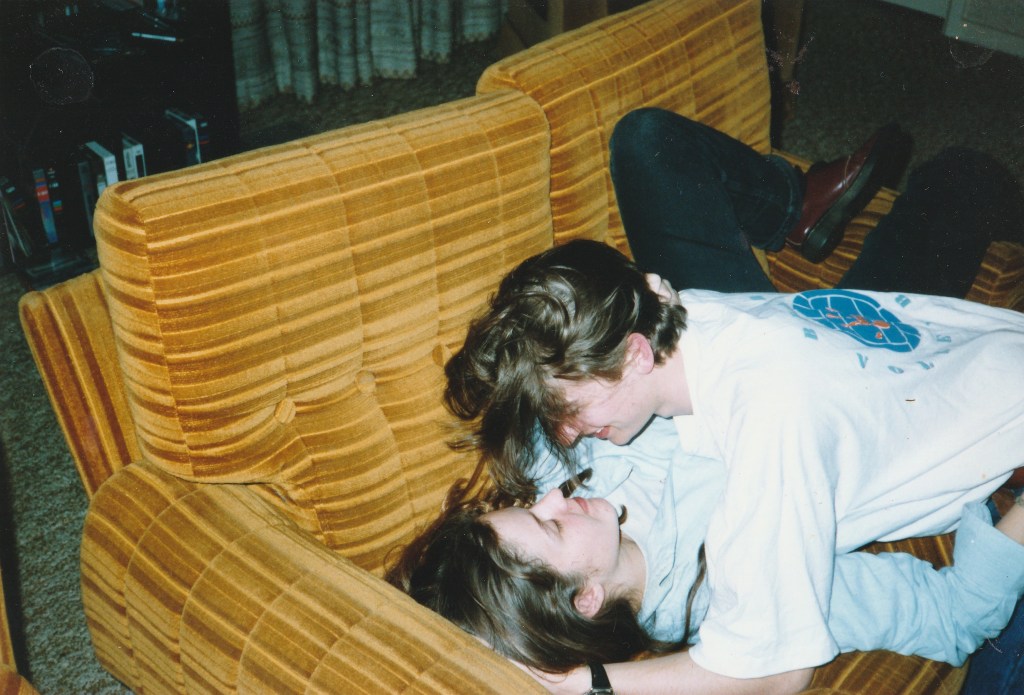
Allister trying to rouse me from a drunken slumber.

When I got black out drunk, as I often did, I’d get up to all sorts of nonsense.  I developed a penchant for climbing trees, absolutely smashed off my head sometimes passing out, precariously nestled in the crook of a branch.  Sometimes I would fall out of the tree and really hurt myself.  Sometimes I’d sneak into strangers’ backyards and help myself to a midnight skinny dip in their pool.  Sometimes I’d have sex with Allister on some random front lawn (oh, the savage grass burns I’ve nursed).   Other times I’d run away from all my friends and hide in a park for a couple of hours, fucking around on the children’s playground, sliding down the slide, swinging on the swings.  Free as a motherfucking bird.  Sometimes I’d wake up lying face down in a flower bed.  Sometimes I’d wake up and have absolutely no recollection of what had happened the night before.  

Yep.  That was me.  

Allister and I used to hang out with one of his friends, also called Alister, (true story, though for the purposes of clarity, I’ll refer to him as Al from now on).  I was already a seasoned boozer, but whenever we hung out with Al, the drinking would ramp up, and we’d often end up guzzling liquor straight from the bottle (many bottles).  The intention was oblivion.  Mission achieved. 

Al was funny.  Not funny haha.  Funny weird.  He just did not like me from day one.  Or did he?  I honestly still don’t know.  Whenever we hung out in a group, or as a foursome with whatever chick he was banging that week, Al would openly bully me, belittle me, insult me, berate me or (if I was really lucky) completely ignore me and act as if I wasn’t even there.  I was so wet behind the ears, so confused and wounded by his animosity, that I would often completely fuck myself up by crying over it for hours.  He seemed to absolutely hate my guts.  For the first few hours anyway.  After he got past a certain point of inebriation, things would change and he would start being a little civil to me.  That was actually nice, and being the young people-pleaser I used to be, I’d forgive and forget his previously nasty ways.  But when Al got really, really drunk, was when he’d start staring at me lecherously from across the room.  I could actually feel the thickness and the darkness of his gaze, and my skin would start to crawl.  Because I knew that very soon, he would find a way to be alone with me.  And then he would start trying to take possession of me.  He would follow me to the bathroom and try to put his hands down my pants.  Or he’d corner me in a corridor and kiss me.  Or he’d grab me from behind and force me into some bushes.  He’d squeeze my breasts roughly, wetly hissing some booze-soaked, noxious bullshit into my ear.  He acted as if he was entitled to my body.  And even though a part of me found this crazy rollercoaster behaviour a little exhilarating, I never, ever encouraged it.  I didn’t want it.  I never consented to it.  And I always pushed him away.  He was an awful, toxic human being, and because of his behaviour Allister and I started spending less time with him.  

We did decide together that it would be OK to invite him to Allister’s 21st birthday party, which was held at his parent’s remote country property in Kinglake.  It was a great night and, of course, I got rip-roaring drunk.  Despite that, I remember exactly what happened in the small hours of that morning.  I remember it with crystal clarity.  Most people had retired to their tents for the night, but there were still a few stragglers keeping the party going in the large tent Allister and I had set up for ourselves.  I remember being in my pyjamas and going for a stumble, taking a time-out to commune with the wombats and to soak up moon.  It was a frosty night but, numb to the cold, I lay down on a grassy mound, less than 25 metres from the tent.  I gazed up at the bright, starry night, trying to keep it all from spinning so violently but didn’t have much luck.  

After about ten minutes I decided that I should get up and go to bed, but I just couldn’t move, I was so drunk.  I plaintively called out for Allister, but music was playing in the tent and I guess he didn’t hear me.  I called out for him again, anyway, hoping he might sense that I needed him.  Which is when I became aware of movement to my left.  It was Al ominously crawling out of the darkness, towards me.  He didn’t say a word.  He just kneeled over me, obscuring the light from the moon, and started pulling down my pyjama bottoms.  They were white with little pale blue dots.  I shook my head and drunkenly pleaded, “don’t”.  I tried to pull them back on, but he lifted my legs up and yanked them off.  And then he lay on top of me and forcefully inserted his barely erect penis into my vagina.  I kept saying no, and I kept trying to squirm out from under him.  But I was crushed beneath his deadweight. I ineptly implored for him to stop, stop, stop, over and over.  He was paralytic, but also determined.  I realised that there was absolutely nothing I could do to prevent what was happening.  So I stopped fighting and went limp, just hoping that it would be over quickly, resigned to the horrific degradation of what was happening to me.  This man who couldn’t decide if it was hate or lust that he felt towards me, had decided that he wanted to fuck me.  And so he did.  From my cloud of drunken despair, I heard a voice in the distance.  Someone was calling Al’s name.  They were beckoning him away from me.  It was our mutual friend Gavin, to whom I’ll always be grateful for announcing his presence.  It worked and Al recoiled from me, oozing back into the darkness from which he’d emerged.  I don’t know how long it took me to get back to the tent, pulling my pyjama top closed as I entered because the buttons had all been ripped off.  I chatted with the others for a few minutes, trying to act normal, like nothing had happened.  How do we do that? Why do we do that? I said goodnight, and gratefully slid into the cocooning comfort of my sleeping bag, turning away and trying to forget what had just happened.  But I couldn’t forget.  I still haven’t forgotten.    

That was the second time I was raped. The first time, I was about seven years old.  It happened in Brunswick.  I was out playing with the neighbourhood kids, at the back of the block of flats where my aunt and cousins lived.  We were all joking around with a guy that the other kids seemed familiar and friendly with.  Out of the blue he asked us, “Can I pick one of you up?”  The other children scattered like marbles leaving me there, confused and wondering if I’d heard him correctly.  His rheumy eyes settled on me and he asked again, “Is it OK if I pick you up?”  I was frozen.  I didn’t want to be picked up but I also didn’t want to be rude and say no.  I had never been in this situation before and I didn’t know what was expected of me.  I looked around at the other kids, but I couldn’t catch anybody’s eyes.  Alarm bells were ringing in my head, and I knew that the situation wasn’t right but I didn’t have the courage to do anything about it.  I didn’t feel like I had a choice.

So I said OK.  

And he picked me up, and it was fine.  All the kids gathered round again, and for a minute I thought everything was dandy, and that I’d been worried for nothing.  Which is when he slid his hand inside my skirt, moved my underpants to the side and penetrated me with his fingers.  I kicked against him and squirmed out of his evil embrace, demanding that he put me down.  And thank goodness he did let me go.  Thank goodness those other kids were around or who knows what else he might have done.  

In my last ejo, my friend Terry asked me at whose feet I lay the blame for abuse.  Sure, at the time, I did blame those kids for not warning me, and I blamed myself for not picking up on their vibe.  And of course I blamed myself for agreeing to be picked up.  I was even wracked with guilt because my parents had warned me to be careful when I went out to play that day, as they always did.  I feel pretty lucky that I was able to quickly process what had happened to me in a healthy way and to release the feeling that I had done anything wrong.  I worked very hard on that, because at the end of the day I knew that I was a child who had been preyed upon by an abhorrent human being.  And so, when I look back at it now, I no longer blame those kids, who might have experienced the same thing, or worse, at that man’s hands.  I don’t blame my parents for letting me play unsupervised in a sketchy neighbourhood.  And I certainly don’t blame myself for consenting to be picked up.  Because I didn’t know any better, and I certainly didn’t consent to what he did to me.  I didn’t consent to being digitally raped.  I blame only him.

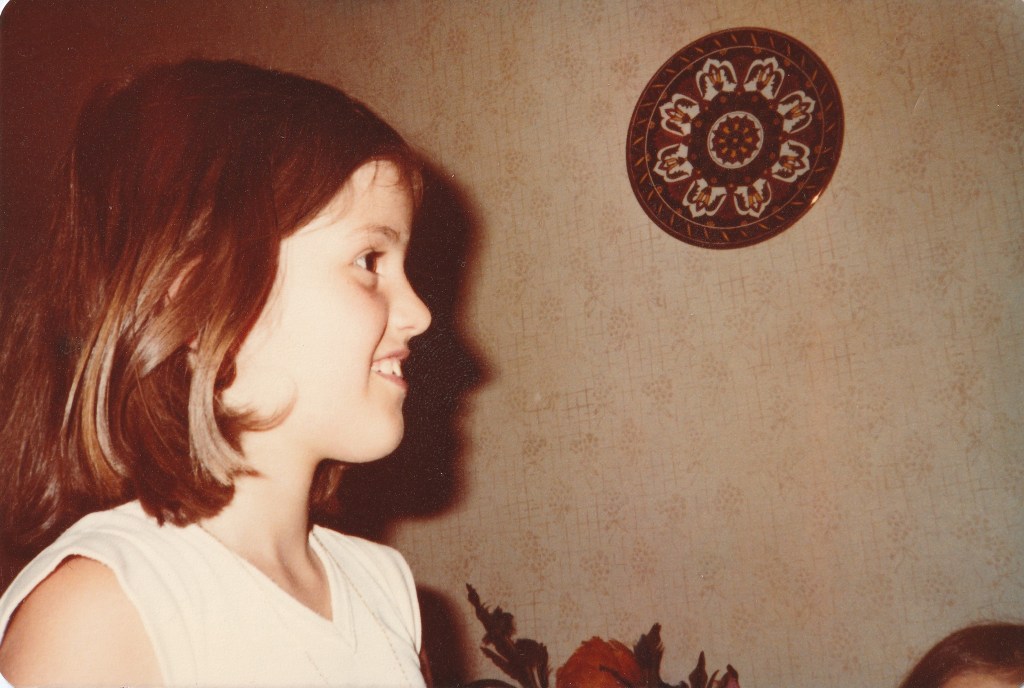
Baby Chryss.

Despite never talking about it with anyone, I don’t feel like I was seriously scarred by it.  I just kept it to myself, armed with a new wariness of strangers.  The first time I shared my story was about two years ago when I just unexpectedly dumped it on my poor sisters, a few months after our Mum died.  I didn’t realise that it had needed to come out, but the timing makes sense.  I think it had stayed locked away while my parents were alive because I knew that they would have blamed themselves, and I didn’t want them to.  Telling my sisters was emotional and intense, but also quite cathartic and healing.  And I’ve decided that I don’t want to keep it a secret anymore, because I didn’t do anything wrong.  I’ve carried the weight of it for a long time, and it was never even my weight to carry.  Talking about it lifts that burden from me, and lightens my load.  My feeling of the memory is no longer a smoky grey.  What happened was very black and white.  I was innocent, and what that man did to me was very wrong. 

I don’t want to overplay anything that’s happened to me.  A lot of people have been through a lot worse.  But I don’t wish to minimise it either.  None of that stuff should have happened because I never gave my permission.  And even though I feel relatively unscathed, it’s impossible to know the extent, or the exact nature, of how I was damaged by each experience.  The insidious thing about someone violating your body is that they depend on your sense of shame to keep it quiet and protect them.  I did keep quiet about the things that were done to me against my will and without my consent.  Because I did feel ashamed.  I did feel dirty.  I did feel that I could have done more, should have done more, to prevent it from happening.  That it was somehow my fault.  But no, I no longer feel that way.  It wasn’t my fault.  I was not to blame.  I am no longer ashamed.  And I will no longer be quiet.  

Ejo #142 – Words With Chryss (Volume 3)

Do you place any meaning in life, either for you or for our species, and what philosophy do you apply to living your life?
Funnily enough, I do have some Words With Chryss® brand ideas of what life is about.  What it means to be alive, why we are here.  And what happens when we die.  My philosophy about life (and death) has evolved in recent years, and is still evolving.  An ongoing search for my life’s “purpose” has led me to much introspection and internal deep-diving.  It has guided me towards meditation, therapy, yoga and lots of reading and learning.  And all of that has led me to the basic conclusion that life is a bizarre phenomenon that we cannot explain using the information that we are in currently in possession of.  Which goes some way towards explaining why the idea of a god that actually gives a shit about people has gained so much traction over the millennia.  So, god.  A fantastic being that isn’t just omniscient and omnipresent, but also (cue fireworks and harpsichords) omnipotent as well.  Seems a little convenient, don’t it?  Look, I just don’t buy into all that jazz.  It feels nonsensical to me, and in the absence of any evidence, I’m happy to risk eternal damnation for my disbelief. 

But hey, speaking of atheism, have you ever thought very deeply about something and formed a belief structure around your efforts only to discover that an olde worlde Dutch philosopher by the name of Bucher Spinoza came up with the same idea almost four hundred years ago?  LOL, me too.  Of course there are huge differences in the complexity of our ideas – mostly because he spent his entire life in deep, critical thought and I spend all my free time binging Netflix.  And yet… we still somehow landed on the same idea.  That the closest thing to “god” in physical, scientific reality is the universe that surrounds us.  The universe that is a part of us, and that we are a part of. 

When people think of the universe they think of galaxies and stars and black holes and the big bang and dark matter.  But everything on earth is composed of elements of the universe that existed billions of years ago.  We are literally all made of stardust.  If I did believe in a god, that would be it.  And I don’t mean to brag, but Einstein was totes on the same page.  He famously said, “I believe in Spinoza’s God, who reveals himself in the lawful harmony of all that exists, but not in a God who concerns himself with the fate and the doings of mankind.” 

Everything that exists in the universe, everything, is a part of the universe.  Including us.  I think that sometimes we tend to identify as observers of the universe, rather than understanding that we are inextricably woven into its fabric.  Personally, I subscribe to the notion that human beings are expressions of the universe, and that the minutiae of our lives are absolutely irrelevant, serving only as distractions to our attention.  I believe that the true purpose of our existence is to shrug off those distractions in order to focus our attention on the present moment, and to be fully aware of ourselves and our own awareness.  And… to simply release everything else.  What do I mean by “distraction”?  I mean breaking your favourite mug, being hungover, your car breaking down, people gossiping about you, failing an exam, being bullied, running late, overdue bills, headaches, pulling a muscle at the gym, an argument with your partner, being overlooked for a promotion or getting mugged.  And if you want to level up, distractions can also include divorce, cancer, or being thrown in jail and tortured for your political beliefs.  I mean, sure, that’s some Mt. Everest shrugging, but it is possible. 

I believe that the universe breathes life into us, in the form of energy flowing through us.  And I believe that we die when that energy ceases to flow.  For the most part people tend to live their lives in a kind of weird denial of the fact that we are only here for a finite time.  Which is a shame because far from being a morbid preoccupation to think of your own death, it can actually serve to crystallise the fact that this moment (in potentially being your last) can be transformed into something extraordinary. 

How would I see the world around me, the room around me, the people around me, if I knew that my next breath would be my last.  I honestly think that right now, I could take a deep breath and look around and feel happy, knowing that I’ve lived an amazing, textured life.  Knowing that I’ve lived true to myself.  Knowing that I’ve been loved.  Knowing that I’ve loved others, and loved myself.  And even if I weren’t ready to die, if I did know that it was coming, I would be grateful for everything that came before.  Every moment is a beautiful gift.  And the gift is that we are here to receive it.  The gift is that we are here to experience it.  And I’ll say it again, because it bears repeating: the gift is that you are here. 

What do I think happens to us after we die?  I think that’s it.  The end.  Lights out.  We return to the place we were before we were born.  We return to oblivion.  Darkness.  Nothingness.  We simply cease to exist.  And after a significant amount of time passes, even the memory of us will disappear.  Nothing of us remains.  The universe is vast, it is powerful, it is everywhere, it is everything.  It is old.  It is beautiful.  The universe is us, and we are the universe. 

What do you dream of achieving? 
Transcendence.  That may seem like a flippant answer, but I promise you it’s not.  Apart from retirement, I don’t really have very many corporeal ambitions.  Every single day, however, I toil to break free from the binds of being “only human”.  This is going to sound pretty new-agey, but I feel like I’ve figured out what my purpose in life is.  In simple terms, it is to be present and aware of this moment, because that’s all I have.  The long version is that I aspire to rise above (transcend) the dramas and emotions, the ups and downs, the constant rollercoaster of the human condition, and to identify with the purest, most unadulterated version of myself – my consciousness.  My awareness.  My life force. 

So what does it mean to “be present”?  It simply means that while I am writing this, I know that I’m writing.  It means that when you’re reading it, you know that you’re reading, almost like you’re watching yourself doing it.  Being present doesn’t mean that you can’t think about anything else, it just means that when you’re doing that, you know you are doing it.  It means that you don’t lose yourself when you’re thinking about those other things.  You remain here, and now.  Being present means not leaning into the next moment, and not clinging to the last. 

People are funny.  We spend so much of our time engrossed in thought about things that aren’t even in front of us, things that may never happen, or things that have happened that we can’t change.  We spend a lot of time responding and reacting to the world around us when, in fact, nothing is ever actually happening to us.  Things are just happening.  Ooooh yeah, let that sink in for a second.  Nothing is happening to me, things are just happening.  Taking that to the highest level, (as much as it may have felt like it) my Mum’s death didn’t happen to me.  It was something that happened, but it didn’t happen to me.  (Fuck yeah, and if you want to get into some ninja-level shit, it didn’t even happen to her; it was just something that happened).

The concept that nothing is happening to *you* can be difficult to grasp.  You are the centre of your universe and it takes a bit of work to mentally shift your framework away from that sole point of reference.  It’s only when you are able to see yourself as being part of something bigger that your reference point can change.  Usually the “something bigger” is religion, right?  Because it’s organised, and actually designed to provide us with comfort and a sense of belonging.  It makes sense, to some degree.  But where it falls apart for me, personally, is that it’s all based on fantasy.  I totally get that seeing yourself as an expression of the universe is far weirder than imagining you are somehow descended from Adam and Eve, because we know very little about the mechanism behind how the universe works.  There’s no handbook.  Is the universe alive?  Is it conscious?  Is it self-designing?  Is it chaos?  Is it exerting a will?  If we are part of the universe, is our will our own, or are we just puppets being controlled by it?  If I am an expression of the universe, then….. shit, am I the universe?  These are big, scary questions for which we do not have answers.  My journey has taken me on a path that doesn’t even need answers.  I don’t need to make up stories to comfort myself.  I’m OK with the discomfort of not knowing.

I’m not going to pretend that I’m anywhere near achieving my goal of transcendence, but I’ve definitely seen some personal growth in my ability to just let shit go.  My progress is hardly linear though (as I’m sure David would attest).  Some days are more difficult than others, and I always do better after I’ve had a cleansing session with Zimmy.  I always do better when I lay off the booze.  But, I am no longer searching for my purpose.  I know my purpose, so I have a head start.  I just need to keep on trying.  Transcendence seems a long way off, but I am prepared to spend the rest of my life trying. 

What makes you angry? 
This was (hands down) the most difficult question anyone asked me.  I pondered this question almost every single day for months, trying to come up with what felt like the right answer.  It became a Gordian knot that I was driven to untangle. 

On a global scale, I’m angry at capitalism, I’m angry at massive, inscrutable corporations making zillions of dollars at humanity’s expense, I’m angry at governments for allowing it, and I’m angry at the injustice of it all.  I am angry that a handful of people benefit (obscenely) from the abject destruction of our beautiful earth.  The climate crisis is not the people’s fault.  It is capitalism which allows a very small number of people to gain everything, as the rest of us helplessly watch our home burn (and flood, and shake, and freeze, and fall apart).  I am angry about the information recently published in the Pandora Papers, exposing the billions of dollars of cash and assets hidden from public view by billionaires and government officials including kings, presidents and prime ministers from countries like Jordan, the Czech Republic, Kenya, Hong Kong, UAE, Chile, Sri Lanka and Ukraine.  Countries in which the divide between the rich and the poor isn’t just vast, it’s incalculable.  I’m angry that billionaires even exist.  Because to make a billionaire, millions of people must live below the poverty line.  I’m angry that capitalism lauds religion to soothe the poor and hungry masses, when it is the capitalists themselves who keep them poor and hungry.  I’m angry that despite it being a very broken system, we all cling to it because we believe that without it we may be stripped of all the nice, shiny things we’ve surrounded ourselves with under the illusion that they’ll make us happy.  I’m angry at Musk and Bezos for squandering billions in their small-dick race to colonise the planet Mars, our inhospitably dusty, red neighbour, when people are starving to death in muddy slums.  On this planet. 

WTF!

So yeah, I’m angry about a few things.  But these angers don’t burn red-hot in the pit of my stomach.  I feel them more as a dull, heavy weight, compressing me whenever I think about the state of the world.  It feels overwhelming, and hopeless, and I see no potential resolution for any of it.  I actually envisage it becoming worse.  If I allowed my anger to burn about these things, I would flame out and die. 

But hey, if we’re talking about anger on a personal level, that is something I have worked on a lot.  Holocaust survivor and psychologist Edith Eger mentions in her book, “The Gift” that anger is often caused when there’s a gap between our expectations and reality.  And I believe this to be the root cause of all anger.  Whether you are angry because you’ve lost your patience with someone, or you’re being disrespected, or you’ve suffered an injustice, it all boils down to reality not meeting the expectations that you had.  So, the easiest way to solve that problem is to not have any expectations.  Right? Well, actually it’s not easy at all; it’s extremely bloody hard.  It also happens to be one of the tenets of Buddhism. 

The Buddha considered “craving” to be the single greatest fetter (shackle, or chain) to achieving happiness and enlightenment.  Aspiring to something (a possession, a relationship, a state of being) is fine.  But as soon as you start to expect a desired outcome, it becomes a condition that can prevent you from being happy and at peace in your life. I want to be happy and at peace. Letting go of expectations doesn’t mean that you don’t give a shit about things or people. It just means that you can experience it all without gripping onto it for survival.  When you can learn to do that, you’ll be able to experience negative emotions, like anger, without reacting to them; and you will no longer be defined by these transient flows of energy.  You’ll be able to step off the rollercoaster.  And that’s a beautiful state to be in.

As well as learning to let go of anger mentally, and emotionally, I’m also learning to let go of it physically.  Last year, during the early months of COVID, I took up yoga as a way to keep my body moving, and I’ve been practising nearly every day since then.  At the end of every session there is a pose called savasana, also known as corpse pose, where you lie on the ground with your legs apart and your arms by your side.  Believe it or not, this is the single most important pose in yoga.  It is the pose in which we learn to relax our body on command, and I can’t stress enough what a gift that is.  Whenever I’m having trouble sleeping, I harness the power of savasana to assist my body and mind to just let go.  It has also helped me in moments of anger.  I might feel the anger rising up in my body, as a physical reaction, a tightness in my chest, but I am able to neutralise it, simply by relaxing my body, taking a deep breath and letting go of the tightness.  This is not the same as pushing the anger down or denying it.  I actually allow myself to feel the emotion, to honour it.  But then I just let it go. 

OK, so it’s not always as neat as I’m making it sound, and sometimes it’s extremely fucking messy.  Sometimes it just doesn’t work at all, and the anger erupts and I snap or yell or tense up.  Despite all my efforts, I am still only human.  But I’m working on it.

Do you lash out or project your anger onto others? 
This is something that I definitely make a huge effort not to do.  You know, I think I used to be a much angrier young woman than I am now.  I think I used to stomp around feeling like I wasn’t getting mine, or whatever.  I don’t feel that way anymore.  I no longer feel like I’m owed anything.  By anyone, not even the universe.  And so, with effort I have learned to manage urges to lash out.  I have learned to view the world as neutral, something to be observed.  Remember; nothing is happening to me, things are just happening.  And so there is no need for me to ever feel targeted or victimised by anything that happens.  Ever.  Instead of being personally affronted by things that would have made me angry in the past, I try to see them as an opportunity for growth.  A chance to practise letting go, almost like a game.  Of course it doesn’t always work, and yes, things happen that might be a hassle, or annoying, but it no longer ruins my day.  I can shrug it off and even choose to be happy!  And therein lies the freedom of being able to transcend all the bullshit, rather than getting mired in it.  All day long, regardless of what’s going on around me, I can make the choice to be happy. 

Are you angry with yourself for being taken in?
I am usually less angry with myself and more disappointed if that happens. 

And ultimately can you let it go and move on? 
I am always letting go.  I wake up every morning with the intention of releasing everything, and not holding onto anything.  I don’t need to be right.  I don’t need to be understood.  I don’t need to have my way, and I don’t need to prove anything.  I just need to be happy, and I make that my priority. 

Are you pissed off that you weren’t taught how to spot the flags of abusers?
No.  What I’ve come to realise is that someone can teach you to spot all the flags, and in the end it still doesn’t stop abuse.  My Mum was always a bit of a worry wort.  She instilled in us the very real knowledge that there are bad people out there in the world and to never really trust anyone.  It didn’t prevent abuse. 

At whose feet do you lay the blame for that?
I blame nobody but the abuser.