Air Traffic Control

Ejo #167 – ATC 101: Pilots

My husband, David, has been an air traffic controller for over 35 years, and you can bet he’s got some juicy aviation tales to tell.  One of my favourite anecdotes is an oldie but a goodie from when he was doing ground control at Dubai International during a crazy busy shift.  Every pilot wanted a piece of him and he was trying to prioritise and get to everybody in turn, but one pilot in particular kept interrupting him to ask about his position in the queue.  David told the guy to standby a couple of times, but the pilot obviously didn’t care about the chaos on frequency because he just kept nagging and nagging (which, by the way, is incredibly poor airmanship).  Eventually David just had enough and snapped at the pilot, “Mate, I’ve got 75 things to do, and you just became number 76!  STANDBY!”  This comment has, justifiably, become legend over the years. 

One of the joys of being married to another air traffic controller is the after-work debrief.  While David and I actually work at different airports in Dubai, we do work the same shift pattern, so we arrive home from work at around the same time.  After several years of marriage we’ve settled on the ritual of greeting each other with a kiss, putting away our work stuff, getting changed into comfy clothes and then decompressing.  Thirty minutes maximum.  And in case you were wondering, yes, there is always (always) something to decompress about.  Being able to vent to somebody who understands ATC is a game-changer, because they get what you’re talking about in a way that a normie simply could not, no matter how much they tried. 

So what do we whinge about?  Well, some of the time it’s about management, but mostly it’s just about the bloody pilots.  The men and women we talk to all day, moving them around like pieces in a 3D chess game.  It often feels like pilots think they’re the only aeroplane on our board (as demonstrated by #76 in David’s example above).  But we are the ones that have the big picture.  Only we know where everything fits, and that is why pilots must do our bidding. To ensure that everything flows safely, expeditiously and in an orderly fashion. 

When I walk home through the arrivals terminal at the end of a shift, I often intermingle with the passengers that have just disembarked from an aircraft.  And just like the Red Sea, the crowds always seem to part for the pilots, confidently strutting through the terminal in their crisp, smart uniforms.  Sure, they might get all the adulation, and even I begrudgingly have the utmost respect for airline pilots.  But at the end of the day it’s the anonymous woman camouflaged in her civvies walking amongst the masses that the pilots have to answer to.  In my tower, when I give an instruction to a pilot I expect them to comply.  In fact, if they don’t comply, I’m obliged to report them to the regulator.  That’s how much sway air traffic controllers have over pilots (we are what it says on the tin).  But we don’t issue instructions willy nilly.  There are rules, and we have to be able to justify every single instruction that we give (in the subsequent court of inquiry, as we like to say in the biz).  Everything we do is recorded and everything we say is recorded.  Every mouse click, every finger on a touch screen, every glance through the binoculars.  Even my carefree dancing in the tower at 2am on a quiet Friday night, is recorded on CCTV. 

Unfortunately, “failure to comply with ATC instruction” is common and routine.  It happens every single day, though it doesn’t always result in a big drama.  If I tell a pilot to turn left on a taxiway, and they turn right, it’s not the end of the world.  No-one’s going to die. But it’s still a failure to comply, and a report needs to be submitted.  Also, it’s a fucking pain in my ass because I’m the one that has to fix it.  Most of the grievances that David and I share at the end of the workday stem from things like this.  Pilots that just don’t do what they’re told.  Pilots that just don’t listen.  Even the simplest instruction of, “Turn left on zulu, right whiskey 8, hold whiskey 8 bravo” will sometimes be read back as, “Right on, um zulu, right victor, hold… um”.  To which I will gently respond by saying, “Negative” and then patiently repeating the instruction.   When they get it wrong again is when I change my tone.  I do not raise my voice, but it is quite clear from my tone that I am not impressed with the pilot, and that they are wasting my time.  I repeat the instruction once more, this time imbued with that tone, and if they get it wrong again (which trust me, they do) I issue a stern “hold position” instruction, and carry on with the other aircraft under my jurisdiction.  I do not do this to be punitive.  I do it because this pilot obviously needs special attention and I do not have special attention to spare at that particular moment.  Usually, by the time I get back to them, they’ll have sorted it out and we can all get on with our day.  I don’t think it’s rude to say that it’s the business jet pilots that give me the most trouble.  In comparison, commercial airline pilots are the epitome of professionalism.  And (quite rudely) I will leave those two facts there for you to make the connection. 

As I said, I don’t punish pilots for fucking up.  We’re all human, and we all make mistakes.  But some air traffic controllers do, which I think is unbecoming and unprofessional.  A young colleague recently boasted to me of how he humiliated a pilot that had made an error after landing, berating him all the way to the parking stand.  I was not impressed with this show of immaturity.  When David told #76 that he’d been relegated to the end of the queue, he didn’t mean it.  The aircraft held its place in line, but I guess the pilot didn’t realise that, and ended up complaining (which is how the story became lore). 

Aviation is a system that utilises redundancies to compensate for all the messy humanness of the people that use it.  We all have to remember that there is a human being on one end of the radio, and a human being on the other end; and when a pilot makes that first call to you, a human connection is created.  They are not aeroplanes and they are not call signs.  They are human beings.  With all their quirks and weirdnesses and stupid dad jokes.  When I first started out in Melbourne airport, a Russian IL76 had made a stopover and was parked on one of the outer taxiways.  Most of us had never seen one before, and one night a Qantas pilot taxiing past asked me, “What type of aircraft is that?”  I naively responded, “Apparently, it’s an Ilyushin,” to which he wisecracked, “No, no, it’s definitely there, I can see it with my own eyes”.  Groan!  I guess I walked right into that one. 

About 12 years ago a Russian cargo plane was in a hurry to depart Al Maktoum so that he could make his strict arrival slot time in Kabul.  As he was taxiing to the runway, a colleague of mine spotted smoke coming out of the engines and as I turned to look, even greater plumes of white smoke started pouring out.  As is standard procedure, we pressed the crash alarm button to alert the  Airport Fire Service of an aircraft ground incident, and I instructed the pilot to hold position.  He objected and kept taxiing, saying that he had to make his departure slot time.  I heard the commercial pressure that he was under, and the stress, in his voice, but I insisted that he hold position and told him that the fire trucks were on their way to inspect the aircraft due to smoke.  He ground to a screeching halt and started yelling at me that it was completely normal to have smoke coming out of the engines of this type of aircraft.  But I didn’t know if that was true.  It might have been, but still, I wasn’t comfortable letting him depart.  Imagine if I’d let him go, and he crashed shortly after departure (don’t forget that court of enquiry I was talking about earlier, I never do).  I allowed the pilot to rant and rave, as he was the only aircraft on my frequency at the time, and after he’d exhausted himself and come to the realisation that he wasn’t going anywhere, I invited him up to the tower to have a chat about it.  He stomped up the stairs in his khaki jumpsuit, smoke coming out of his ears, angry and ready to fight.  But I greeted him politely, offered him a cup of coffee, and showed him exactly where it was printed in my instruction manual that I had no choice but to call the fire service in a situation like that.  Fifteen minutes later, he left, all sweetness and light.  We smiled and shook hands before he walked down the stairs and out of my life forever.  I like to think that he didn’t get into trouble over the incident, or lose his job because he missed his slot, but I really can’t be sure. 

So we develop relationships with pilots, even if it’s just for the few minutes that they are on our frequency. (One colleague from Melbourne tower took this to the next level and actually married one!) We crack jokes. We get shitty with each other.  We all say happy new year when the clock strikes twelve.  We all shared an eerie feeling of shock, support and camaraderie on 12th September 2001.  Sometimes we misunderstand each other or we make a mistake, and when that happens the other one will either laugh it off or they’ll rub it in and say I told you so.  I was taught the old-school way of never apologising to a pilot, even when I’m wrong.  But that’s not my stripe.  I have a little replay button on my comms screen that I can use to go back and check what was said, and if I’m the one that made the error, I’m more than happy to admit it to the pilot and to say I’m sorry.  The response is always respectful gratitude, which is its own reward. 

More recently at Maktoum airport I was working the doggo, which is when I turn on my night shift voice (you know – smooth, dulcet, graveyard-shift, radio DJ vibes).  I had a couple of planes on the go and as one of them taxied to his stand, he said, “You know, you have a very lovely voice”.  The other pilot piped up and added, “I was just thinking the same thing, it’s so reassuring!”  This totally made my night, and I spent the next 30 minutes blushing to myself in the tower. 

A snippet of my twilight voice (my night shift voice is even more reassuring)

As I said earlier, we don’t have any passenger airlines based at my airport, but we do have a couple of helicopter operators, one of which is the Dubai Police Airwing and the other, a commercial helicopter operator called AeroGulf.  Flying for almost 50 years, their bread and butter is offshore flights ferrying Dubai Petroleum staff to and from oil rigs, which they do out of Al Maktoum several times a day.  Recently, the UAE’s General Civil Aviation Authority’s preliminary report of the helicopter accident that occurred offshore on 7th September 2023 stated the following: 

An AeroGulf Bell B212 Helicopter, registration marks A6-ALD, was scheduled for a non-revenue training flight for night operations to an offshore helideck under call sign Alpha Lima Delta (ALD).  The Helicopter took off at 1518 (UTC) from runway 30 of Al Maktoum International Airport (OMDW) for the offshore ARAS driller rig located in Umm Al Quwain.  There were two flight crewmembers onboard. 

Later in the report:

At 1605, the Helicopter took off from the rig and changed direction heading northwest and continued the flight.  One minute later, at 1606, the Helideck Landing Officer (HLO) reported that the Helicopter had crashed approximately 600m away from the rig in the northwest direction.  At 1608, a distress call for search and rescue was initiated.

Photo courtesy of AeroGulf.

What the report fails to mention is that at 1730 GMT, I walked up the stairs into the air traffic control tower at Al Maktoum airport to commence my night shift.  As soon as I got there, I knew something was wrong.  I asked what was going on and was told that A6-ALD had crashed into the sea.  My breath caught in my lungs, and I felt like I’d been kicked in the chest.  Oh my god. I was asked if I was OK to work the shift, and I said yes.  Of course. I was OK, but still devastated and fearful for the safety of the two pilots on board.  I talk to these guys every single day.  I’ve never met any of the AeroGulf pilots, but they’re my guys.  When I am on shift, I am responsible for them.  And two of them were now missing and presumed dead.  And I didn’t know which ones. During my shift the police helicopter operated under the Rescue callsign, searching for the pilots and the wreckage in the inky darkness of night, returning to refuel and then take off again to continue the search.  I could hear the exhaustion and the hopelessness in the police helicopter pilot’s voice.  I hoped that he could hear the compassion and hope in mine.  In the early hours of the morning the police helicopter landed one more time and taxied back to their hangar for the night.  The search would resume in the morning. 

The body of one pilot was found the next day, and the second pilot’s body was found two days later.  Even though I had known that the impact of a helicopter crashing into the sea would be fatal, I (and I’m sure many other people) had held out hope that the pilots would somehow survive.  That maybe they’d been picked up by some fishing boat.  But sadly, that wasn’t the case.  All that remains now is for the full investigation to reveal what happened on that fateful night. 

About a month after the crash, my curiosity got the better of me and I asked a colleague if she knew which of the AeroGulf pilots had died.  She tried to describe the voice of one of them, and my heart just broke.  She was describing my favourite guy.  Super friendly, very good at his job, someone I could always rely on.  Even though I’d never met him, and even though I didn’t know his name, we had a relationship. I felt like we could trust each other, and that we had each other’s backs.  I would issue him clearances that I would never give to other helicopter pilots, simply because I knew that he understood my instructions perfectly.  He was switched on and reliable, and not all pilots are.  Of course it didn’t make a difference that he was my favourite, the fact was that two men had died and I was really sad about that.  But knowing that I would never hear his lovely, cheerful voice again was heartbreaking.

The very next day, when I arrived at work I saw a flight plan for an AeroGulf helicopter, so I wasn’t surprised when a pilot called me for an airways clearance.  But I was shocked that the pilot who called me was my guy!!!!!  He was alive.  He’s alive!!!  I can’t tell you how happy and relieved I was to hear his beautiful voice.  But I felt conflicted, knowing that my joy was a slap to the faces of the two pilots who did die.  I felt disgusting, but still revelled in the relief of knowing that my favourite pilot was alive and well.  It took every ounce of professionalism for me not to tell him that over the radio. 

And now whenever I talk to my AeroGulf pilot, I like to think that I’m conveying in my voice how deeply happy I am to hear his.  How happy I am that he’s alive.  In my tone, I also try to convey my deepest condolences for the loss of his colleagues.  I often think about how he might be scared to be flying around without yet knowing what happened to them.  And I often think about how sad he must be.  I wish to convey in my voice all of these things when I issue standard instructions like, “Take off your discretion”, “Join right downwind runway 30”, “Taxi via zulu, victor seven, back to AeroGulf”.  And with every single instruction that I give him, every single thing that I say to him, my voice is heavy and thick with meaning. 

And when he departs my control zone on his way out to some oil rig and I instruct him to “Broadcast MBZ 134.65”, I hope that he can hear in my voice how much I love him and how much I hope that he comes back.  How much in my heart I’m saying, please, please, please, please, please, please come back.  Please be safe.  Safe travels.  I’ll wait for your return.  I’ll be here.  I’ll be waiting.  Because two of his colleagues never came back.  They left Al Maktoum airport and they just never came back.  And I can’t imagine how that must feel.  So I just hope that he can sense how much I care for him, as I care for all the pilots under my control.  I’m looking out for each and every one them.  It’s my job to keep them safe.  It’s my job to send them all out into the world, and to bring them all back home again, safe and sound. Sometimes I can’t do that, but it’s still my job.

Ejo #154 – ATC 101: Shift Work (aka Fatigue)

I’ve been an air traffic controller for over 22 years.   It’s part of who I am now.  And a big part of being a controller is the crazy shift work hours.  But what exactly is shift work, anyway?  It’s basically anything that requires people to work outside of regular office hours.  Restaurants, hospitals, nightclubs, fast food joints, bodegas and milk bars, call centres, media outlets, retail shops, security and airports all run by the grace of those of us who sacrifice normal lives to work shifts.  We’re a weird bunch, that’s for sure.  But I wouldn’t have it any other way.  I absolutely love shift work, and wouldn’t go back to an office job with office hours in a million years.  I love having time off when everyone else is at work, and I really love being at work on the weekends, when the desk jockeys of the world flock to the beaches, the shops, the cinemas, and all the cafes, bars and restaurants.  Have at it normies!!  Fill your boots. I’ll be eating out next Tuesday!

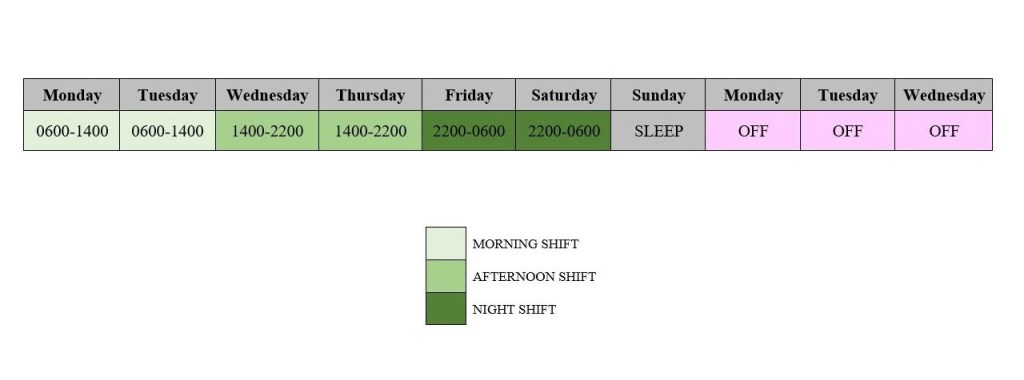
So yes, I do love shift work, but I don’t want to sugarcoat it.  It’s pretty hard yakka.  Regular people work some variation of nine to five, Monday to Friday, with weekends off, right? We don’t get weekends off. Or public holidays.  What’s Christmas, what’s New Year’s Eve, what’s Easter, what’s Melbourne Cup day?  Also, what’s Saturday, and what the fuck is Sunday?  I do not recognise any of these days.  They are meaningless to me.  For I am shift worker.  Honestly, I never have any idea what day of the week it is.  Occupational hazard, I guess.  Our work week is six and a half days long, and we are rewarded for that toil with three and a half days off.  Your cycle is seven days.  Ours is ten.  And it looks a little something like this.

Rinse and repeat.

The truth, however, is that even though this is the “standard” work cycle for ATCs in Dubai, our rosters are a lot more fluid, and a lot less predictable (we usually find out what shifts we’ve been rostered to work for a given month about half way through the previous one). I very rarely work the prescribed cycle of two mornings, two afternoons and two nights.  I wish I did, I would love that kind of stability.  But unfortunately due to staff shortages, training, annual leave, sick leave and controllers being seconded to the office, the roster is usually all over the place.


On the left, the standard roster template for 2018. On the right, the actual 2018 roster. Oh Mr. Hart, what a mess.

So, how does a typical work cycle actually play out?  Let’s start with morning shifts.  We are required to be at work by 0545 for a 0600 start (I’ll be using 24 hour time in this post, as per aviation convention), but I do like to get to work a little earlier to let the night shift zombies go home.  So, for me to be at work by, say, 0530 I need to leap out of bed at 0400.  I actually like to snooze my alarm for about 45 minutes before I actually get up (yes, I’m a weirdo).  This means that my first (of many) alarms goes off at the ungodly hour of 0315. 

Sleepy beepy!

The philosophy behind the myriad alarms is that my everyday alarm tone is a very soothing harpsichord sound, designed to gently rouse me from my slumber.  At 0315 in the morning, however, this doesn’t always do the trick.  The choice of alarms is progressively more likely to penetrate my repose. To that effect, the duck tone alarm is quite annoying.  The bark tone alarm is extremely irritating.  And the Leanne alarm (the back-up alarm of last resort) is actually my telephone ringtone which is the sound I would hear if I did accidentally sleep in and my watch manager was calling me to see where the fuck I was.  It instils enough fear and panic to wake me up no matter how sleepy I might be.  Committing the cardinal sin of sleeping in for a morning shift is a really horrible feeling.  Not only are you late for work, but there’s someone in the tower who has worked an eight hour night shift waiting for you to come and relieve them so that they can go home.  And they’re not allowed to leave until you actually get there.  I’ve only slept in for a morning shift once, and let me tell you it’s a very discombobulating situation. 

Another reason for the plethora of alarms is that it’s virtually impossible to get a good night’s sleep before that first morning shift.  I spend all night tossing and turning, subconsciously worrying that I’ll sleep in, inducing anxiety, which (of course) prevents a good sleep.  It’s a vicious circle.  Plus the only way to get eight hours in bed before my alarm goes off is to retire at 1915 the night before.  Which is impossible.  I always harbour well-meaning intentions of going to bed super early before my morning shifts, but usually turn the lights out sometime between 2100 and 2200 giving me about five or six hours of downtime. Not only do I usually wake up tired for the shift, but the entire cycle is off to a terrible start.  Welcome to shift work world. 

So I get up at 0400 and I get ready for work.  My routine at this time of day is so well rehearsed, it’s as smooth as Swiss clockwork.  Everything is done on autopilot.  David and I dance around each other like a beautifully choreographed ballet.  I don’t rush around like a crazy person, but every minute counts and there isn’t a lot of room for unforeseen variables.  The last couple of years I’ve also had to factor in an extra five minutes sprawled on the couch for the inevitable early morning hot flush episode that has become a stalwart component of my routine.  Menopause is fun! 

I’m usually out the door by 0450 and get to the tower by 0530 to take over position.  Depending on how many controllers are rostered for the morning, I might rotate through two hours in position, followed by a two hour break for the eight hour shift, or I might work two hours in position with a one hour break.  The maximum number of hours I can legally work is two and a half, after which I’m required to have at least a thirty minute rest period.  These rules are set by the General Civil Aviation Authority (GCAA), which is the regulatory body for aviation in the UAE.  And they lay down a lot of other rules regarding shift work in the tower, which I’ll talk more about later.  At the end of my shift, I’ll usually leave the tower some time between 1330 and 1400 and reach home by 1500 at the latest.  Those of you who read my previous ejo know that this is the ideal time for a coffee nap, and I almost always have one after a morning shift. 

Afternoons are my least favourite shifts.  The whole day is kind of fucked for getting anything done.  We usually get up around 0830 which isn’t super late, but it’s still an extra four and a half hours sleep than the previous two days so it feels like a real luxury, and actually plays a large part in our sleep debt recovery.  We have a little over four hours to get shit done before leaving for work.  Shit includes going for a walk followed by a yoga session, showering and washing my hair, reading my emails, playing Wordle, responding to messages, cooking and eating lunch (which is usually a delicious, juicy steak) and then doing the dishes, and also preparing something to snack on at work later that evening.  It can be a bit hectic to be honest.  I normally get to the tower at around 1330, send the morning shift on their merry way, and settle in for the next eight hours.  Maybe it’s because the shift straddles the transition from day to night, but afternoon shifts just seem to drag on and on and on.  They’re boring as hell and by the time I get home at around 2300 it’s way too late to do anything.

Morning shifts used to be my favourite because I’d get the whole afternoon off, but lately I’m starting to really feel the exhaustion of having to wake up so goddamn early.  Let’s not mince words, I’m an old lady now.  My new favourite shifts are night shifts.  Sure it’s tiring having to stay up all night, but when there are only two of us rostered, we work a great schedule that gives each of us a two and a half hour break in the middle, so that we can both have a good rest.  This means that I have the entire tower to myself for a couple of hours at a time while my colleague naps.  It’s me time, baby. I play a little background music, I eat a little midnight snack, I talk to some pilots in my night shift voice, I plan holidays, I water the tower plants, I do some squats and I work on my ejos.  I actually have a really good time.  David doesn’t have it so lucky.  Night shifts at DXB are usually the busiest shift of the day, so while I’m dancing around my tower, David’s working his ass off in his. 

Despite me having it relatively easy on the night shifts, I still have to be awake and alert at an hour when most people are fast asleep.  By the time David and I get home at 7am after a night shift, we are both pretty fucking knackered.  We’ll have a quick shower and go to bed for a few hours, and get up just before midday.  It’s definitely not enough rest, but sleeping into the PM messes with my circadian rhythms too much. Everyone deals with night shifts differently and a lot of the local guys sleep until the late afternoon following a night shift, but there’s no way I could do that. I subscribe to the jet lag school of thought, sticking as close as possible to my regular schedule, even though it’s exhausting, and even though it means I need a little extra time to recover. At least I’m not completely screwing up my sleep/wake routine. David and I tend to take it very easy in between night shifts, rarely scheduling social engagements or appointments that would require us to leave the house.  We lay low and make sure to squeeze in a 20 minute coffee nap sometime during the afternoon.  It ain’t a lot, but it definitely helps.  And later that evening, we lock up the house, get in our cars and set off in opposite directions to our respective airports to do it all again. 

The day after our second night shift is called a sleep day, or a rest day, for obvious reasons.  It isn’t actually considered a day off (since we’ve worked the first six hours of it), but it’s not considered a full work day either (since the shift started the previous day).  When I was a younger woman, I secretly did think of sleep days as a day off.  Oh, the impertinence of youth.  These days it truly is a day of rest, and it generally takes me the whole day to recover from having worked the cycle. 

Fatigue caused by shift work is a massive concern in the aviation industry, and there are very strict rules about the hours that air traffic controllers can work.  I already mentioned that we need to take a break every two and a half hours, but there are many other rules governing our rostering principles.  For instance, a controller can only work a maximum of ten hours in a single shift.  And we must have a minimum of ten hours between shifts.  We can’t be rostered to work more than three night shifts in any rolling ten day period.  And if we’re rostered to work seven days in a row, we must have a minimum break of two and a half days (or 60 hours) before coming back to work.  And there are lots of other restrictions that get a little technical, things like “Within 720 consecutive hours (30 days) the aggregate of duty periods and standby duties shall not exceed 300 hours, provided that duty periods do not exceed 200 hours.”  Blah blah blah.  At the end of the day the rules are there to protect us, the controllers.  But they’re also there to protect the unit.  And our employer.  And the airlines.  And the pilots. And the flying public.  Fatigue is no joke. It causes errors in judgement, and that’s something air traffic controllers simply can’t afford.

Working a reverse rotating shift cycle (starting with early mornings and progressing through to night shifts) is supposed to be the least fatiguing roster, and I actually prefer it to the forward rotating cycle that we used to work in Melbourne tower (which started in the evenings and progressed through to morning shifts).  But at the end of the day, fatigue wins.  It always wins, and it’s impossible to avoid. All we can do is mitigate it, but it will always be a huge issue in air traffic control.  As I mentioned earlier, I need to be functional while doing a relatively complex job at a time of night when all my body wants to do is curl up and go to sleep.  And that takes a toll.  Shift workers are notoriously prone to a cornucopia of health problems including heart disease, obesity, high blood pressure, reproductive issues, ulcers, diabetes, depression, low testosterone, insomnia and stroke.  In fact working shifts is so bad for your health it even has a disorder named after it.  Yay? 

As a bonus, we are also way more susceptible to death.  In a very large, famous, longitudinal study, The Nurse’s Health Study, researchers followed 74,862 nurses over a period of 22 years and concluded that the nurses who worked rotating shifts for more than 15 years were 38% more likely to die from heart disease, 25% more likely to die from lung cancer and 33% more likely to die from colon cancer than their counterparts who worked day shifts only.  Sobering.  In fact it’s so unhealthy that in 2007 the World Health Organisation declared that shift work was a probable carcinogenic.

So how does shift work wreak such havoc in the body?  It’s all to do with circadian disruption.  Having to be wide awake at 0200 isn’t just a pain in the ass, it also throws a spanner in the body’s finely tuned chemistry, creating hormonal chaos and laying waste to our biological homeostasis.  This is such an interesting and expansive topic that I’ll be writing about it in my next ejo, so keep an eye out for that.  In the meantime, all you need to know is that my highly paid job is almost definitely killing me. 

But I do not want your sympathy.  Absolutely not.  Fuck that noise.  I’ve made a choice to stick to this beautiful career, and despite its pitfalls I feel absolutely #blessed.  If you go back and have another look at that 2018 roster, zoom in and check out all those greyed out dates.  Those are holidays, bitches.  In January we went to one of our favourite destinations, Japan, spending time in the ski fields of Nagano, as well as drinking our body weight in sake in bustling downtown Tokyo.  In February we took a short four day trip to Sri Lanka during our days off for David’s birthday.  In mid-April we travelled back home to Australia to see family and friends.  And five days later we jetted off to France for a couple of weeks, attending a close friend’s wedding in the French countryside.  In June/July we spent two and a half glorious weeks in Amsterdam, introducing my youngest sister, Pieta, to our favourite city.  And in mid-August we were lucky enough to be able to travel to America for six days to go to the wedding of another close friend.  When we got home we had enough time to do some laundry before heading straight back out again three days later, visiting Sicily for the very first time.  We obviously loved it because we went back in October, this time with my sister Mary in tow.  So yeah, while my job is basically murdering me, at least I’m having fun with the time I’ve got left.

So now you know what it’s like to be a shift worker.  Or rather, now you have an inkling of what it’s like to be a shift worker.  If you dare, I challenge you to simulate just one of my night shifts and see how it really feels.  One Saturday morning, just get up at your normal time and go about your day.  Remember to have a coffee nap (or maybe an even better idea might be to have a proper, long nap), and then at 2050, get in your car and drive around for 45 minutes.  Come back into the house and start working on something.  Maybe you have some office work to do, maybe a hobby.  But you’re not allowed to watch TV or use your phone (coz we’re not allowed to either).  At 2330 you’re on a break for two and a half hours.  I suggest trying to sleep.  But don’t forget to set an alarm (or four) to make sure you are up and ready to take over again at 0200.  This is the tough part.  It’s usually quiet on the night shifts, but sometimes you wake up from your nap and you have to hit the ground running.  You can’t afford to give in to your sleep urges.  Feel free to have a coffee if you think it’ll help.  I no longer drink coffee on the night shifts (in fact I only have it for coffee naps), but I’ll often have a little snack right around this time for some energy.  A boiled egg or a few strips of bacon.  But you do whatever you need to do to stay awake.  And don’t forget to work.  You’re in position until 0430.  You can’t slack off. And you can’t fall asleep.  So keep working.  Naps on the job will get you fired.  Or, worst case scenario, kill people.  At 0430 your imaginary partner takes over and you can chill for a while, but you can’t go home yet.  Not until the morning crew arrives to relieve you from your duties.  You can have another little nap while you wait, but at 0600 you need to get up, get in your car and drive around for another 45 minutes.  When you finally get home on Sunday morning, you’re done.  Congratulations, you’re an honorary shift worker.  How do you feel?  Now do it again.  And repeat every ten days for the next twenty years.  Bet you can’t.

So, think of us… next time you have a late night pizza delivered, next time you need to go to the hospital in the wee hours of the morning, or have to call an Uber to take you home after a big night out. Think of us when you need to call a locksmith, or have to catch an obscenely early flight.  Think of us, the weirdos, the shift workers.  While you’re sleeping, we keep the world turning. It’s tough work, but someone’s got to do it.

Ejo #150 – Boeing 747: Queen Of The Skies

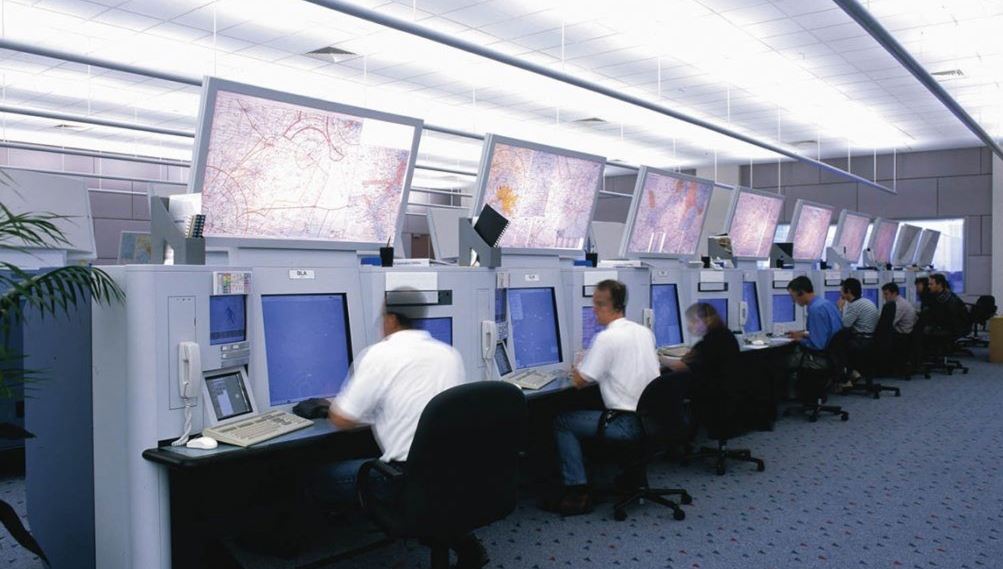
I have been an air traffic controller for nearly 22 years, and I’m lucky enough to be able to say that I still absolutely love my job.  A fun fact about me is that I’m actually trained to work in both tower and approach environments, but I’ve always been grateful that my entire career has been spent working exclusively in air traffic control towers.  There’s a funny, self-aggrandising hierarchy amongst approach controllers in which they believe that they’re the top guns of ATC, and that the tower is where air traffic controllers go to die (we don’t call them figjam for nothing).  I’m not going to get into that debate here, but I will say that every single day I go to work I’m thankful that I get to look out the window and see the aeroplanes I’m controlling, rather than being stuck in a cheerless radar room with row upon row of radar screens and no windows or natural light.

Queen of my domain.
A generic factory floor, oops, I mean radar room. 😉

Truly, one of the joys of my job is just being able to watch the aircraft fly.  In 22 years I reckon I’ve seen over a million takeoffs and landings, so you’d be forgiven for assuming I might be a bit jaded by it all.  But no, I still totally get off on it.  I definitely wouldn’t call myself an aerosexual, but there is one particular aircraft’s takeoff which absolutely fills me with awe and wonder every time I see it, and that aircraft is the Boeing 747.  For something that has a maximum takeoff weight of 442,252 kilograms, the Jumbo jet veritably glides off the runway with such elegance and grace, it still takes my breath away.  

Taxiing for departure at Al Maktoum International Airport. ♥

The first B747 flight took place from Everett, Washington in the United States in 1969, with the model entering service a year later.  Years in the making, the “Dream Team” of over 50,000 employees that worked on the aircraft, produced a remarkable feat of aviation engineering which revolutionised air travel by making it cheaper and easier for people to fly. The Boeing 747, which is capable of carrying 660 passengers (in a single, cattle-class, configuration), is commonly referred to as the Queen Of The Skies and is beloved and revered by aviation enthusiasts all over the world, including me.  It’s no surprise that the 747, with its unique and classic shape is one of the most iconic, popular, and most recognisable aircraft in aviation history. 

The very first B747. Isn’t she lovely, isn’t she wonderful.
The difference between the B747 and it’s predecessor, the B707, is vast. Which is how the Jumbo jet transformed air travel.

How much do I love the B747?  Let me tell you the ways.  I own a clock, a truly magnificent work of art, made from an actual Boeing 747 passenger window.  I love the fact that I have a little piece of flying history up on my wall.  I love that instead of rusting away in some desolate scrapyard heap, part of this remarkable aircraft was salvaged and lovingly handcrafted into a beautiful timepiece.  For over two decades, the window that my clock is made from travelled thousands of miles, at altitudes exceeding 40,000 feet.  Its history no doubt contains tales of severe turbulence, strong winds, rain, freezing temperatures and possibly even lightning strikes.  My B747 has traversed the globe countless times, crossing oceans and deserts, and possibly even poles.  Her ports of call have included New York City, Miami, Cape Town, Singapore, San Francisco, Johannesburg and São Paulo (special shout out to all the aerosexuals out there who keep track of this sort of stuff).

That’s my girl.

Who knows how many passengers gazed out of my window, on their way to a holiday, a business conference or to start a brand new life.  How many people looked through my window with wonder, how many with terror or sadness or with joy.  How many of them had a little too much to drink out of too many miniature bottles of booze?  Who was the youngest person to ever sit in my window seat?  Who was the oldest?  Oh, what stories my window could tell.  How many hard landings did she have to endure, and how many landings did the pilot absolutely glue to the runway?  Did my British Airways 747 ever experience a near miss?  How many times did she have to divert due to a sick passenger, or an unruly one?  How much drama and intrigue unfolded in the galley, long after the cabin lights had been dimmed?  And exactly how many people were initiated into the mile high club?  These are things I’ll never know, but it sure is fun to wonder.  The things I do know about my window is that the registration of the aircraft it belonged to was GCIVM (that’s Golf Charlie India Victor Mike to the uninitiated).  Her maiden flight was on Tuesday, 27th May 1997 and her final scheduled flight was 23 years later, with wheels touching down on Sunday, 15th March 2020. 

Air France’s moving, farewell tribute to their last B747. I’m not crying, you’re crying!!

Sadly, in July 2020 British Airways retired their entire fleet of 31 passenger Boeing 747s due to the sharp downturn in air travel hastened by covid.  I received my clock seven months after my B747 was put out to pasture, thanks to two brothers in England who have combined their love of furniture-making and their passion for aviation to form a business called Plane Industries, repurposing old aircraft parts. 

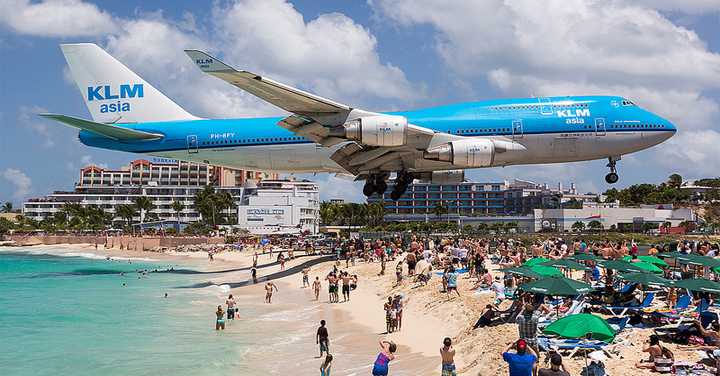
KLM B747 arriving at St. Maarten’s. Pure aviation pornography (oh shit, maybe I am an aerosexual after all)!!

British Airways isn’t the only airline to stop flying the fuel guzzling, four-engine wide-body aircraft.  Demand for the Queen Of The Skies has dwindled in recent years and two years ago Boeing regretfully announced that they planned to stop making the aircraft in October 2022.  It will be a very sad day in aviation when the last Jumbo jet rolls off the production line, but I do feel some consolation that the B747s currently being used as freighters will remain in service, roaming the skies long after I ride the tower elevator down to the ground floor for the very last time. 

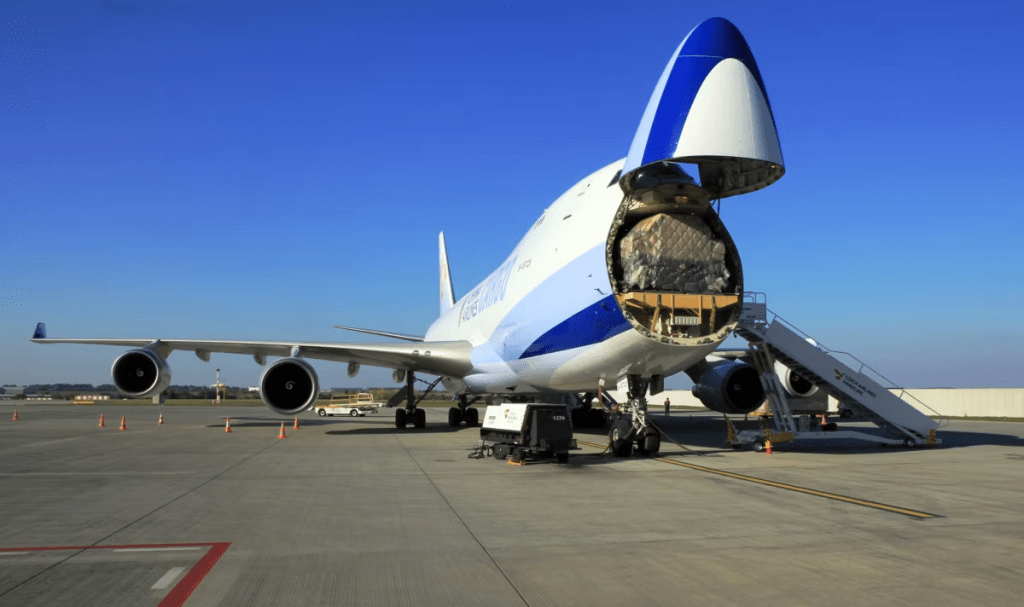
Fill her up, buttercup. I bet you didn’t know that this is how they load cargo onto B747 freighters.

How much do I love the B747?  At the beginning of May, I got my very first tattoo in Amsterdam, at the ripe old age of fifty.  The image is an outline of a Boeing 747 taking off, on the inside of my left wrist.  Though it is beautiful, the aircraft doesn’t just appeal to me aesthetically.  It also represents my work, which I love.  It represents the job that totally changed my life and allowed me to pursue and indulge in my other passion, travel.  It represents my wanderlust, and my desire to soar, and to keep seeking new experiences in far-flung places.  It represents hope, and anticipation and joy. 

My B747 isn’t quite anatomically correct (a lesson in being super precise in telling the tattooist what you want). But I still love her.

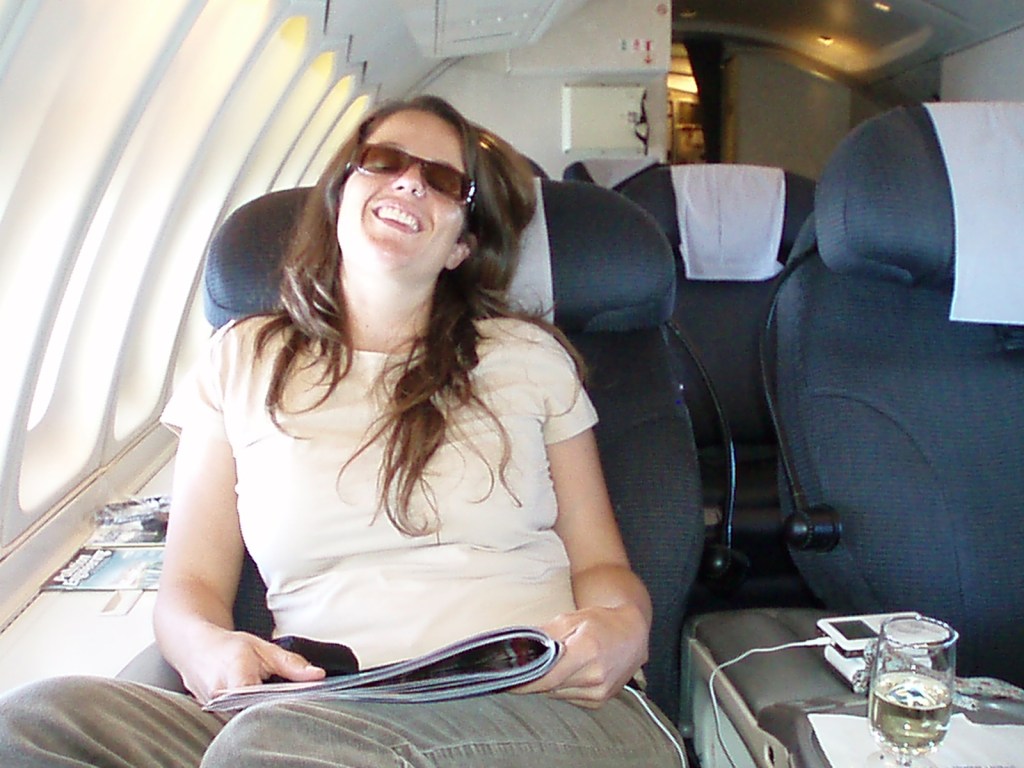
You want to know how much I love the B747? My very first business class flight was in a Jumbo jet.  I was travelling home from a trip to San Francisco in 2006 and the plane stopped over for about an hour in Sydney.  When we re-boarded to fly the final leg to Melbourne I decided to shoot my shot and boldly asked if I could sit in business class, playing the old “I’m an air traffic controller” card. Don’t ask me how, but it actually worked!!  The lovely cabin crew escorted me up that glorious stairway to heaven, also known as the upper-deck, business-class section, where for the next hour they plied me with champagne and treated me like a queen.  Queen of the goddamn skies. 

Business, bitchzzzz!!