Emirati Info

Ejo #20 – A Few Thoughts On Islam (And What It Means To Be Muslim)

“Beware! Whoever is cruel and hard on a non-Muslim, or curtails their rights, or burdens them with more than they can bear, or takes anything from them against their free will; I will complain against that person on the Day of Judgement.”  So said the Prophet Mohammed, preaching tolerance, kindness and understanding towards us heretics.  It isn’t the picture most people have in their minds of the Islamic faith – and that is, perhaps, unfortunate.  The reason could be related to the rising number of acts of aggression against the western world, ostensibly in the name of Islam.  But as many Muslims would be at great pains to point out, these acts of terrorism strike against the very kernel of what it is to be a member of the Islamic faith.


I’m not religious in the least but I have always been curious about the concept. When I moved to Dubai I was able to learn a little bit about Islam.  I could probably write 20 ejos on the subject, but I won’t.  What I’d like to do is shed some light on a belief system and way of life that is sometimes shrouded in mystery, and quite often veiled by misinterpretation.  If I can bust just one myth or clear up one misconception for anyone that’ll make me happy.  I’m hardly an expert though; what follows is just a few personal observations backed up with a bit of research.


Let us begin.  The reason Muslims call their deity Allah is to differentiate him from other gods – it is the personal name of Islam’s one true god.  Whereas the word “god” can be pluralised and genderised, the word Allah cannot.  Allah is merciful and compassionate, and really just a very nice god indeed.  For instance, if you intend to do a bad deed and then don’t actually go through with it, he won’t hold it against you (even though, of course, he is fully aware that you did think about it).  It is only when you act on the intention that it counts against you.  Furthermore, if you truly regret what you did, the slate automatically wipes clean.  The simple act of repentance leads to Allah’s forgiveness.


Some people wonder about the importance of the Prophet Mohammed in the faith.  He was just one of many thousands of prophets, but Mohammed is the greatest of them all because he was the last prophet, the one that completed all of Allah’s revelations and sealed them together to create the teachings of Islam as they have been known, unaltered, for the last 1400 years.  He is second only to Allah in importance.


The word Muslim means “to submit” and Islam is based on its believers living out the will of Allah, as far as humanly possible.  It is founded on five pillars.  They are:

1) testimony of faith, i.e. accepting that there is no god but Allah, and Mohammed is his messenger.

2) praying five times a day;

3) Zakat, which is the giving back to the community of a certain amount of money, usually as a charitable donation;

4) fasting during Ramadan; and

5) pilgrimage to the holy city of Mecca at least once during a Muslim’s lifetime (for those who are physically and financially able).


The second pillar of Islam is prayer.  Muslims are required to pray five times a day– furthermore they must be “clean” when they do so.  A ritual ablution occurs before the prayer and this includes washing the face, arms and feet so as to be pure when presenting themselves to Allah.  To facilitate this in Dubai, every toilet (private and public) has a long hose and nozzle in it so that wherever they may find themselves at prayertime, a Muslim is able to wash in preparation.  It is also why, sometimes, when entering a bathroom after a Muslim you may find it absolutely soaking wet.  I guess in striving to become clean, it is sometimes necessary to create a mess.  You get used to it.


Zakat is the requirement to donate to charity or to give to those less fortunate. Muslims are obligated to give 2.5% of any income they’ve earned for the year which is surplus to their family’s requirements.  This is usually collected and distributed during Ramadan.


Ramadan is the month of the Islamic calendar during which Muslims must fast – refraining from eating, drinking, smoking, having impure thoughts or engaging in sexual activity during daylight hours.  These sacrifices transcend physical discipline and bring the faster closer to Allah.  This year Ramadan has fallen during August, which happens to be the hottest time of year. Fasters have been going without food and water for up to 15 long hours a day, which as you can imagine is super difficult.  Hunger and thirst remind fasters of others who are less fortunate and who go hungry and thirsty everyday.  It also serves as a trigger to commune with Allah, to give thanks, and also to atone for any sins committed during the year.  It is an extremely important time of year for all Muslims.  To read more about Ramadan check out Ejo #9 – Ramadan In Dubai (What It Means And What To Expect).


As with all religions, some things are considered right, and others wrong.  “Halal”encompasses everything which is good (and thus permitted in the eyes of God), whereas “haram” describes the opposite – all which is harmful (and thus forbidden).  The word halal actually refers to a wide spectrum of things, but is most commonly used to describe meat that has been prepared in an approved way. A lot of animals these days are killed by electrocution – but this method is deemed haram by Muslims.  The animal suffers and so it is forbidden to eat its meat.  To be considered humane, the knife that will kill the animal must not be sharpened in front of it.  Animals should be killed quickly, and as comfortably as possible, and one animal must never witness the slaughter of another as this would frighten it, making the meat haram.  The animal should be well fed and watered despite the fact that it shall soon be lunch.


Intoxicants, such as alcohol, are considered haram – the reason being that alcohol decreases your ability to control your own mind and body.  There is an old Islamic fable: “A man was told to either rip up the Holy Quran, or murder a child, or bow in worship to an idol, or drink one cup of alcohol, or sleep with a woman.  He thought the least sinful thing to do was drink the cup, so he drank it.  Then he slept with the woman, killed the child, tore up the Quran and bowed in worship to the idol”.  Being a Muslim is all about controlling your impulses and you attain closeness to God when you restrain yourself from physical and mental urges.  Alcohol takes away all of that restraint, rendering one vulnerable to the temptations of the devil (and anyone who’s ever been drunk can surely attest to that – I know I can!).


The Quran clearly refers to men and women as being equal.  Oppression of women tends to be more culturally and nationalistically based, than theistically.  But often the culture fostering the oppression is so closely entwined in an Islamic identity it is difficult to separate the two.  Although women are thought of as being equal to men, the physical differences between them has been taken into account and because of this women have been granted the right of protection by (and from) men. One of the major components of Islam is modesty (for both sexes, albeit predominantly for women).  As such, men are required to not look upon women sexually and women are required to cover up in public.  Islam sees the covering up of a woman’s body as the opposite of female repression. Because it hides her womanliness they believe that it is really a form of female liberation, allowing her to be appreciated for her character and mind, and not just for her body.  Nowhere in the Quran or in the prophet’s messages does it state that women must cover their faces – to force a woman to do so (as the Taliban do in Afghanistan) goes against the very spirit of Islam.


Even with all this covering up though, occasionally a person might find themselves sexually aroused in a public place by a person who is not their spouse. Hey, it happens!  One of my favourite of prophet Mohammed’s recommendations is that, should this occur to you, you must immediately hurry home to your husband (or wife) and satisfy that sexual urge honourably.  Yipee!


While men and women are created equal, they most definitely have different roles to play in marriage and family life.  The husband is expected to provide for the family and the wife is expected to look after him and the household (including children when/if they have them).  This doesn’t mean a woman can’t go out and work if she wants to.  She can, but she must still fulfil her obligations at home too (what else is new, right?).  The role of housewife and mother is regarded as one of the most honourable occupations in Islam.  Staying home to raise a family garners the greatest respect from the community, because it is arguably one of the most difficult jobs to do.


Polygamy is permitted in Islam but not in the way most people imagine.  Men are allowed to marry up to only four women, and there are many restrictions.  For instance, a man can only marry another woman if he can afford to keep her in the same way he keeps his first wife; giving them the same amount of food, clothing, leisure, living space, time and compassion.  Plus, he actually needs the permission of his first wife in order to take another.  Theoretically, anyway.  Polygamy was sanctioned, initially, with the intention of providing security and a stable family life for the women left behind after the first Islamic war. Rather than leave the many widows and orphans to fend for themselves it was encouraged for families to give them a home – and since a woman and a man who are not married are forbidden from living under the same roof, marriage was the solution.  Today, however, women are able to support themselves.  This negates the requirement for a man to marry multiple women.  Governments look after those in need, providing welfare to ensure financial stability and security.  The burden of this responsibility has been removed from the man, however polygamy (of course) still occurs.


Well, that’s just a drop in the ocean.  If you have any questions about Islam please feel free to ask and I will try and get an informed answer from one of my Muslim colleagues.  Look out next month for another episode from The Misadventures Of Dangerous Doug.
Ejo #16 – Crime In The UAE & Little Moosa’s Tragic Story (Do You Believe In The Death Penalty?)

After reading my ejos people sometimes ask me if Dubai is as wonderful as I make it out to be.  The simple answer is yes, as those who have come  to visit can attest.  But the simple answer is very rarely an accurate one.  The city is not all shopping malls, beaches, restaurants, five star hotels and indoor ski slopes.  In fact, if you scratch a little bit behind the surface, Dubai is not at all what it appears to be.  True it has a low crime rate compared to other major cities, but just like anywhere else in the world there is a dark underbelly hidden beneath the glossy exterior.

I still feel safer here than I did living in Australia.  It’s perfectly safe to leave your handbag, phone or wallet in the car in clear view.  Car theft is virtually non-existent.  And because the consumption of alcohol outside of the home is so regulated, you very rarely hear about drunken punch ups or public violence.  There are no wolf whistles emanating from construction sites, and it feels safe to walk the streets at night (even though just like other cities, some streets feel safer than others).  The city is mostly inhabited by law abiding citizens – simply because the penalties for breaking the law are so harsh.  Most of the time an infraction attracts a jail sentence followed by possible deportation.  This provides a very satisfactory deterrent. 

Nonetheless crime does exist.  Open the pages of any newspaper and you can read about a number of bizarre and unsavoury cases that have gone to trial.  Drug cases, burglary and theft, kidnapping, prostitution and even human trafficking.  And, of course, murder.  Recently I read about a Bangladeshi man who owed one of his friends a few thousand dirhams.  The guy was demanding payment and the Bangladeshi man decided it would be a good idea to kill his friend and keep the money.  He lured the man to his food delivery truck with the promise of payment.  Instead of money though, the man received a knock to the head and was pushed into the back of the truck.  The Bangladeshi man set the temperature to -4°C and left him there to die while he went home to bed for the night.  Early the next morning when he went to dispose of the body he found his friend completely frozen, yet miraculously, still alive – his eyelids blinking in terror.  The Bangladeshi man panicked, fetched a knife and proceeded to cut his friend’s throat from ear to ear.

This was a particularly strange case, however it’s representative of a great number of the types of crime that occur here.  That is, crimes of greed, passion or opportunity, usually involving a friend or compatriot, and committed in desperation.

The most horrific crime that I’ve heard of happened about a year after we moved to Dubai.  It occurred in November 2009, during Eid al-Adha, which is an Islamic feast celebrating Ibrahim’s faith and obedience to Allah in sacrificing his son, and also, Allah’s mercy – it translates literally to “Feast of the Sacrifice”.  It is a very important occasion, as it is a time to bond and connect with family and close friends.  People dress in their very best clothing and prepare great feasts to share with loved ones.  It is a particularly joyous time for kids (kind of like Xmas for the rest of us), as they receive gifts and are free to play and run around the neighbourhood. 

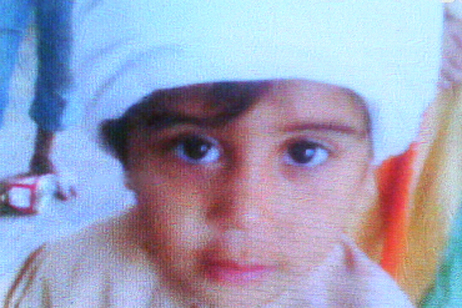
Pakistani father of three, Mukhtiar Ahmed Khudabaksh remembers his middle child, four year old Moosa, being particularly happy and excited that it was Eid.  He remembers that at around 11am that Friday morning, Moosa was sitting right beside him eating cheese crackers, before running out of the house to join the other children playing outside.  It was the last time he saw his son alive.

The next time he saw Moosa, it was to identify his body in the morgue of the local hospital.  The family received no immediate information about Moosa’s death and assumed that, since he’d been found in the bathroom of the mosque next door to their house, that he’d slipped and fatally struck his head on the floor.  Of course they were devastated.  But they had no idea of the horror yet to come.  The next day they got a call from Police saying that Moosa had been murdered by a 30 year old Emirati fishing boat captain.  They had the man in custody and he had confessed to the killing.  Can you even begin to imagine the shock and anger his family felt towards this man??  And those feelings would have amplified exponentially when they found out the details of how their young son died.

Little Moosa


According to a statement made by Rashid Al Rashidi, the man charged with the murder, he’d been drinking that morning and when he’d seen Moosa playing outside he’d lured him to the nearby mosque with promises of Eid gifts.  Moosa, excited at the prospect of more gifts, and having no reason to mistrust the man, followed him into the mosque where Al Rashidi led him into the bathroom.  While hundreds of other men were praying in the main room, and while an Imam intoned the holy prayer, Al Rashidi raped the little boy. 

Details of what happened to Moosa have not been released, and I am very grateful for that because I am haunted enough simply by the idea of what suffering that little boy had to endure.  Al Rashidi confessed that Moosa was shouting in pain during his ordeal, and when he heard someone else come into the bathroom he covered Moosa’s mouth with his hands to keep him quiet.  When that didn’t stop the little boy from screaming, he slammed his little head hard on the floor.  Twice.  He then fled the scene, leaving Moosa to die on the bathroom floor.  After he was caught, he admitted to intending to rape Moosa but said that he never planned to kill him.  He showed remorse during the hearings and pleaded for mercy from the victim’s family and the courts. 

The reason I am writing about this is mostly for myself.  It has weighed on my mind for a long time and I’ve needed to sort out in my head whether or not I believe he deserved the sentence he received – death!  At 8.35am, on 10th February 2011, Rashid Al Rashidi was executed by firing squad, in front of a few witnesses, including Moosa’s parents.  Did he deserve mercy when he showed none to a small, defenceless boy?  As the prosecution stated, “he raped and murdered an innocent angel in the house of God”.  Wasn’t Rashidi’s own death more humane and civilised than the one which he inflicted upon Moosa? 

Moosa’s family will never have him back, and they will forever live with the pain of what happened to their little boy, but following the execution his father said that he had “finally found some peace”.  And I understand that.  After the execution, he went and prayed in the very same mosque in which his son was killed.  This was not an act of forgiveness, though.  From the moment he found out about what Al Rashidi had done to his son, Mukhtiar Ahmed Khudabaksh had campaigned for the death penalty and said that he could never forgive the man who killed his son.  He said, “I don’t need anything in life except his death.”  And he got it.  Will Rashid Al Rashidi’s execution make him happy?  No, probably not.  But I believe that it will allow him to feel that justice has been served.  That the ultimate (and appropriate) price has been paid for the crime committed against his son.  Anything less would have been a miscarriage of justice.

I’m sure some of you are probably against capital punishment and, of course, everyone is entitled to their own opinion.  I don’t particularly condone it, but I do think that in this case it was justified.  I’d love to hear what anyone else thinks about it. 

Sorry to hit you with the hard and heavy stuff today.  Next month it’ll be some easy breezy reading with more adventures from Dangerous Doug.  See you then.

Ejo #14 (Part II) – Invited To An Emirati Wedding; An Inside Look At What Happens Behind The Curtains (Plus: A Very Dry Valentine’s Day)

So, last time we spoke, I was describing how the white room had suddenly turned black as all the women threw their abayas and headscarves on.  This augered the imminent arrival of a MAN, and no man could be allowed to feast upon the glorious bounty of skin and curves on display in the room!  So a swift cover up took place.  And indeed, a moment later, the beaming bride and groom entered the room to wild applause.  He was dressed in the national dishdash and ghoutra.  She was glowing in what looked like a Vera Wang strapless gown.  Arm in arm they slowly marched down the red carpet, through the meringue tables, onto the catwalk and finally to the stage where they sat down beside each other on the chaise lounge.  All the while, a camera on a 30 foot hydraulic boom captured their every step and broadcast it onto a massive screen so that even us plebs up the back could get a good view.

Then the entertainment started.  A troupe of male and female dancers twirled up the red carpet and onto the catwalk where they spun around, accompanied by a drummer beating a tribal rhythm on a massive drum which was slung around his neck.  It was hypnotic and not dissimilar to what I imagine a whirling dervish is like, the drum beat pounding like a giant pulsating heart.  Wow – it didn’t last very long, perhaps five minutes, but it left a lasting impression.  And it was reluctantly that I snapped out of my trance-like state when it came to an end.  The dancers collected the groom and they all skipped out of the ballroom leaving us ladies to ourselves again.  Their departure heralded the prompt flinging off of the abayas, producing the effect of a sun, rising on the black dawn, to reveal flowers of every colour in bloom.

Suddenly, one of the lovelier blossoms, draped in a dusky rose, slinky sheath, was standing before us and introducing herself as Omran’s wife, Khulood.  She apologized profusely for not being able to come earlier as she’d been with the bride, getting ready.  I was amazed that she’d even come to talk to us at all, but if I’d learned anything from this experience it’s that Emirati hospitality is second to none.  Once you are welcomed into the fold, you are treated as a very special guest and taken very good care of.  Khulood was so warm and open and lovely, just like her husband.  I simply couldn’t stop smiling at her.  She quite possibly thought I was deranged.

Regardless of what she thought though, she didn’t show it, and in fact she asked us if we would like to go and chat with the bride who was still reclined on the white couch, graciously receiving visitors.  So we all made our way over to the catwalk.  I took a step onto it and realised it was somewhat shiny and slippery.  And so it was that my fate flashed before my eyes.  I would be strutting up the catwalk towards the bride, 550 pairs of eyes on the woman wearing overalls and 5 inch stilettos, and as I approached the blushing bride I would trip and fall onto her, knocking her (and the lounge) over, arms and legs akimbo, dress up over my head and my Spanx exposed for the whole world to see (Svetlana, I could already hear your hysterical laughter echoing through my head as I took my next step).

OK, so it didn’t happen, but that’s only because I very carefully, very gingerly and very self-consciously tottered the length of that catwalk to the stage.  I’m positive I looked like an idiot – but, oh well, you’ve gotta do what you’ve gotta do.  I joined my colleagues around the beautiful bride and we congratulated her, complimented her and posed for photos with her.  Again, I was bowled over by Arabic hospitality.  This woman had never laid eyes on us before and yet she treated us as she had been treating all her friends [all 550 of them], with warmth and generosity of spirit.  She truly was a beautiful bride, inside and out.

I tottered off the stage, and with the formalities over, it was time for dinner.  Yep, at 11.30pm.  Those Arabs sure know how to party.  In the ballroom’s anteroom, a full buffet had been laid out and there was plenty to choose from though unfortunately not much of it was local cuisine.  A sample: butter chicken, lemon chicken, chicken biryani, mutton biryani, fish biryani, fried rice, beef stroganoff, beef fillet, dahl, dim sum, fish & chips, jumbo grilled prawns, pasta and much more (including the token Arabic bread, dips and salads).  Then, there was the dessert table, groaning under the weight of mini versions of crème brûlée, chocolate fondant, panna cotta, summer pudding, caramel tarts, pecan pie, cookies, cheesecake, meringue, chocolate mud cake, sponge cake, jellies, fruit salad and about ten million other sweets that I dared not even look at for fear it might bring on a sudden and acute case of diabetes.

After the meal the lights were dimmed even further and a spotlight was focussed on the catwalk where a number of pretty young ladies holding the trains of their gowns had gathered to dance.  It was awesome to watch the pure abandon with which they moved their bodies in time to the music and I was struck with the contrast of seeing them here in a room without any guys in it, comfortable in their revealing dresses, comfortable showing off their gorgeous hair and even a good amount of cleavage, as opposed to when I see them in the outside world all wrapped up, demure and modest.  And I felt really lucky to be a witness to it.  I got a glimpse into a world that not many outside people ever get to see.  I know words are never going to be enough to describe it properly, but I’m hoping that by reading about it here, you too can transport yourself there and see it all in your mind’s eye.

OK, so before I go I’d like to say Happy Valentine’s Day to everyone for whom it actually means anything.  It’s never meant much to me but particularly since getting together with David it’s meant even less because his birthday falls on the 15th so if there’s to be any romantic dinners or gestures I usually save them for the next day!  Usually Valentine’s Day is quite a big deal in the UAE.  All the hotels and restaurants have romantic Valentine’s packages and of course they make a bucketload of money out of it because people are (for some reason) willing to pay premium price on this day.  Now, Dubai might make concessions to the expats for these kinds of occasions but they are first and utmost an Islamic state.  And this year, the Prophet Mohammed’s birthday (Peace Be Upon Him) happens to fall on the 14th February.  Oh, how nice, you might think, a double celebration!  Well, think again.  This is a very religious holiday and thus the entire day is decreed a ‘dry’ day – which means that no alcohol is allowed to be served on any public premises anywhere.  At all.  No matter what!  So, anyone wishing to celebrate Cupid’s Day witih a glass of something special will have to make do with that something special being orange juice.  Don’t worry about us though, I’ve put a bottle of something very special indeed in the fridge to chill and we’ll be having it tomorrow to celebrate my lovely husband’s birthday. 

Next time, more on Doug (by popular demand)!

Bye for now

Chryss

PS David says g’day.