Good Life

Ejo #131 – My Diary: The Carnivore Experiment – Part 1

After talking to my friend Chris about the benefits of the carnivore way of eating, I was inspired to try it myself. After all, I’m nothing if not adventurous. So David and I have committed to eating nothing but animal products for 30 days. Here’s how the first half has panned out.

DAY 1 (Monday, 16th November 2020)
Not off to a great start, actually.  Oops.  I’m starting to think that perhaps I should have done a little bit more prep work for our meaty adventure.  I arrogantly thought that it would simply be a case of, “Well, I’ll just eat some meat and see how things work out”, but it turns out that a carnivore diet actually requires a little bit of meal planning, particularly if you’re a shift worker. 

I did make the effort to cook up a beef and bone marrow burger for today’s lunch at work.  But because I was working in the office and had a busy day, I didn’t have the chance to eat lunch until 1.30pm.  I was absolutely fucking starving, which goes against the ethos of carnivore: eat when you’re hungry and eat until you’re full.  I quickly microwaved my grey lump of meat and shoved it down my gob in between administrative tasks.  I will not lie.  It wasn’t very nice.  I’m definitely going to have to sit down and figure something out for work meals, especially as some days I eat both lunch and dinner in the tower. 

Dinner at home was much better.  We roasted some organic chicken thighs and melted a little bit of butter on top.  What’s not to like about that. 

Oh yeah, David and I took some horrible pictures of each other in our underwear for the “before” snapshot (and no, these photos will never see the light of day, ew!).  We also measured our chests, waists, hips, upper arms and thighs.  This was about as much fun as it sounds.  While the primary goal of this experiment isn’t actually weight loss, it will probably be a welcome by-product, and it’ll be interesting to compare our bodies after a month of eating only animal products.  I also had my blood lipids tested yesterday so that I can see the effect on those results as well.  Convention would have us expect that my cholesterol will go through the roof.  Let’s wait and see. 

DAY 2 (Tuesday, 17th November 2020)
​​​I worked in the office again today and even though I woke up feeling pretty good, a headache galloped in at around 8am.  I also started to feel really lethargic and sleepy.  I wonder if this is what’s known as “keto flu”.  I looked it up and it appears that the symptoms do include headache, as well as lethargy, irritability, nausea, foggy brain and difficulty sleeping.  Symptoms tend to appear up to a week after starting a ketogenic diet, i.e. a diet of very low or no carbohydrates in which your body switches from burning glucose to burning fat.  I’m hoping that these symptoms all resolve fairly quickly and that I start to feel some physical and mental benefits soon.  It’s only Day 2 though, so I know I need to be patient. 

I had a very tasty lunch at work today.  David and I cooked up some salmon fillets last night and I heated mine up in the microwave at work.  It was SO much better than the burger.  Definitely something to put on the work meal roster. 

When I got home I was so exhausted I basically changed out of my work clothes and crashed on the couch.  And when I woke up it took me a good couple of hours to recover.  Bloody hell. 

Dinner was another of those beef and bone marrow burger patties, which actually tasted so much better freshly cooked than reheated the next day.  Oh, and a fried egg.  Weirdly, I think I might not be eating enough.  But I’m simply not hungry.  The amount of fat we’re consuming seems to be satiating me, which is great, but I am concerned that perhaps I’m not getting enough caloric energy.  I need to do some more reading about it. 

DAY 3 (Wednesday, 18th November 2020)
I woke up feeling good again, though that could be because we’re not drinking booze. Wine is grapes, people.  Physical scan: my right elbow felt achy and my lower back hurt when I got out of bed.  I also had a pain in my lower left abdomen, which is caused by a pesky ovarian cyst.  It’s old news, but something I am actually hoping might see some improvement.  Other things I’d like to see improve?  Where do I fucking start.  I’ve had plantar fasciitis in my right foot for a couple of years.  It comes and goes, and mostly only hurts in the mornings but I’ve heard that eliminating plant products from your diet can help this to resolve.  And I have firsthand anecdotal evidence from Chris himself that it does.  Fingers crossed.  For about a year I’ve experienced varying degrees of soreness and achiness in both of my elbow joints.  Whenever I move my left arm a certain way I feel pain, deep in my shoulder joint that radiates all the way down my arm.  My left hip and pelvis almost always hurt.  So yeah, I’m hoping that all the wonderful ways in which Chris’ body became healthier and stronger when he switched over to carnivore might also happen for me.

Today my headache rang the doorbell around 3pm.  It wasn’t a particularly bad headache, but it was persistent, and somewhat weird.  Not a regular kind of headache at all. My head felt spongy and heavy.  Like a medicine ball.  I drank heaps of water so I don’t think it was due to dehydration.  Is it food related?  Who knows.  It’s early days yet and I’m really still wrapping my spongy head around everything. 

I had a deli-style lunch at work today.  Some salami, prosciutto, smoked salmon, a couple of boiled eggs and a piece of cheese.  It was nice, and actually so filling that I couldn’t even finish it all, in one sitting.  While cold cut meats are very convenient, I think we’ll eat them scarcely, if at all.  It’s not exactly stuff that our bodies were evolved to eat, so we’ll try to stick to animal products that have been messed around with as little as possible. 
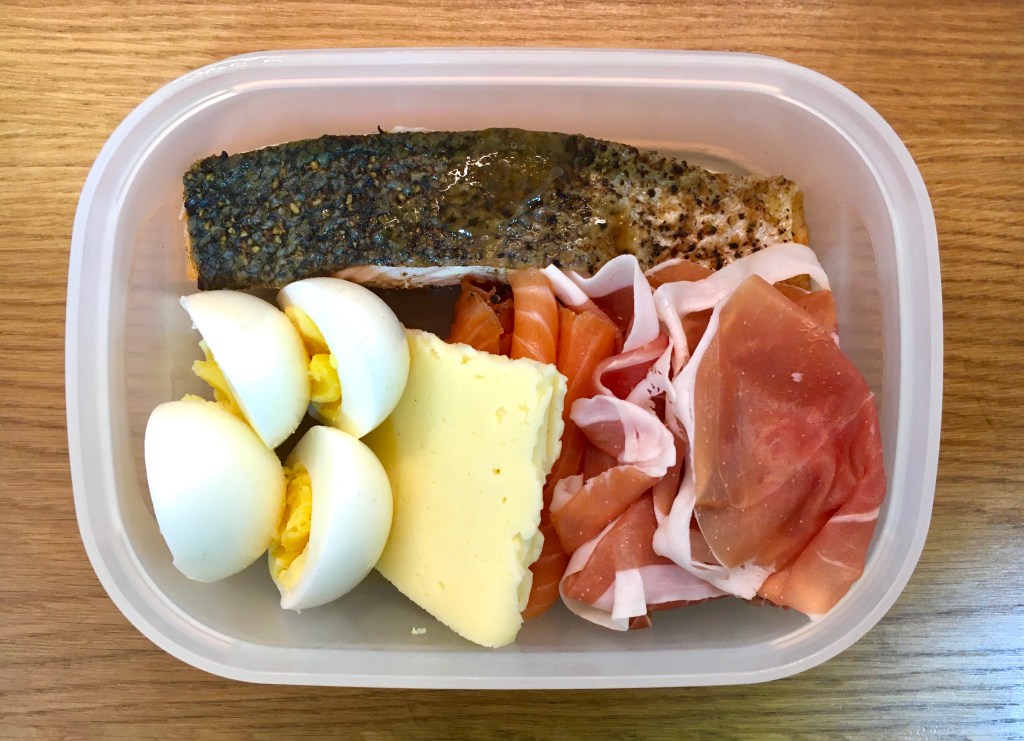
Animal products

DAY 4 (Thursday, 19th November 2020)
It gives me no pleasure to talk about this, but in the interests of full disclosure, here goes.  I am pooping a lot.  Maybe six, seven times a day.  Runny, gassy, small (but frequent) amounts of lumpy shit.  Sometimes explosive.  I did read that it can take a couple of weeks for the gallbladder to adjust to higher levels of fat, so yeah, I guess that’s one more thing I need to be patient about. 

For lunch today, we pan-fried some salmon fillets in a little bit of butter and it was great.  Simple, yummy and easy.  And for dinner we ate boneless pork chops (organic, of course) with a fried egg.  So far, even though I think about veggies wistfully, I can’t say I’m missing them physically.  I’m not experiencing any cravings yet.  I wonder, will I crave them?  Hmm, food for thought.

DAY 5 (Friday, 20th November 2020)
Lectins are proteins that are found in all plants (though some contain more than others).  There’s a bit of a debate about whether they are harmful to human beings but I did read an article which posited that lectins are known to disrupt and modify hormone functions.  As you can imagine, that would fuck up lots of different parts of the body, including (drumroll….) my crappy reproductive organs.  I don’t know if a lifetime of eating tomatoes is the reason I have uterine fibroids and ovarian cysts, but after learning this information, I’m very keen to see if going 30 days plant-free results in some improvement in my symptoms, namely the constant pain in my lower abdomen. 

We are both feeling good, but not heaps different, to be honest.  Still waiting for the miracle change.  But hey, maybe it happens more slowly, over time.  Maybe 30 days isn’t even enough.  That’s why I’m writing this diary.  I want to keep track of things, and perhaps even help another fellow newbie carnivore navigate their own journey. 

For lunch today, we cooked up a burger patty each.  We bought some ribeye mince made from 100% grass-fed and grass-finished beef.  It’s amazing what you can buy online these days.  For dinner we grilled some organic chicken thighs.  So yummy.  We’re certainly eating well.  Unfortunately though, I am still experiencing tummy upsets and as I prepare for my night shift, the rumbling in my belly fills me with fear and trepidation.  During nights I work in the tower alone for two and a half hour sessions.  I need my butt to behave. 

DAY 6 (21st November 2020)
I started the day feeling pretty good, despite having worked a night shift last night.  I woke up feeling physically stronger and more energetic than the last few days, as well as mentally sharper, clearer and more focused.  I banged out a great yoga session and did a few chores around the house.  After a 1pm lunch of a burger patty and fried egg, I did kind of parachute down a little bit, but I think that’s more to do with not having had much sleep in the previous 30 hours.  This is the life of a shift worker, unfortunately.  And that’s OK, I’m used to it.  What is noteworthy though, is that a week ago I would have needed a nap in the middle of the day.  It’s 6pm as I write this, and I am tired, but I’ll easily make it to bedtime.  Though it might have to be an early one. 

It’s funny, having given up booze at the same time has been eclipsed by the huge change in what we are eating.  So even though I haven’t had a drink in six days, it’s barely registered.  And that’s cool.  For snacks today we munched on a boiled egg each, and a couple of teaspoons of wild salmon roe – not only is this decadent and fucking delicious, it also provides some of the nutrients that a diet devoid of plant products may be missing out on.  Stuff like Vitamin E and magnesium.  And for dinner I’m preparing some organic chicken wings to bake in the oven. 

We would normally have these with the world’s hottest hot sauces, but hot sauces are made from chillies which are plants so we went without.

DAY 7 (22nd November 2020)
Well, today was a bit of a wild rollercoaster ride.  I woke up feeling really great.  My energy was back, better than ever.  I was bouncing around the house, full of beans!!  For lunch we had a steak cooked in butter.  Great! So what happened?  About an hour after lunch, I started feeling sluggish, and mentioned that to David.  We wondered why that would be and decided to snack on a piece of smoked salmon.  Five minutes later I felt like I was going to faint.  I wouldn’t say I’m prone to fainting, but I have fainted a couple of times before, so I recognise the signs.    

What is vasovagal syncope??  The internet defines it as: “a sudden drop in blood pressure, which causes your heart to slow down for a short time. As a result, your brain may not get enough oxygen-rich blood, which causes you to pass out”.  Yep, sounds about right.  I went to lie down for a bit, had some salt and recovered.  No big deal.  An hour later I was feeling energetic and back to normal.  I don’t know what caused it, and I’m not going to be alarmed.  I will just keep an eye on my blood pressure, which always tends towards the low side anyway. 

We’ve gone a little nuts and bought ourselves an airfryer and an Instant Pot which we are using as a pressure cooker to make our own bone broths.  We whipped up a batch each of beef and chicken bone broth.  I’m so proud of us. 

Thank you grass-fed cow, for all that you have done.
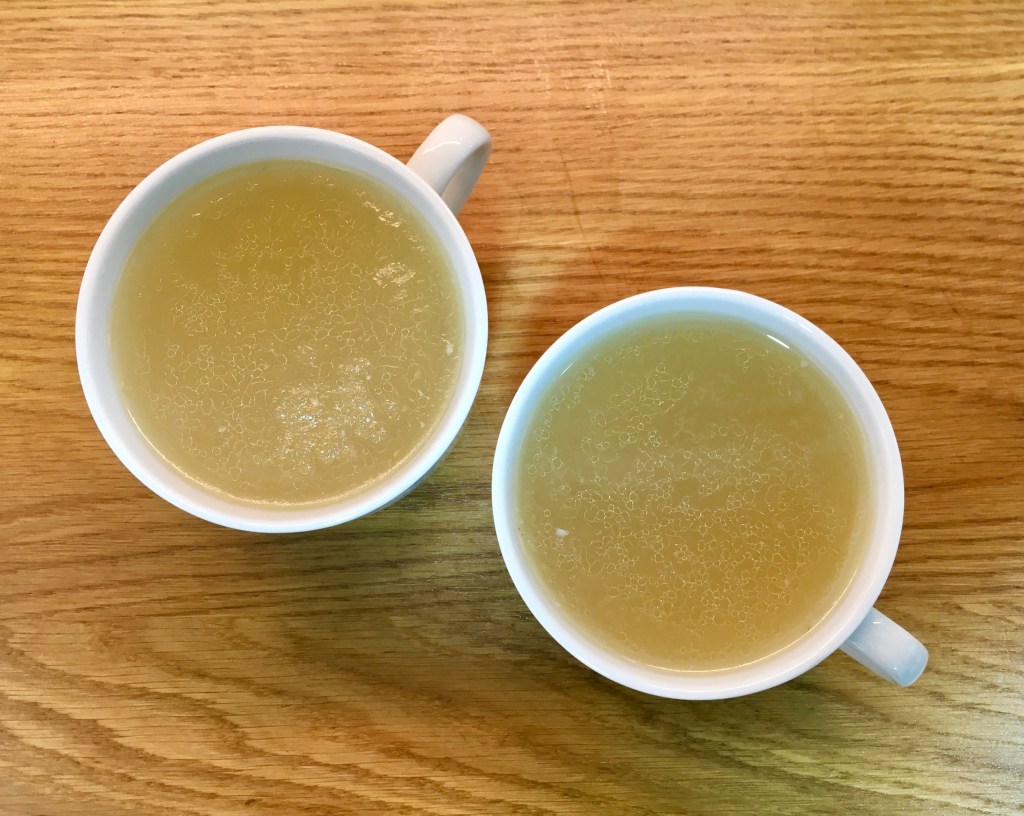
Not only is bone broth packed full of protein goodness, it also contains A LOT of collagen and gelatin, both things that our bodies love. This is what it looks like straight out of the fridge.

DAY 8 (23rd November 2020)
I’m definitely waking up feeling less achy, and today I had almost no issues with my plantar fasciitis, which is astonishing because it’s something I’ve grown accustomed to.  I just wake up every day with a sore foot.  I really feel that even though it’s all very incremental, my body is starting to feel different.  Unfortunately it’s not all good yet.  I had another “episode” today.  Early in the afternoon, I just started feeling generally unwell, and then later I felt lightheaded and weak.  I also felt nauseous, and thought that I might vomit (even though I didn’t).  I rested and David brought me some of the amazing bone broth that we made yesterday.  It was so restorative and comforting.  I took it pretty easy for the rest of the night, and I feel OK now. 

David cooked dinner in our new air fryer.  This thing is amazing.  It roasted us a small organic chicken in about an hour.  It was juicy on the inside and the skin was crispy and delicious.  We split the chicken and had half each. 

We absolutely demolished this yummy airfried bird.

DAY 9 (24th November 2020)
I’m lucky to have my friend and carnivore mentor, Chris, on speed dial to support us in our meaty quest.  He’s super keen to see us get great results from this new way of eating and I really appreciate that.  When I told him about my afternoon slumps (let’s call them slumps, OK?), he suggested that my electrolyte levels were too low, perhaps as a result of drinking too much water.  So yeah, apparently in my quest to hydrate, I’ve been flooding my body and flushing all the good electrolytes away.  Things like sodium, magnesium and potassium.  So today, I made an effort to drink less.  Which sounds nuts, but there you go.  And I also made an effort to eat more salt (I consumed 12g of beautiful, pink Murray River Salt, which equates to around 3.8g of sodium).  I mainlined the stuff.  Literally spooning teaspoons of it into my mouth.  And it made me feel better.  I still didn’t feel 100% this afternoon, but I didn’t need to put my head between my legs to stay conscious.  Let’s put it that way. 

If the idea of scarfing salt like that seems shocking, perhaps it’s because we are conditioned to think that salt is bad.  That it causes high blood pressure, and therefore increases the risk for heart disease.  But that might not actually be the case.  A 2011 meta-study dispels that myth. Salt is essential for the body, and when you stop eating carbohydrates a lot of essential minerals (electrolytes) get flushed out, leaving you deficient. Honestly, the only thing that has made me feel better the last few days has been copious amounts of salt.  I am also having magnesium supplements at night to make sure I’m not deficient in that.  The only thing I’m not supplementing is potassium because I can’t find it in any of the stores here.  I might have to order it online. 

I had a midday appointment today so we had an early, standing lunch of tinned mackerel, a slice of duck liver pâté for the huge kick of vitamin B12, and a piece of cheese.  That kept me going for a while.  When I got back home I had a cup of chicken bone broth that David had whipped up while I was gone (yes, I am the luckiest woman alive!!).  And for dinner, we enjoyed a Maryland chicken each, roasted to crispy, juicy perfection in our new air fryer. 

DAY 10 (25th November 2020)
I had an offsite work meeting at a café today.  There weren’t heaps of options available to me on the menu, but I was still able to stick with my carnivore diet and ordered three eggs fried in butter. 

If you do need to eat out, there’s usually something you can get from the menu that is carnivore.

Unfortunately I still haven’t mastered the water/electrolyte balancing act I need to avoid feeling faint and weak in the afternoons.  I know when I do it will pay off, so I’m going to persist.  I won’t let this glitch bring me down. 

During the day I snacked on a boiled egg, some cold boerewors sausage that David grilled yesterday, and a cup of chicken and beef bone broth (the combo is to die for!!!!).  Dinner was some fatty lamb chops under the grill.  Nom nom. 
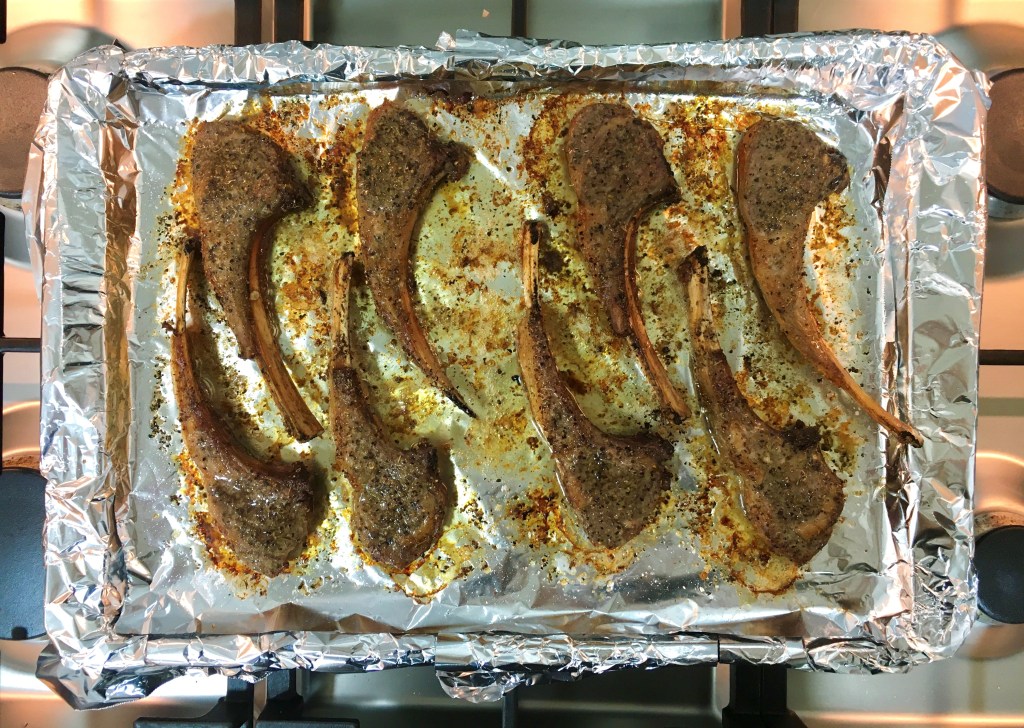
Fatty goodness. Can you believe I am not missing veggies at all.

DAY 11 (26th November 2020)
OK, I think I might have figured out the solution to my electrolyte problem.  Before I even started this experiment, Chris sent me the recipe for an electrolyte replacement (kinda like the carnivore version of an energy drink).  Because I hadn’t been able to find potassium chloride, I was holding off on making it.  Silly girl.  Anyway, today David found some in the supermarket and I made up a batch and immediately felt my energy increase.  I felt like I was once again walking on solid ground, and that’s such a real relief.  I can’t be going to work feeling light headed.  That won’t track. 

So, what’s the drink?  It’s called snake juice (of course), and it’s very simple to make.  To a litre of water, you just add ½ teaspoon each of bicarbonate of soda (for the sodium bicarbonate), salt (for the sodium chloride) and NoSalt or other salt substitute (for the elusive potassium chloride).  Mix it all up and drink a glass and you’re good to go.  I’ve drunk two glasses of it already and I feel great again.  Huzzah!!! 

Today’s lunch was a Scottish salmon fillet pan-fried in a little butter.  And dinner was smash burgers.  Very yum. 
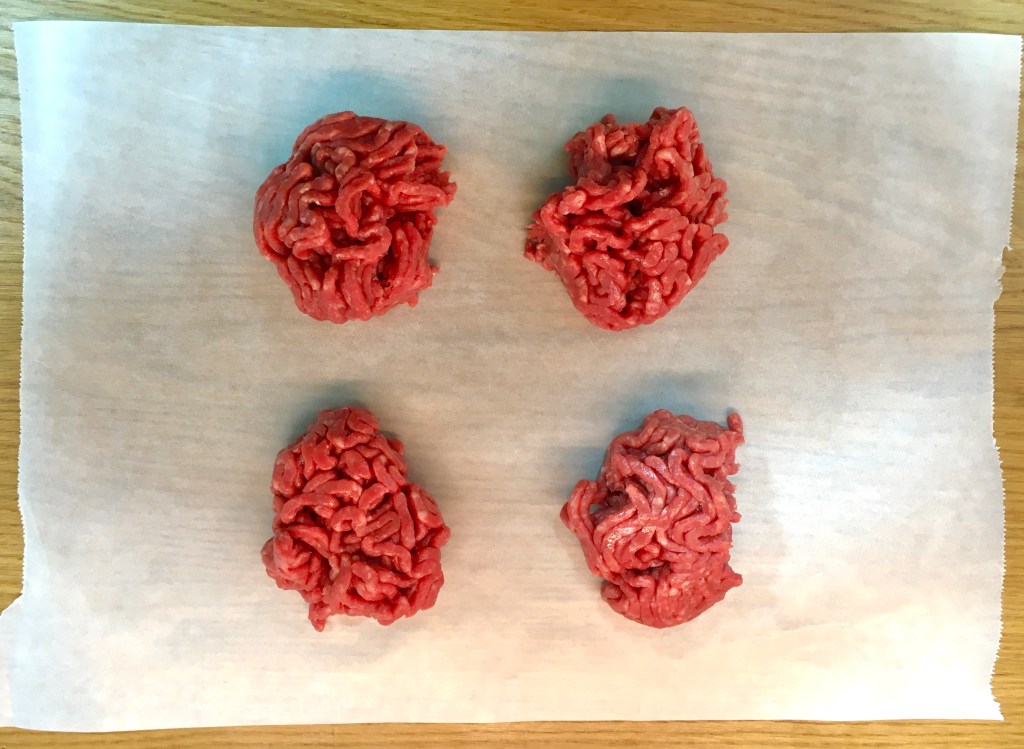
Smash burgers are what they sound like. Grab a fistful of mince, chuck it in a pan and smash it with a spatula. Bob’s your uncle.

DAY 12 (27th November 2020)
I had a morning shift today so was up at 4am.  Bleurgh.  I felt great for most of the day and was actually jumping around in the tower (though the five espressos I had might have had something to do with that).  It was a relief to have so much energy and clarity because I NEED to not feel lightheaded when I’m working.  I can’t be having any fainting spells.  If that felt even close to happening, obviously I’d have to give up this experiment. 

Despite feeling good at work, and despite drinking snake juice all day, when I got home I just flopped onto the couch for an hour, fatigued and weak.  I am very keen to figure out what’s causing my mental and physical afternoon slumps so that I can do something about it.  It’s so frustrating feeling so let down by my body. I’ve read about how long it can take for your body to transition though, and I’m not giving up. It takes some people six months before they adjust. I’m hoping it won’t take me that long. When I woke up David brought me a cup of chicken bone broth.  I felt really good afterwards and we enjoyed a very tasty air-fried roast chicken for dinner while we caught up on Season 2 of The Crown.     

DAY 13 (28th November 2020)
I really wanted to attack this dizziness problem today, so mid-morning I pre-emptively had a cup of chicken bone broth, since it seems to always perk me up.  I’m starting to think that I’m not ingesting enough protein, so the broth is perfect for that.  And it did help.  David has really taken to our new kitchen appliances which is so awesome. He made us scotch eggs for lunch.  And even though I did have a bit of an energy slump after eating them, I kept up my electrolytes and salt intake and powered through without needing to rest.  Is this a turning point for me?  I fucking hope so because I’m getting pretty sick of it. 

DAY 14 (29th November 2020)
I woke up with a goddamn hangover today.  Well, not literally because I haven’t drunk any alcohol in two weeks.  But it felt like I’d been hit by a freight train.  I had a headache, I felt swollen and puffy and I was groggy.  Ugh.  WTF!!!!!  Thankfully a coffee, followed by a yoga session helped brush away the cobwebs, and before I knew it I felt great.  I didn’t experience any major energy slumps or dizziness for the rest of the day so hopefully I’ve turned a corner. 

Today we decided to eat lunch before work (which means we ate at 11.30am). I’ve never done this before. I usually eat lunch at 2pm when I’m working an afternoon shift, but hey, I’m prepared to roll with the punches.
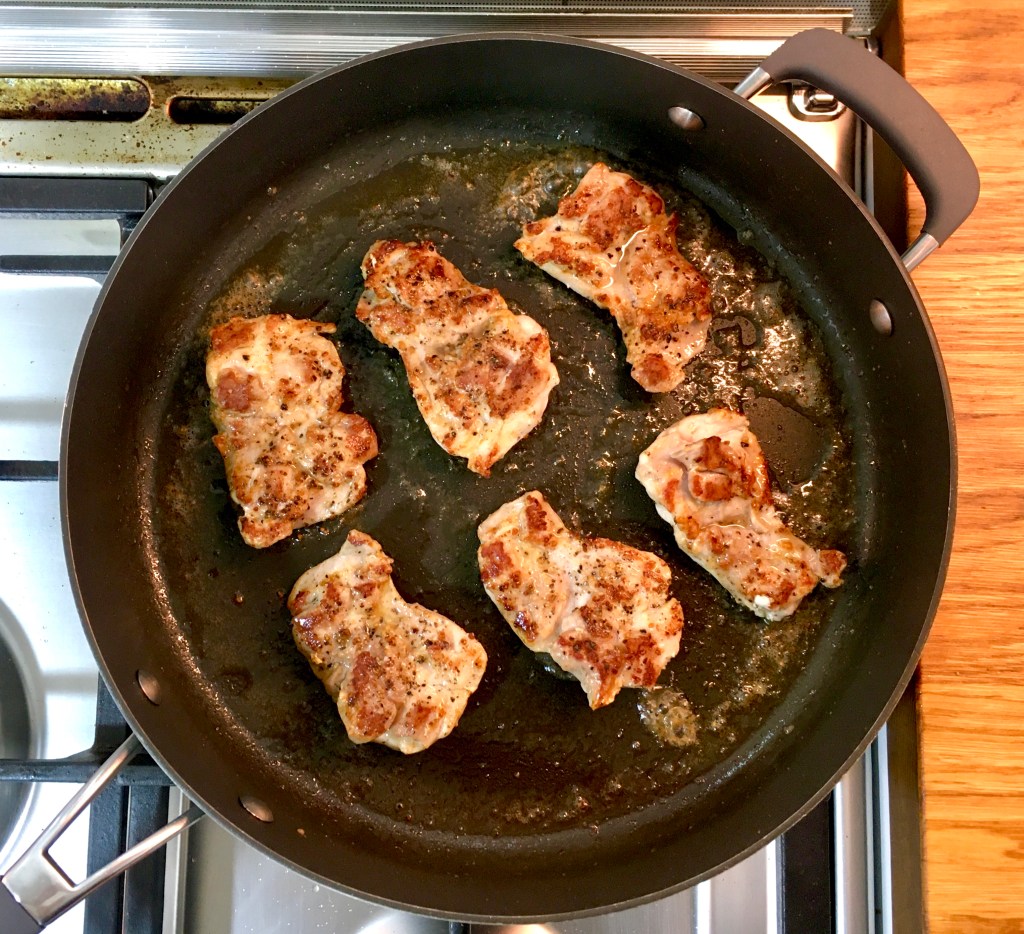
Chicken thighs panfried in butter, makes for a delicious lunch.

DAY 15 (30th November 2020)
I feel great today.  Back to normal.  Better than normal.  YAY!!!!!!!!!!!!!!  Fucking yay!!  You’ll also be pleased to know that my gall bladder has stepped up to the plate and started properly processing all the extra fat I’m eating.  This means we don’t need to talk about my bowel movements anymore.  Phew! 

David and I went shopping at the local organic store and saw a cut of pork called neck steaks, which we bought for lunch. I’ve never cooked with this cut of meat before and was pleasantly surprised at how easy it was, and how goddamn delicious it turned out. YUMMO!!! How wonderful that this experiment is introducing me to new foods, and things that I probably would never have tried otherwise. We also made up a fresh batch of chicken bone broth, which I’ve come to regard as an elixir.

After panfrying these about five minutes each side, I let them rest and then sliced them into strips. Every mouthful elicited a moan of culinary pleasure.
Chicken bone broth. Life giving!!!!!

And for dinner, more of those incredibly tasty smash burgers, topped with cheese and grilled bacon. LOL!!! What did you have for dinner? 😉

Continued in Part 2.

Ejo #130 – The Extraordinary People I Know: Chris Diprose

I first met my friend Chris in 1995 when I was living with The Boys (shoutout to Andy, Matty and Mike) in a share-house called Delmore Mews. One day this tall, lanky 19 year old rookie cop just turned up and became part of the furniture (I’m assuming one of the guys invited him over, but who really knows, it was so many years ago 😉). Twenty five years later, we’re still in each other’s lives (and you might even recognise him from our big Vietnam motorcycle adventure of 2012). It’s funny, when you’ve known someone that long, you see them change and evolve and grow. Over the years I’ve watched Chris metamorphose many times, but a common thread in all of his evolutions has been his intensity and commitment to whatever he sets his mind to do. We may not always see eye to eye on everything, but something I’ve always admired about him is that he puts in the hours, he puts in the work and he goes all-in on whatever he focusses on. And I find that extraordinary. Which is why I wanted to talk to him for this ejo.

So Chris, you weren’t in the police force for very long before you moved into computer programming. And I’ve always been fascinated by how you then pivoted that into building a very successful online sex toy store. Walk me through the full three acts of that business.
So, I started out programming in 1998, and in 2006 I went travelling for a year. While I was away I got interested in search engine optimisation (SEO), which is structuring and marketing your website in such a way as to harness the traffic from search engines. When I returned from overseas I got more heavily interested in that, and it led me to work for a digital agency, as head of their Online Marketing, working with Honda, Bunnings, Myer and the like, to help them with their SEO strategy. When you’re helping other companies really push their brands, driving traffic to their websites, it’s not such a long jump to think, maybe I should be doing this for my own business.

So, I first started an online business with a good friend of mine, Pip, selling UGG boots. We grew the business so quickly that our boot supplier, Emu, actually withdrew supply of boots to our little company because they were worried about the impact our huge orders would have on the physical shops in the UK that were buying the same product. So one of Pip’s other friends bought my share (I made a bit of a profit from it) and they went on to manufacture their own brand.

After this experience I was thinking, “What is the most highly sought after product online?” Actually, it’s two things, more closely related than one might think! Baby stuff, and sex toys. Baby stuff includes clothing (which can be problematic for online sales due to sizing) and prams. Sex toys, in comparison, are small, light, discreet and people want them delivered. The choice was obvious to me. I started the business and quickly grew it to be in a very dominant position. We were #1 for all major terms in the search engines. We had big numbers of web traffic and sales. We were turning over large volumes of orders, and had around 8-10 employees at one point.

I did that for more than 12 years, and achieved so much running that business. It was an amazing time, and I swore I’d never work for anyone ever again. You should never say never! January 2020 rolled around, and I was on a plane back from Europe and business wasn’t doing great. The two biggest sex toy retailers in the world were now in the Australian market, they were importing container loads of product from their bases in the US and UK, they were undercutting me on prices with some products being sold below my wholesale cost price, and they were leveraging their big marketing power to push smaller players like me out of the market.

So yeah, in January of this year on that plane home I decided enough is enough. Time to draw a line under it, and try to find a role doing the same job for a larger company. Covid-19 put a pause on all of that, but I’ve been hunting on and off since March and meanwhile spending heaps of time with my son, running home-school, cooking, cleaning and trying to do my part for our house. Oh, if anyone knows of a position for Head of Digital or eCommerce Director, let me know!!

In my last ejo, you mentioned your health wake-up call which happened eight years ago when the doctor prescribed you statins. I can’t remember you ever being 40kg overweight, but your physique now is definitely closer to what you looked like when I first met you all those years ago. What happened in between?
I think because I’m 6’4″ I just didn’t seem that big. But I was 112cm around the belly, and 115kg on the scales. It wasn’t like it happened in one day. It was a slow creep in weight, every year adding a bit more, and a bit more, until whammo, I was “technically” obese. My BMI tipped into the 30 range, and then a few blood tests later the doctor was saying, “I think we might need to put you on statins”. Weight gain doesn’t happen overnight, it happens because people wear their bodies down. It’s hormonal, and if you tax those hormones enough, you start to stack it on. I actually have a picture on the shelf from my graduation day at the Police Academy. I’m trimmer, and probably fitter now than I was back then. Much healthier too.

So tell us about the changes that you’ve made to your diet over the last eight years.
Holy moly, where do I start? So, about eight years ago I just started trying to eat more healthily. That meant cutting out fast food and eating more vegetables. I ate well, I ate organic, and I ate good home cooked foods from the food pyramid. So what happened? I put on more weight and ended up with a herniated belly button, insomnia, anxiety, inflamed glands on my neck and the back of my head, headaches every week, plus a whole raft of other health issues.

About five years ago, my wife Nicole and I watched “That Sugar Film” and I read the books “Pure White and Deadly” and “Sweet Poison”. Immediately after watching the movie we ditched all added sugar. Overall though, it wasn’t enough. I was still eating bread, potatoes, rice and pasta. These are the backbone of all weight gain problems, not table sugar specifically. Sugar and treats are obvious, but those four foods are core staples in the food pyramid (which, in my opinion, is so flawed it should probably be inverted). I kept reading many more books, and I managed to convince Nicole that we should try a low carb, ketogenic diet. And that massively improved everything. It was the step I needed to take to improve my health, and it worked 90%. It jumped my knowledge and understanding up a huge notch, and made dramatic improvements in all of my health markers, but more importantly I felt better – I felt more alive, more energetic, my brain fog lifted and there were plenty of other benefits. One year ago, after reading more and more, and thinking about things logically, from an evolutionary perspective, from a nature point of view, we went 100% carnivore. We now eat only animal products, and I have to say this last step sealed the deal, it nailed the final 10% of body and brain improvements. I’m now a 78-79cm waist, and I weigh 75-76kg on the scale.

I know some people think, wow that’s restrictive, or weird, but everything that goes into my mouth is simply delicious. Sure I do miss some things sometimes, but then I have some bacon and… well, it’s bacon, enough said. I’m not saying we’re so chaste that we don’t have dessert; sometimes, we do. But we recognise how we feel afterwards, and that we should probably try and avoid it in future.

I think there are many diets out there, that remove a lot of the foods that are toxins and you can survive on those diets long term, and probably live a great life, but ultimately we rest firmly on the shoulders of our ancestors for what our body thrives on. The difference is survive versus thrive. When did humans start eating meat? Approximately 3.5 million years ago. When did we start monocropping agriculture and eating grains? About 11,000 years ago. Evolution is interesting. We haven’t always eaten modern fruit, rice, bread, potatoes or pasta. So why are these bad? The upshot is that our body breaks down all of these foods into sugar; and sugar spikes insulin in our body. When you have insulin circulating in your body, any fat you have ingested in that same meal gets stored in your adipose tissue, and while you continue to feed your carbohydrate addiction, you’ll keep holding onto that fat, stacking on more and more over time. Possibly the worst thing someone can do is eat several high carbohydrate meals per day, but unfortunately that is precisely what dietary guidelines tell us to do. The interesting thing in my particular journey is that I eat nearly the same amount of calories that I used to eat, but I weigh 40kg less. It kind of makes you realise that calories, in terms of human nutrition, aren’t very informative. I should also note that weight loss has nothing to do with exercise. I did less exercise in losing that 40kg than I did before.

You grow, butcher and make a lot of the food that you eat, right? Tell us more about that.
Yes I do. I avoid all of the additives and processes that food from supermarkets goes through to reach the shelf, and stay there for months without refrigeration. Not all food is created equal and if you judge a food by price alone then you are missing the point of what healthy food really is – that’s not to say healthy food is more expensive, I personally save heaps of money by buying bulk and preparing my own food, but I always buy the best quality ingredients. I like to know where my food comes from, how it was produced and grown, and I like to know what it is made from precisely. Why? If we find that we are overweight, sick or unhealthy, then it is most likely linked directly to the inputs we have going into our body, and in my opinion 95% of that is food related. People don’t realise that getting older doesn’t mean you need to be fat, tired, unfit, anxious, sleep deprived or foggy minded. These are not normal, and you don’t need medications to “fix” them. The path of pharmaceuticals, as a solution, is a lifetime sentence of medication after medication, without end. The big pharmaceutical companies are not interested in curing your ills, they want you as a lifetime customer.

By self-analysing and correcting your path with a healthy diet of the most nutrient dense food you can buy, you get yourself off that conveyor belt to misery, you take control of your life, you liberate yourself from the clutches of the pharmaceutical industry. Why does this matter? People see their doctor maybe once or twice a year (if lucky), for about 15 minutes at a time. Doctors have little clue about you, about your health and at best, after pleasantries, they have 12 minutes to solve your ills. They take some blood tests and have no concept or understanding about what caused any of the issues that might crop up in those blood tests. The doctor won’t ask you what you eat, even though, as I said before, we have so few inputs that 95% of ill health has to come back to food and what you put in your mouth. So what, you might say? The doc said I’m fine. Well, yes, you’re fine until you’re not fine. You might be surviving, and you may or may not get sick. Or sometimes (like some friends of ours) you get that stage 4 cancer diagnosis, and given less than 12 months to live.

A while back, when I started thinking more deeply about health, I took it upon myself to study the leading causes of death. If I’m going to die of something, then I want to know as much as I can about it, and find out if there are ways that I can mitigate, or prevent it. The leading five causes of death in Australia? Coronary heart disease, Alzheimer’s, stroke, cancer and diabetes. How much do you know about them? And, why should you care? Death seems so far in the future. But the facts show that over the course of our lives 50% of us will get cancer, 13% will get coronary heart disease (and 50% of those will die from it), 35% will get diabetes, half of us will get Alzheimer’s and 40% of us are obese. We might well live to a ripe old age, but the last 20 years of our lives will be sick with disability.

One thing that these ills have in common is that they are all driven by chronic inflammation. In simple terms, inflammation is when your body is unable to differentiate good cells from bad, putting your body into a constant state of attacking itself. This is all driven by the inputs that we have going into our body, that confuse and distract our immune system. Imagine you’re in your castle circa 1066, and an army walks up to the front gate and starts attacking you. Meanwhile another army walks up to your western flank, and then your eastern flank. Your immune system is now forced into fighting battles on three fronts, on an ongoing basis, forever. Forces and defences are divided. Is it any wonder that the immune system might then miss the single assassin who scales the southern wall, that single cancer cell which is left unnoticed and is able to enter the castle and assassinate the king.

So, viewed from that lens of knowing we have very few inputs (with a huge impact), then it makes perfect sense that I’d want to know what is going in, and knowing that it’s the best I can possibly get – and making my own is the only way to do that. Fortunately, the best foods are produced at home, from quality ingredients, so I choose to do that. Over the last few years I’ve learned how to make many different kinds of cheeses: ricotta, hard cheese, soft cheese. I make salamis, prosciutto, and pancetta. I make Greek style yogurt, I have butchered a steer, a lamb and a pig in the past, and I’ll continue to do things like that. I plan to get a gun licence, to hunt deer and possibly slaughter and butcher a steer myself. In the past, I have also made sauerkraut, pickled vegetables and sourdough bread, but these all went by the wayside when we turned carnivore. I also make chicken liver pâté, I smoke many different meats (bacon, brisket, burgers, sausages, etc.), and I bought a griddle not that long ago, which gets a big workout every day for burgers. We also have a lot of berry plants and fruit trees, for those occasional desserts.

Another aspect to this is, what are we evolved to eat? Are we evolved to eat apples, which were only cultivated 5000 years ago? That equates to just a minute on the evolutionary clock. Apples used to be small, sour and unpalatable, but they have been cultivated in the last few hundred years to be big and sweet. Are we evolved to eat that? Bananas are five times bigger and sweeter than they were even just 300 years ago. Are we evolved to eat that?

Now consider meat, which is the reason we came down from the trees 3.5 million years ago. Our brains grew, and we evolved to hunt animals. Are we to believe that our oldest food, the food our brain evolved with, is to be lower on the list of things to eat than bananas, wheat, corn, soy or pea-protein? According to the food pyramid, it is. That doesn’t make sense to me. The question I ask is, are we adapted to thrive on those foods, or are we capable of just surviving on them? A great resource on the topic of what humans are designed to eat is Dr. Barry Groves.

So, what does a typical day of eating look like for you?
Around 10am I eat my main meal, which is typically 600g of ground beef in six burgers, on the griddle. It’s all local, regenerative beef. Then, eight eggs yolks, raw; local and direct from the farmer. Also 100g of homemade chicken liver pâté made from local chickens, free range, organic and no soy.

At around 2-3pm I whisk up the egg whites that I didn’t eat at brekky, and I turn them into meringue (no sugar or anything else added). They’re probably too plain for those who eat sugar normally, but they’re awesome to me. On some days, if I’m still hungry I might also have a bunch of chicken wings. Or some homemade scotch eggs, or some sausages, or bacon, or salami or cold cuts (I made smoked brisket the other day, nom nom), or maybe some more burgers or other animal product.

Do you think you’ll continue to eat like this for the rest of your life?
The other side to this question is what would be the consequences of returning to the way I ate before? Pretty dire if you ask me. At every point in my diet, as I’ve moved more towards animal-only foods, I’ve become healthier. And at this point I’ve never been healthier, never felt better, never been fitter, never been stronger, never been able to put on muscle so quickly or easily, never recovered from physical exertion so quickly, never had a clearer mind or been more calm. I cannot see myself changing the way I eat, I eat like a king! Having said that, I am not so dogmatic as to think that my way is the only way, or that I am the only healthy person. But I do know what is working for me. I’ve found a comfortable spot, I listen to my body and how it responds to foods, and I react accordingly. I do occasionally have non-animal food that really adversely affects me, and that simply reinforces the need to avoid it.

You mentioned something while we were chatting for the “(It’s Easy) Bein’ Green” ejo that intrigued me and I’m curious to learn more about that, if that’s OK. You said, “To explain the natural carbon cycle and why cows can save us – that’s another ejo unto itself”. What did you mean by that?
Okay, so I’ll explain this in simple terms. Cows are bad, right? Most people think so anyway. They produce methane, therefore we should stop, or reduce, eating meat. But the reality of the situation couldn’t be further from the truth. Cows can, and are the only proven way to, sequester carbon back into the soil, which is the best way to lock it back up.

Why is cow-produced methane/carbon not as bad as thought? The oil and fossil fuels that we dig up from the ground have no natural way to be sequestered back into it. These are simply dug up from where they were sequestered 50 million years ago, and they are burned and released into the atmosphere. There are no simple or natural pathways for that 50 million year old carbon to be stored back in the ground where it came from. It’s just added to the carbon in the atmosphere.

On the other hand, herbivores like cows and sheep are part of a natural carbon cycle, which means that when used in combination with their natural environment they are carbon negative (or at the very worst carbon neutral). A cow cannot produce more carbon (methane) than it consumes; it only produces what was already stored in that grass. If cattle populations remain stable, and the cattle are fed grass (their natural diet) then it is impossible to be net positive methane/carbon.

OK, I’m not entirely sure I understand how that works. Can you break it down for me?
Okay, so the rumen on a cow is a digestion tank, it is simply a vat that contains the plant material chewed and swallowed by the cow as well as a whole bunch of bacteria (which the cow has a symbiotic relationship with). That bacteria breaks down the fibre and plant material, and then through the process of moving through the four chambers, the cow’s stomach consumes the bacteria. Believe it or not, cows don’t actually live on grass, they live on the bacteria. Their diet actually yields about 60% fat, which is amazing because grass contains practically 0% fat. And the bacteria inside the cow’s rumen is identical to the bacteria that digest and consume organic material outside of the rumen, out on the field, under trees, in grasslands and all around us.

So, no matter if the cow eats the grass or if we leave the grass to be consumed by bacteria those same gases contained within the grass are released into the atmosphere. The bonuses of running that grass through the cow is that we produce food, we produce high nutrient fertilisers (urine and manure), we produce soil (undigested fibre and plant material), and we do this in an environment where other animals are welcome and can thrive. Leaving the grass on the ground does nothing to sequester the carbon contained within the grass back into the soil. The grass just sits on top of the ground, it decomposes, and those gases are released into the atmosphere. If however the cow chews and trims the top of the grass, then the grass plant has to root prune, meaning that the plant selects some of its roots to “shut off” and rot in the ground. It no longer has the need for so many roots, and that equals carbon now being stored in the soil. Basically, cows eating grass equals carbon sequestration, and if managed properly can become a huge carbon sink.

Sustainability is no longer a saviour for our environment. We need to have ways to regenerate our land, and regenerate our soil. We only have about 30-50 years of harvests left in our croplands. I hope that sinks in; 30 years of wheat left, and that’s it. And, 90% of current arable land is already in use, so we cannot simply move to the next field and just start doing the same thing again. The current growth of crops is utterly dependent on NPK fertiliser, produced with fossil fuels – which is unsustainable. When you eat corn, soy, wheat, peas and oats, that’s all grown with petrol. Without that fossil fuel you would not be able to produce the crop in our modern food systems.

What we need to do is change the way we think about soil. Were it not for soil we would not exist. That 15cm of topsoil surrounding our planet is why there is life on earth, and why we are able to live. Soil grows our plants, it filters our water and it provides carbon storage to keep our atmospheric temperature stable. Soil is a living organism, with billions of living things in every teaspoon of it.

One of the biggest criticisms of cows being on pasture is that they degrade the land, and this is why proper management with regenerative agriculture is so important. It keeps the cattle moving, not allowing them enough time in one place to degrade the soil. It mimics nature, in that the cattle eat the grass, drop urine and manure, and then move on within a matter of days. This is how predator and prey work; the predator keeps the prey moving, not allowing it to stay in one spot for too long. Unfortunately most of the big predators are gone, and so we need to step in and move cows in paddocks frequently. This is regenerative agriculture, and combined with crop production it fertilises the soil for crops, produces beef and sequesters more carbon in the soil than is emitted.

When you talk about sequestering carbon, the first thing that comes into my mind is trees.
Trees burn. The roots of plants don’t. A tree stores most of its carbon above ground, and when you have the 2019 tinder-dry conditions that we experienced in Australia and California, then you end up with a years’ worth of Australia’s carbon emissions being burned into the atmosphere in four months – just from those trees burning. And that’s on top of our usual power generation and fossil fuel burning emissions. Prairie grasslands sequester their carbon into the soil with root pruning, root exudates and soil life. So, if a fire sweeps through a grassland, sure the top of the grass gets burned, but soon enough that grass is growing again and is often refreshed and renewed, with more vigour. Grass is far more efficient in growing than trees, and grass is far more efficient in storing carbon than trees. Perennial grasses penetrate the soil deeply, allowing for more water storage, more resilience and better drought resistance for land. Forests and trees have their place, but they are not the solution to sequestering carbon in the soil, and they are not fast enough, nor bankable enough, long term. Grasslands coupled with cattle are our bankable, and proven, way to sequester carbon back into the soil, regenerate those soils, regenerate landscapes and feed people.

People might rightly ask the question, so how can I use this information? Well, if you want to be good for the planet then you need to buy local, buy directly from farmers, buy in-season food, buy food that helps improve the environment (regenerative beef, chicken, eggs) and recognise that food which is grown overseas or far away is not only grown with fossil fuels but also needs to be transported to your location, and is likely grown in ways that you have no control over.

OK, but if everyone were to buy local there wouldn’t be enough to go around, would there? How can we fix the problem of supply, without the farmers having to increase their output to the point that the quality of their produce is compromised. It seems like the huge number of people that need to be fed on earth make it difficult to escape that cycle.
There are a couple of fallacies here. That more natural growing practices are somehow less productive, and that we need to produce more food to feed the world. Regenerative agriculture land is actually more productive because it can be stacked and utilised in non-traditional cropping seasons for other food production, e.g. grazing animals in the off season. Not only that, the soil is also more productive and is known to produce more bushels per acre than non-regenerative agriculture land. The current methods are leading to collapse, where croplands will no longer be usable. So, how can we continue doing the same thing? That’s the very definition of insanity!

A factory-farm setup, where animals are crowded into pens, fed feed and then marched off to a slaughter house, is arguably one of the most destructive production systems. While you might only see the small spaces the animals are kept in, and as exploitative as they are, they are only part of the picture. In that factory-farm, the steer are fed corn because it fattens them up the fastest. That corn is grown in a monocrop environment (and, as Jared Diamond puts it, the single most destructive thing humans ever did to the planet was inventing the plough). They kill all the animals on that land, they churn up the soil, they grow annual plants that again ruin the soil, they spray the crops with pesticides, herbicides, fungicides, they shoot any large predators, they poison mice, and then when they harvest the crop they leave nowhere safe for any of these animals to live, so predators (like snakes or birds of prey) finish off the ones that are left.

And, not only that, cattle aren’t even evolved to eat corn. The animals get sick, and if they were fed corn for much more than a few months they would likely die of some kind of illness anyway. Meanwhile in a regenerative farm, the steer is on grass, eating its natural food, in its natural environment, with no stresses. It’s not standing in its own manure day after day, it’s healthy, and it doesn’t need hormone and disease shots. Sure it takes about two to three months longer to grow to a mature size steer ready for slaughter, but you’re seeing the entire system all in one place. This environment encourages other animals, and the soil flourishes with life. And the cows are about as close to their natural evolved environment as they can possibly be. Then they have one single bad moment on one single day, when they are killed and turned into the most nutrient dense food on the planet.

Farmers already feed the world. But a lot of that food goes to countries that don’t need it, and waste it. There are countless examples of poor countries shipping their main staple of cropped food to rich Western countries because it can be sold for more money than locally. This is food inequality, and it’s not sustainable. There is already enough food in this world to feed everyone, in fact we can probably feed up to ten billion people without any increase in production. We just have to waste less, and give food to the right places.

My question is, knowing this, how can we continue to do things the existing way? How can anyone continue to support that kind of system? We have to escape that cycle of thinking that humans are smarter than nature, of thinking that we know better, that we can improve on nature and spray chemicals and fossil fuels on things to defeat nature. We cannot defeat nature, and it’s complete hubris to think that we can. Most wheat is sprayed with pesticide right before harvest to make it dry up and to make it easier for processing. Yum! Rice is sprayed several times during growing. A strawberry typically has over 40 different chemical compounds on it while sitting on the supermarket shelf. If you’re not buying spray-free, then all grains, fruit and vegetables that you consume have numerous pesticides, insecticides and herbicides on them. So do we keep producing food this way or do we look for ways to produce foods that are safer and better for humans, while regenerating the environment? Nature has shown us the way, we just need to get off the chemical bandwagon and observe nature, mimic the ways it produces food. There is a better way, it’s productive, it’s beyond sustainable and it’s already being practised by many producers. We, as consumers, just need to make those smart choices to choose to reward the farmers and ranchers who are producing food in a way that benefits our environment and produces quality nutrient dense food.

There is a sense, to me, of huge cognitive dissonance when it comes to what people eat, and the effect it has on the planet. It seems like it’s easier to just not worry about it, and to live in ignorant bliss. How frustrated do you get?
Cognitive dissonance implies that people have investigated, and then ignored, the facts in reaching a conclusion counter to all logic. Everyone wants to believe their way is right, that they cannot be wrong. A vegan will see plant-based food on their plate and think that no animal died for them to eat it. That this makes them the best human being they can be, a force for good. Unfortunately life is vastly more complicated than that, and just because you don’t see an animal product on your plate doesn’t mean many animals didn’t die to grow that plant food. The truth is that growing and eating vegetables, grains and fruit results in far more death than eating animals as your main food source.

I don’t think it’s cognitive dissonance on the part of most people though, I think it’s just not understanding, or really needing to understand. “Everyone knows oats are a healthy breakfast!” “Fruit juice is so healthy!” Why bother investigating that oats turn into sugar, if your doctor hasn’t told you that you’re a diabetic? Why bother finding out that those oats are grown in monocrops, and how many animals died to grow them? Why investigate cholesterol if your doctor hasn’t uttered the words, “We might need to put you on a statin”? But it makes sense that people need to be prodded, or pushed into change. For instance, the food pyramid must be right, yeah? I mean, experts investigated it and produced a pyramid of food. Most people don’t realise how much impact lobbyists, bad science and politics had in producing that dodgy food pyramid. Most people don’t know that for 99.999% of human history we have never eaten so many carbohydrates. And then there’s all the crap nutritional “knowledge” out there. That all calories are equal, saturated fat is bad, fruit and vegetables are necessary, cholesterol is bad, you need fibre, you can be a healthy vegan and plenty more.

I just don’t give much of a hoot what others think, or what they do. On social media, I used to debate vegans. I don’t do that anymore. Now, when I think about commenting online, I try and live by the Warhol quote, “When people are ready to, they change. You can’t make them change if they don’t want to, just like when they do want to, you can’t stop them”. We all live such privileged lives, in such a privileged country, and it’s easy to forget that we are all a part of nature, we are just animals and because of that we have weaknesses. One of those is our inbuilt desire for certain foods, and unfortunately there are many companies and forces working against us, against our health, trying to manipulate us into eating their foods.

So, it’s not frustrating for me per se. Everyone has to live their own life, and live it the way that they want to. Everyone is entitled to their opinion, but not their own set of facts. I guess my ideas might sound like fringe theories or concepts to some, but all of what I’ve said about diet is being practised by many thousands of doctors with great success for their patients, and what I’ve said about farming methods is being practised at large scale with great success by thousands of farmers around the world. These are not new concepts, they are old concepts being practiced in the modern era.

So this has been a pretty intense, but really informative chat. Thank you Chris. For those who are interested in learning more, can you recommend some resources for people to read up on?
Watch Allan Savory’s TED Talk. Read “Dirt to Soil”, by Gabe Brown, “Sacred Cow”, by Diana Rogers, “Cows Save the Planet”, by Judith Schwartz, “Defending Beef”, by Nicolette Hahn Niman, “The Vegetarian Myth”, by Lierre Keith, “A New Green History of the World”, by Clive Ponting, “Guns, Germs and Steel”, by Jared Diamond and “On Eating Meat”, by Matthew Evans.

Happy and healthy.

Ejo #110 – The Happiness Project: Part 3

Well, we’ve reached the Happiness Project finale!  I hope you’ve enjoyed reading about some of the strategies available to all of us to increase our happiness levels.  When I first started the project I was already pretty happy thanks to my years of working closely with Zimmy (who David accurately refers to as my “guru”).  But the three months I spent closely monitoring the way I think, and the things I do, actually increased my happiness score significantly.  For some of us, constant vigilance and consistency is necessary in order to be happy.  For others, dipping in and out, as required is enough to do the trick.  Everyone is different, but we all deserve happiness, so read on to learn about the final seven rewirements of the project.

YOGA
Yoga is amazing because it ticks so many boxes on the path to happiness. Contrary to popular belief, the core purpose of yoga isn’t actually achieving pretzel pose perfection, but rather the accompanying breathing  (though the poses and stretches are a fantastic workout). I always walk away from a yoga session with a sense of euphoria, and the great thing is that almost anyone can do it. A simple series of movements called a sun salutation done first thing in the morning is a wonderful way to start your day. It gets the blood and energy in your body flowing, and it eases the transition from sleep to wakefulness for both the body and the mind.

sun


PERSONALITY RESHUFFLE
Zimmy considers that our personalities are actually a composite of beliefs, behaviours and habits that we develop to cope with previous traumas, or challenging events from our past. What she would like us to do is to ask ourselves who we are outside of our pain, anxiety, insecurities and fears. What would we be? How would we think, or feel, if we stopped living our lives as a product of the story we have created about ourselves? To be honest, I initially misinterpreted this rewirement as needing to change the way I viewed the world, and in particular my feelings towards Dubai. But when I discussed this with Zimmy during one of our in-person sessions, she pointed out that it wasn’t about affirming a new intention but actually adopting a whole new personality and then basically trying that new personality out, like in a role-playing game (kind of like faking it ‘til you make it). I totally understand how this rewirement has the potential to make me happier. By taking on a survivor mentality about living in Dubai, I’m creating that reality around me. This one isn’t easy – you have to first identify the obsolete dominating personality and then lovingly let it go, while supporting another, healthier personality to come forward.

PRACTISE FORGIVENESS
Forgiveness does not mean letting someone “get away with it”. It doesn’t mean that what they did is OK. What it does mean is that you release the burden of holding onto resentment and negativity because of what someone did to you. Isn’t it crazy that painfully holding onto that shit can sometimes seem easier than just letting it go? This rewirement is definitely one that requires you to put in the work, especially if you have something major you’d like to let go of. But when you can learn to forgive, easily and without feeling like you’re losing something in the process, you will feel a weight lift from your shoulders. You’ll be empowered because your well-being is no longer dependent on other people’s actions and words. And, as a bonus, you’ll also experience health benefits like a stronger immune system, heart health and self-esteem. Holding onto pain and resentment and anger only hurts you, not the other person. Even worse, it tethers you to them, and what they did. Forgiving is freeing. Let karma take care of the rest.

DECLUTTER
As I already mentioned in Part 1, stuff doesn’t make us happy. And research shows that it can actually make us stressed, anxious and unhappy. It’s human nature to gather stuff. If you’ve ever moved house you’ll know the shock of realising exactly how much shit you’ve accumulated over the years. What feels less natural is getting rid of it, but that’s exactly what you need to do in order to be happier. It might feel really difficult to let go of some things, but the catharsis you’ll feel by decluttering makes it worth the effort. I have a general rule of thumb whenever I get the urge to spring clean – if I haven’t used it or enjoyed it in over a year, I try to get rid of it. I’ll admit I’m not as brutal as I could be when it comes to throwing things out, but I do know I love to live in a minimal house that isn’t full of crap. The state of your home can have a real impact on the state of your mind, so see how it feels to start decluttering it.

BE MORE CHARITABLE
The benefits of being charitable are fairly well documented, and I’m proud to say that most of my friends are already pretty amazing in this regard. Every time David and I raise money for a food handout I’m always overwhelmed by the huge response. It’s funny when I thank my friends for donating, how many of them thank me back for actually doing the handout but really, that’s the most rewarding part of the experience. Seeing someone’s face express joy, gratitude or even just relief at receiving something given with no expectation of anything in return is an incredible feeling and I actually feel lucky that I can be so hands-on with making a difference. But there are so many other ways in which you can be charitable. Of course you can volunteer at an organisation that helps others. You can declutter your home and give your unwanted items to someone who needs them, or to a charity. You can donate blood, and hair (if it’s long enough), or the ultimate charitable act, your organs. You can help someone cross the street or carry their shopping to their car. You can foster an animal (or a child)! There are so many ways to help out our fellow humans, and in the process of making the world a better place, you also end up helping yourself.

PRACTICE KINDNESS
Think about the last time someone was kind to you. How did their act of compassion or generosity make you feel? I bet it was good. When you do something kind for someone, or when you’re the recipient of someone’s kindness, incredible things happen in your brain. A whole bunch of feel-good hormones get released into your body. Stuff like endorphins, which you also get after running a marathon. Serotonin, which is the hormone released when you take lots of ecstasy (though kindness has the benefit of being a lot less illegal, and a lot better for you). Dopamine, which is known as the reward hormone, and the reason some people become addicted to gambling (though I reckon kindness is a helluva nicer thing to be addicted to).  And finally, oxytocin, known as the “love” hormone, which also floods the body during orgasm.  I’ll just leave that there for you to think about. 😉

PLAY
So tell me guys, why do kids get to have all the fun? When did we, as grown ups, stop playing? And more importantly, why? It’s well known that kids need to play in order for their brains to develop empathy, communication and resilience. But adults can also benefit by incorporating some playtime into their day. Firstly, the act of playing releases dopamine, which makes you feel good. But more than that, it’s been proven to increase productivity, creativity and connection. Which is why the most progressive companies in the world factor playtime into their office design and schedules. Being playful doesn’t necessarily have to be a structured thing, either. Finding the humour in situations, being silly, making jokes, flirting, play-fighting and role-playing all contribute to our well-being, as well as making us healthier and happier. And isn’t that what we’re all looking for?!