Other Cultures

Ejo #174 – Drunk In… Barcelona: AKA – A Love Letter To Ben

In 2008 David and I went on an amazing six week driving tour of Europe, staying in Paris, Saint Paul-de-Vence, Puligny-Montrachet, Ludes, Siena, Piemonte, Ancient Korinth, Athens, Huesca, San Sebastian, Hondarribia, Zamora, Badajoz, Marbella, Alicante and Barcelona.  This was pre-smartphone days so all our google map directions were printed on reams of A4 paper, which I valiantly tried to keep in some semblance of order.  But by the time we reached Barcelona’s ring-road at around midnight I realised that I’d lost the relevant pages somewhere along the way.  If you’ve ever driven in Barcelona, you know that the city is a curious mix of perfectly laid out grid-like roads, magically interwoven with streets that wind and curve, in infuriatingly unpredictable ways.  And if you’ve ever met me, you might know that being a navigator without a map is one of the most stressful situations you could ever put me in.  So yeah, basically I was freaking out.  But you know what happened?  Navigating around prominent landmarks, doing my best to work from memory, and invoking Saint Jude, the patron saint of lost causes, we somehow, somehow managed to find our accommodation in the dense warren of Barri Gòtic, one of Barcelona’s oldest and most labyrinthine suburbs.  It was, ladies and gents, a stone-cold miracle. 

We stayed in the city of Barcelona for three days and totally fell in love with it, so we went back for five days in 2011, four more days in 2013, and then another three days in 2014.  But for some reason, in the ensuing years, Barcelona sadly fell off the travel radar.  Shame on us.  So when my old friend Ben told me in December of last year that he and his parents, Ellen and Greg, would be travelling to Barcelona in March 2024, and would we like to join them for a couple of days, the answer was a resounding hell yes! 
He’s always been a peach!

David and I finished working our night shifts at 6am and, as is our wont, jumped straight on a plane to Barcelona, getting to our cute little apartment at around 3pm.  We immediately jumped into bed for a 20 minute coffee nap to perk up before meeting with Ben and Greg for a bite to eat (Ellen was recovering from a painful and, unfortunately timed, foot surgery a couple of days before their trip, and was laid up at their hotel, resting).  Naturally I had compiled a map of all the cool restaurants, cafes and bars I wanted to check out while we were in town (as well as a few old favourites that David and I really wanted to return to), but there was nothing in the immediate vicinity and I didn’t want to drag everyone around the city looking for places that fussy little Miss Chryss approved of – I didn’t want to be that person.  So instead I dragged everyone around the neighbourhood and did something which I hate doing, which is randomly choose a restaurant that looks like it serves nice, traditional food and just roll the culinary dice.  Don’t ever let anyone tell you I don’t live on the edge. 

As expected our meal was OK, but nothing special.  It might (or might not) shock you to learn that I have a real phobia of eating mediocre meals when I travel.  It’s something that I really hate, because when you’re in a new country or a new city, you only have a finite number of meals with which to sample all the delicious and glorious cuisine of that location.  And wasting even one of those meals on shitty food is a tragedy of epic proportions.  I am not the type of person who eats to live.  So I will never be the type of person that just grabs a bite for sustenance.  For me, the food is the main event.  It is the reason I travel.  And after enough bad experiences, I am no longer the type of person who optimistically wanders around town hoping to just serendipitously stumble upon the perfect restaurant.  The idea gives me hives.  Sure it’s possible, but it’s also possible that you’re going to eat a really shitty meal.  Which is what happened to David and me in Madrid, 2013 on our seventh wedding anniversary.  We’d booked a fancy dinner, but decided to leave lunch to fate.  And fate did not treat us kindly.  Lamentably, we ended up at a place that served soggy croquettes, rubbery Jamón and sickly sweet sangria.  I got really angry with myself, and then I got really sad that we’d eaten such sub-standard food on such a special day, in a city known for its extraordinary gastronomy.  And, with my fist raised towards the sky, I vowed on that day to never let it happen again.  Which is why, over the years, I’ve developed a system of google mapping a location, doing a bunch of research and locating some great places to visit.  I don’t necessarily make bookings at all the restaurants I like, but if I happen to find myself in an area and feel peckish, I can just open my map, and I have a number of options that I know are going to hit the spot (with recommendations for what to try on the menu and what to avoid).  This system works well, and I currently have active maps for 34 cities around the world.  Yes, I am a freak!

Plenty of places to eat a good meal in Barcelona

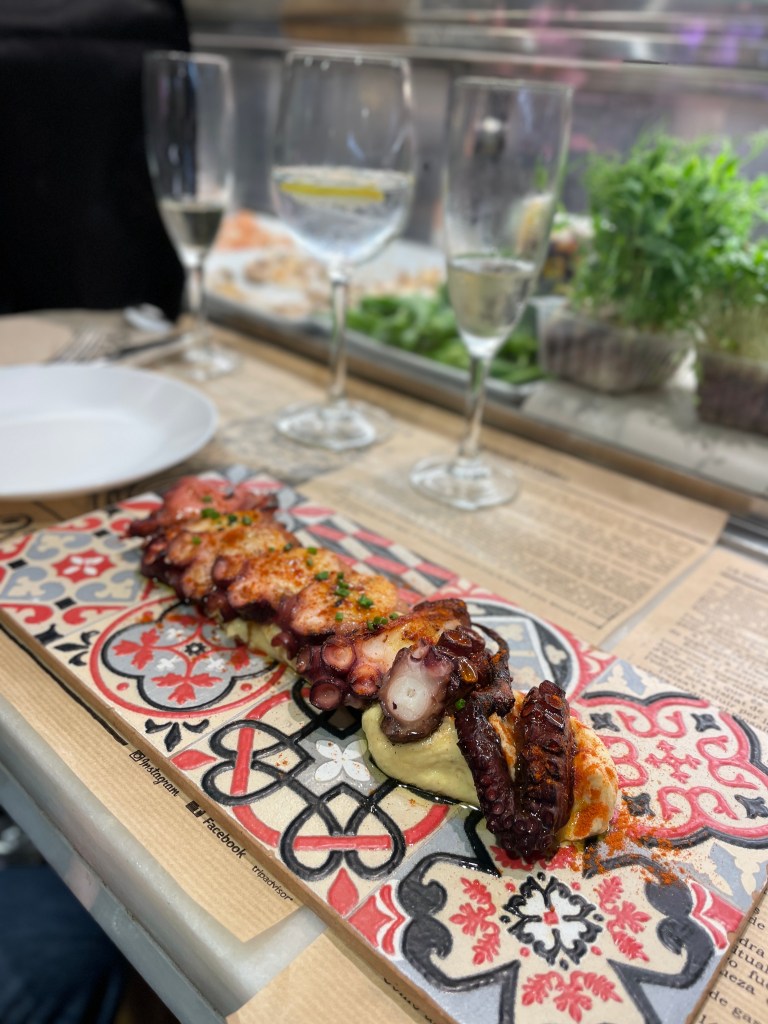
So, feeling a little triggered by the fact that I was responsible for our lacklustre snacks the previous day, the next morning I suggested we go to the local market and have an early lunch at El Quim de la Boqueria, an institution in Barcelona despite only being around since 1987.  Located smack bang in the middle of a bustling market filled with locals shopping for groceries and meat and fish, I knew right away that it was my kind of place.  I’ve said it before, and I’ll say it again, any city worth its salt has a great foodie market-hall.  It may only have been 10am but, taking our cue from several older Spaniards who were enjoying breakfast beers with their food, we decided to order a bottle of cava to share, coz why not!  When in Barcelona, bitches! 

.
.

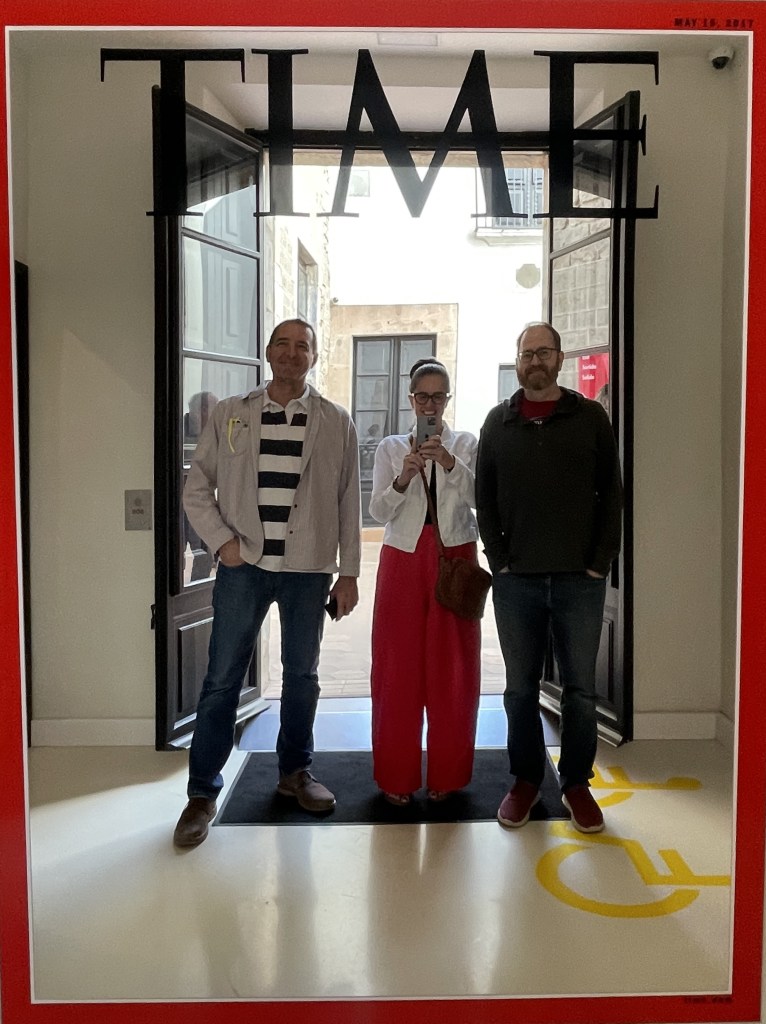
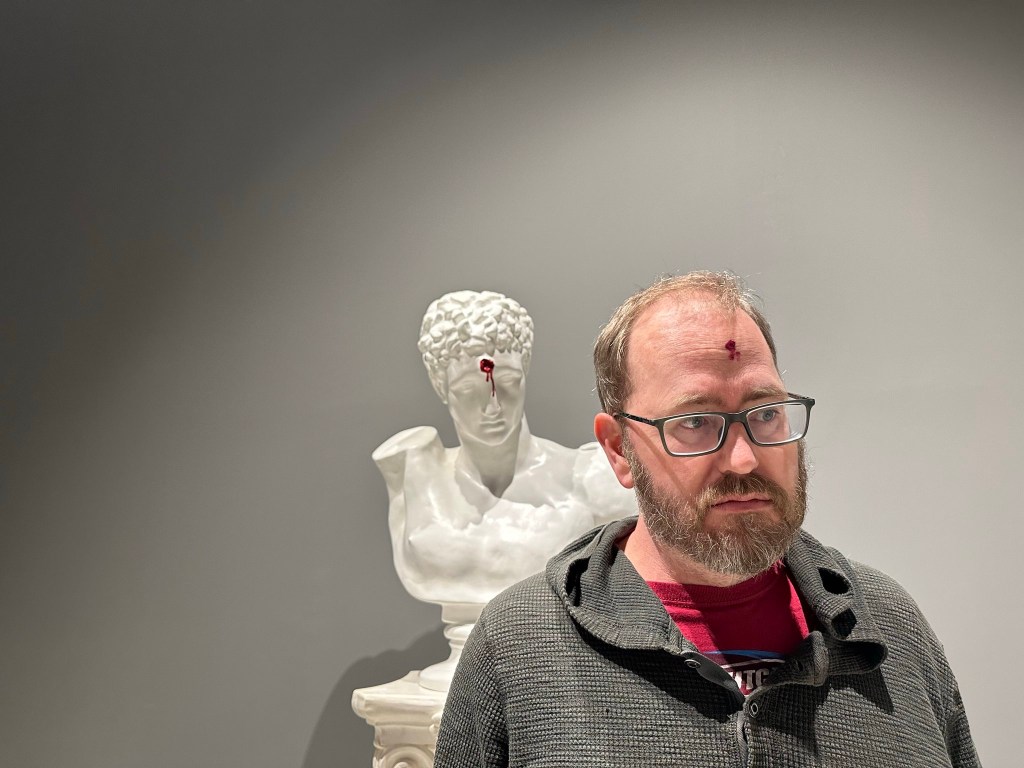
After lunch Ellen and Greg headed back to their hotel while David, Ben and I went in search of some culture.  Being familiar with Moco Museum in Amsterdam, we decided to check out their new outpost in Barcelona.  Specialising in modern and contemporary art, it was fun to spend an hour checking out artworks by prominent masters such as Warhol, Haring, Basquiat and Kusama as well as exciting contemporary street artists like Banksy and KAWS.  And they even had a section highlighting NFTs

Fifteen minutes of fame
Light installations are my favourite, they’re so fun and whimsical!
Life imitates art. My friend, Ben ♥

Afterwards we took a walk along the harbour looking for somewhere to quench our thirst, stopping at a couple of places that don’t really warrant mentioning, but I’mma mention them anyway, just for laughs.  The first offered a rooftop bar, and we were all keen to check out a nice view of the city so we made our way there and were offered a large table in the shade.  Perfect!  Two minutes later, an abrasive young server sporting an impertinent ponytail and holding onto a clipboard for dear life strutted over to our table and told us we’d have to move, as it was reserved only for large groups.  I asked if there was a large group waiting to be seated and she said no, but one might come along at any moment.  I blinked at her and offered to move should that situation eventuate, but she insisted that the table was only for large groups.  I pointed out that we hadn’t even chosen to sit there, we’d been offered the table by one of her colleagues.  She took a deep breath to argue with me again, which is when Ben picked up what I was throwing down and ran with it, pointedly said to her, “Are you throwing us out?”  I stifled a laugh and looked at him in awe.  Sassy as fuck!!  Flustered, she stormed off, whipping her ponytail into a frenzy behind her, and moments later our drinks were served.  We considered hanging around for another round just to piss her off but decided to move on and try one of the places downstairs (which we shouldn’t have, because the cocktails were literally undrinkable). 
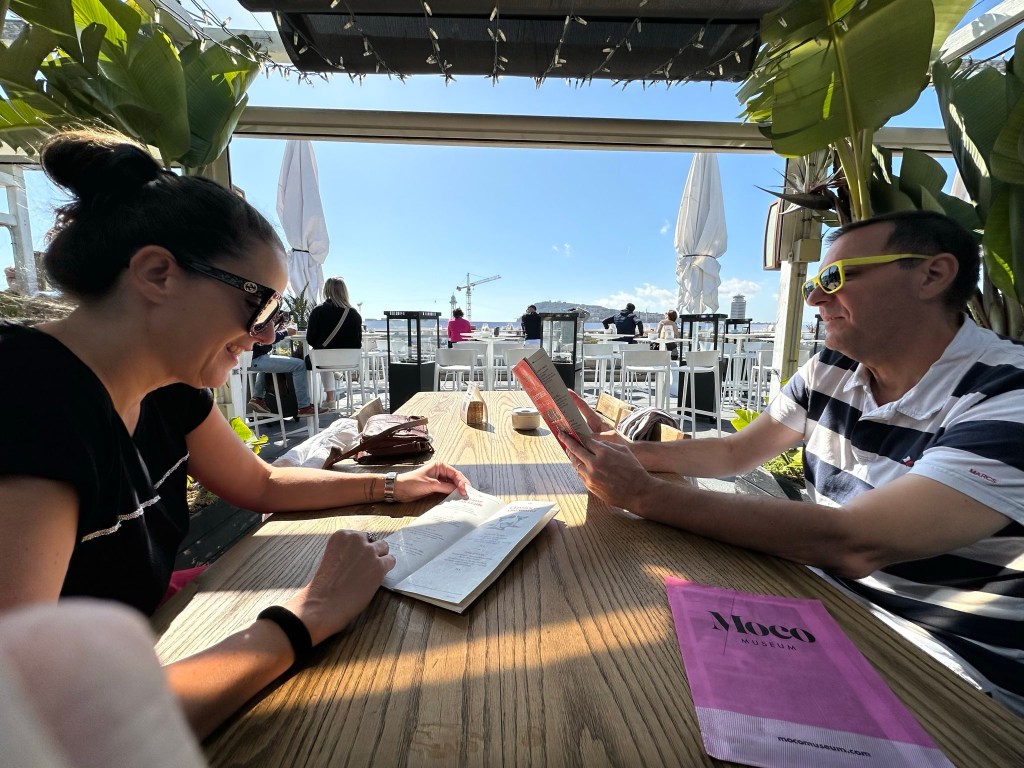
Just taking our sweet ol’ time

We got a text from Greg saying he’d like to join us while Ellen rested, so I suggested we meet at Paradiso, which was about a ten minute walk away.  My colleague Mark recommended this place to me, and the fact that it was voted #1 of The World’s 50 Best Bars in 2022 didn’t hurt either!  We figured getting there at opening time would help us secure a table, and avoid the long lines that famously snake around the block, and we were in luck.  Ushered into a tiny pastrami shop through red velvet ropes, the four of us looked for the entrance to the speakeasy, spinning around and bumping into each other, baffled about where it could possibly be.  And then they showed us!  And we laughed, and we nodded appreciatively.  I may have clapped. Trust me, it’s very cool.  You’ve gotta go and check it out for yourself.  Once inside we were blown away by the décor, the friendliness of the staff and the delicious, inventive cocktails. 
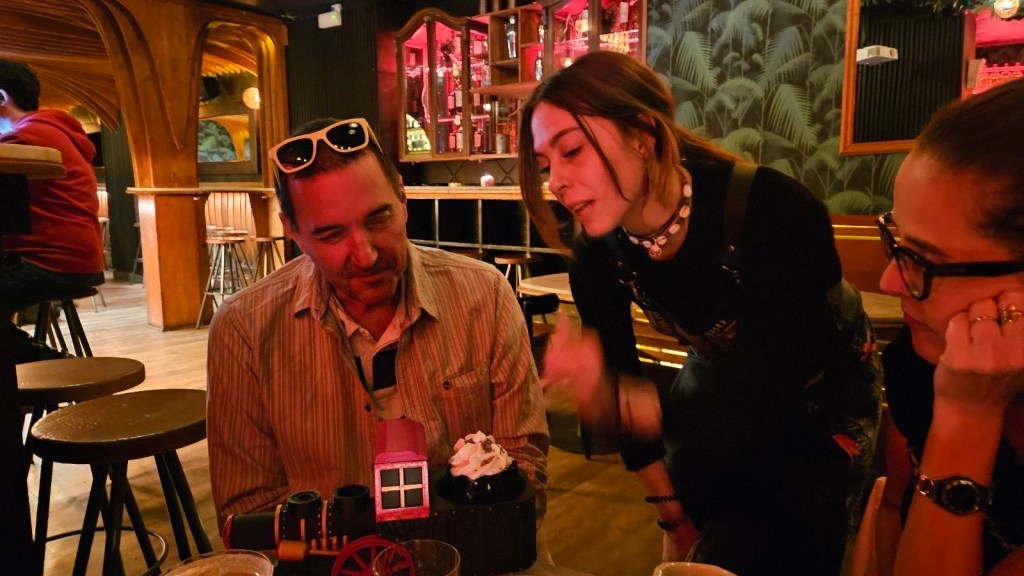
The lovely server explaining David’s choo-choo drink.

During our afternoon stroll through the streets of El Born, we came across a great looking seafood restaurant called Cadaqués and spontaneously decided to make a booking for dinner that night (DON’T EVER LET ANYONE TELL YOU I DON’T LIVE ON THE EDGE).  I found out later that Cadaqués is a very picturesque fishing village in north-eastern Spain, home to none other than visionary artist Salvador Dalí.  And our evening did kind of kick off in a surreal way when our two groups somehow ended up at two restaurants with the same name, and two very different google ratings.   Just as David and I were being seated (at the good Cadaqués) we got a few alarmed messages from Ben (whose Uber was taking them to the bad Cadaqués) saying that the reviews were terrible and we should bail and find somewhere else for dinner.  Eek!  The confusion was quickly cleared up though, and when our friends got to the good Cadaqués we had a wonderful dinner, with delicious Catalan food and wine and dessert.  It was a very fun night and I think you should go next time you’re in Barcelona (just make sure you go to the right one). 

.

The paella was to die for!!!
Five very satisfied customers.

I’ve mentioned my friend Ben in my essays before, but I’ll give you all a quick recap in case you missed it.  We met online in 1996 (pshhh-kkkkkkrrrr-​tsh​chchchchchchch-cheeeeeeeeeeeeee-oooooo-eeeeee), bonding over our shared admiration of Gwyneth Paltrow.  After a few months of getting to know each other over dial-up modem, we decided that it would be a fabulous idea to meet in real life.  So, at the tender age of 25, I threw all caution to the wind and sparked what would later become an insatiable thirst for travel and adventure.  I took two months leave-without-pay from my dead-end government job and (rather insanely) got onto an aeroplane and flew to California to meet my digital pen friend, who could, quite plausibly, have been a psycho serial killer.  Fucking wild, right? 

In the couple of months I spent squatting in an empty Avery House dorm room at Caltech, Ben and I developed a kind of routine, where he would go to class and I would fill my days exploring and writing, and then at the end of the school day we’d hang out together.  My heart fills with fondness when I think of that time, and I have so many fun memories of it. 

Since I was an interloper at the university, and had no rights to eat in the school cafeteria, Ben helped himself to extra food for me every night using his meal card, loading his tray with double serves of everything.  We’d claim our beanbag spots in front of one of the TVs in the dining hall, hoping to catch the latest episode of The Simpsons (Season 8, bitches) but sometimes having to suffer through Home Improvements instead (the worst!).  Sometimes we’d follow dinner with a couple of tablespoons of the coffee flavoured Häagen-Dazs we kept in the dorm freezer, as a treat.  One time we found ourselves in possession of a big fat cigar that we shared sitting on the steps near the dorm.  I can’t remember where we got the cigar, but I remember it hurting my throat, and becoming lightheaded as I looked up at the twinkling Californian stars. 

We went to movies (so many movies) and always sat in the front row, cricking our necks to gaze up at the big screen in unison.  Ben introduced me to the music of Tool and Korn, and inspired me to write poetry at the desk underneath his bunk bed while he was in class.  We played Quake in the communal computer room (where Molly, a girl that had a crush on Ben would alternately shoot daggers at me or pretend I didn’t exist), and I remember the day some kid burst in with a bootleg copy of the pilot episode of South Park.  We stopped shooting each other long enough to gather around one of the computers to watch it, and afterwards the room erupted into an excited frenzy.  I remember the sense of it being a profound moment, and I soaked it all in. 

We rode around Pasadena on Ben’s bicycle, me dinking a ride on the back wheel pegs, the wind blowing in my hair, feeling carefree and wild, wishing I could stay forever.  Wishing I never had to go home.  I still get that feeling when I travel.  We’d ride to Tower Records down the road to rent videos, and then sneak into a Caltech auditorium to play them on the massive, lecture room projector screen.  Nothing beats the feeling of two people sitting in an otherwise empty auditorium, eating popcorn and watching Trainspotting.  Nothing. 

Ben heroically tried to teach me how to play guitar, and showed me pictures of the girl that he was in love with.  I wasn’t to know at the time, but a couple of years later I would meet her, and she would become one of my best friends.  One time, riding Ben’s bike at night, I lost my balance and fell into a hedge.  I still proudly sport the scar on my finger.  We drank gallons of pink grapefruit juice and ate way too much McDonalds.  We ate at Burger Continental, a place we decided was run by Greek mobsters, where the salad I ordered was literally the size of a basketball and Ben joked about how I’d better fucken finish it, or Stavros would organise a hit on me.  One night we drove a couple of hours south to San Diego to see his parents, and then drove all the way back again when we figured out it was too late to visit.  We stopped at Taco Bell for midnight snacks on the way home, and laughed and laughed when the cashier couldn’t understand my Australian accent when I tried ordering a Coke.  I just kept saying Coke, Coke, Coke, as the cashier leaned closer and closer towards me looking more and more puzzled, and in the end Ben had to order my drink for me. 

Ben took me on an illicit tour of Caltech’s (not so) secret tunnel system to look at some of the haunting 70s era graffiti scrawled on the walls, and I remember feeling pretty scared as we got lost and the tunnels got darker and smaller and more cobwebby, until we were eventually chased out by a grumpy security guard with a flashlight.  I still remember the feeling of exhilaration when I took that first, deep breath of fresh air on the outside.  Another time we took a road trip to the Anza Borrego desert, spending the night in a motel close to the Mexican border, and eating at a local Mexican restaurant.  The place was so jam-packed, that after nearly an hour of trying to pay the bill we just gave up and did a runner.  We spent the rest of the sleepless night worrying about Mexican hit men storming our room and demanding retribution.  One Saturday night we walked around the Avery House dorm rooms, just saying hi to all these random, drunk kids.  We sat chatting with one guy for a little while, but decided to beat it when he casually mentioned that he’d taken a pretty big hit of acid and oh man, was it starting to come on!!!  We attended Ben’s step-great-grandmother Frieda’s 100th birthday party at her nursing home, and stayed at Ben’s parents’ house afterwards.  Which gave me a chance to get to know them better.  And vice versa.

I love Ben, and I love Ellen and Greg.  When I first met them they were understandably dubious of me.  A strange, foreign woman (psycho serial killer?) in her mid-twenties, hanging out with their 19 year old son at his university.  What the fuck?  But over the years our relationship has blossomed into something special, independent of Ben.  So it was truly beautiful to spend a couple of days with all three of them in Barcelona recently.  Sadly, it was over way too soon, and after our wonderful dinner at Cadaqués we said our goodbyes, as the three of them were travelling on to Nice, France the following morning. 

Breakfast is the most important meal of the day.

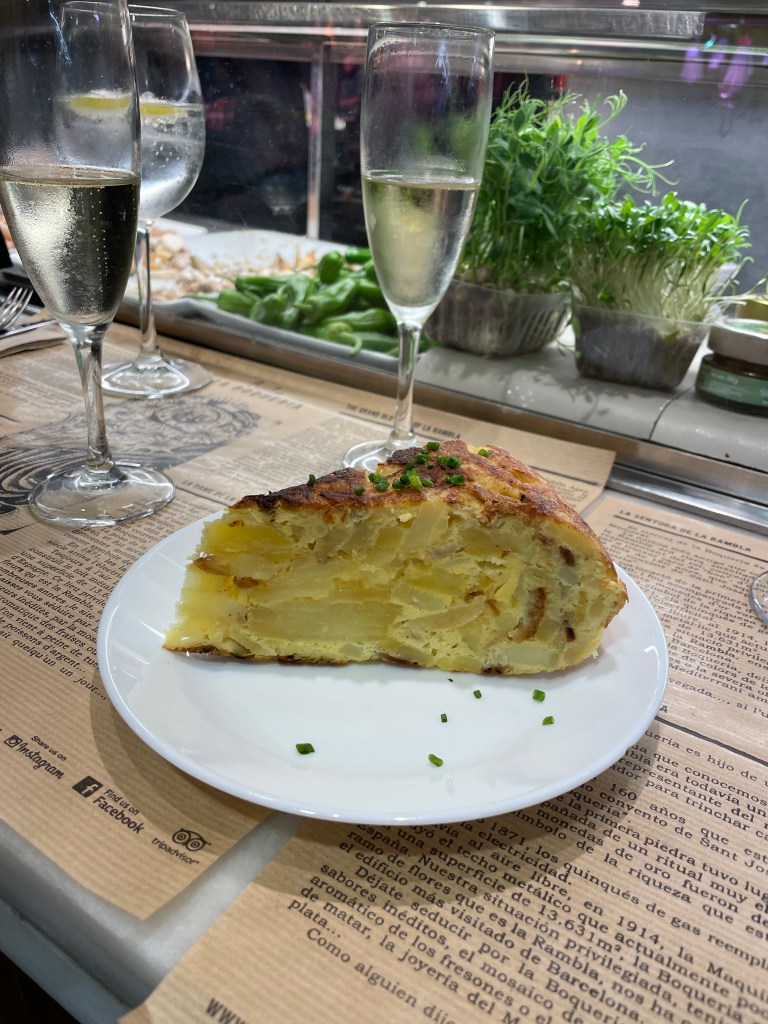
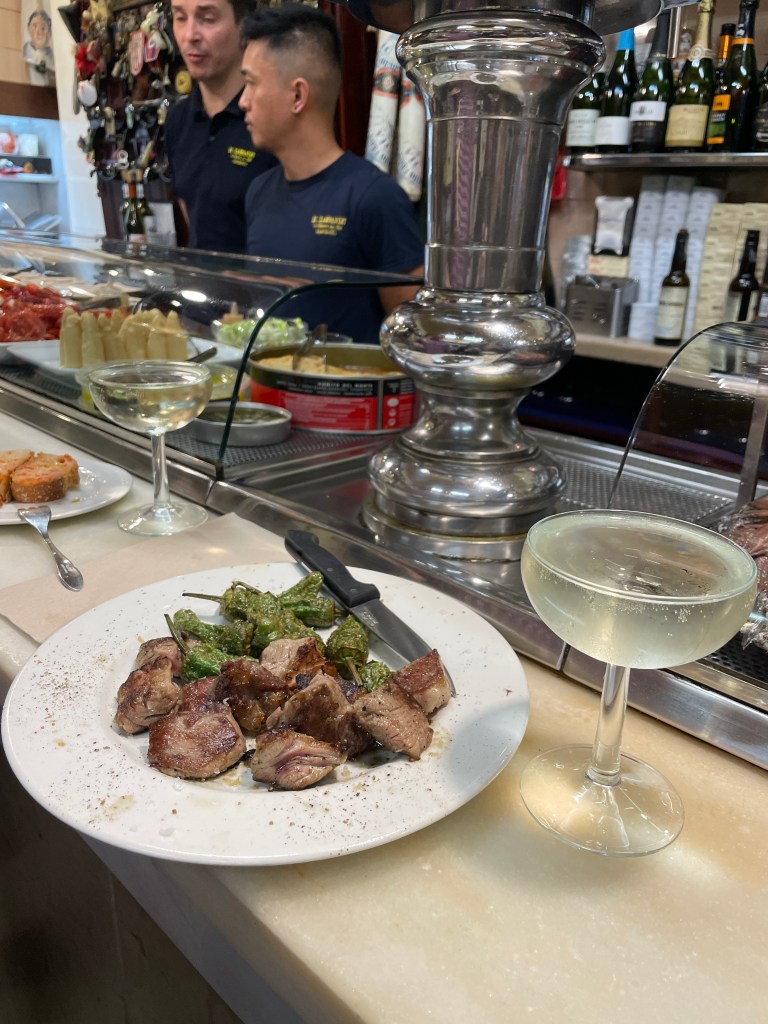
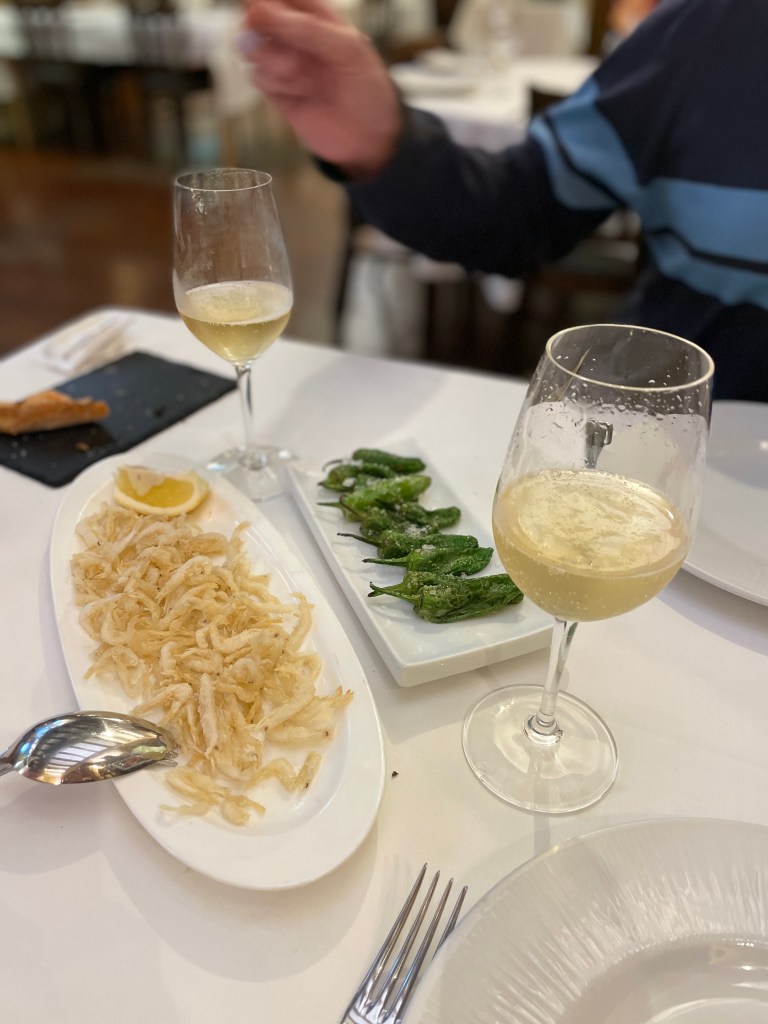
David and I had another two days of cavorting planned in Barcelona and the next morning we started in earnest by having Bloody Mary’s at Milk Bar & Bistro.  So many vitamins and minerals, what a nutritious way to start the day!  Afterwards we walked to our favourite tapas bar, the iconic El Xampanyet.  The place was, as always, raucously packed full of locals and tourists alike and with no seating available David and I parked ourselves at the stand-up bar (which I actually think is the perfect place from which to enjoy all the tasty morsels on offer).  Being in prime position to observe all the amazing array of tapas dishes being prepared, all we had to do was point at something we liked the look of and say, “Esto, por favor!”  This worked a treat and we were served plate after plate of incredibly delicious tapas, including chorizo, marinated sardines, tortilla de patatas, Galician pulpo, braised pork with Padron peppers, and stewed snails all washed down with glass after glass of the house cava.  I was in heaven. 

.

We didn’t order this, but we did eat the hell out of it, El Xampanyet’s very special version of Crema Catalan.

The next morning, being the culture vultures that we are, David and I just had to squeeze in a visit to another art museum, this time visiting Fundació Joan Miró, a museum established by, and dedicated to, the renowned Catalan artist, to peruse a few of his modern masterpieces.  And being the booze hounds that we are, doing so made us extremely thirsty, so afterwards we went off in search of a vermutería, or old-school vermouth bar.  We settled on Bodega La Peninsular, an historic wine cellar founded in 1903, known for serving the traditional libation at la hora de vermut, typically between midday and 2pm as an aperitivo before lunch.  Vermouth, a fortified wine infused with spirits and spices, has recently experienced a resurgence in popularity and I can totally understand why.  I don’t know what I was expecting, but I found the drink to be very light and refreshing, and perfectly accompanied by a plate of fresh razor clams.  We would have stuck around for a few more rounds but we had lunch plans and had to get a move on. 
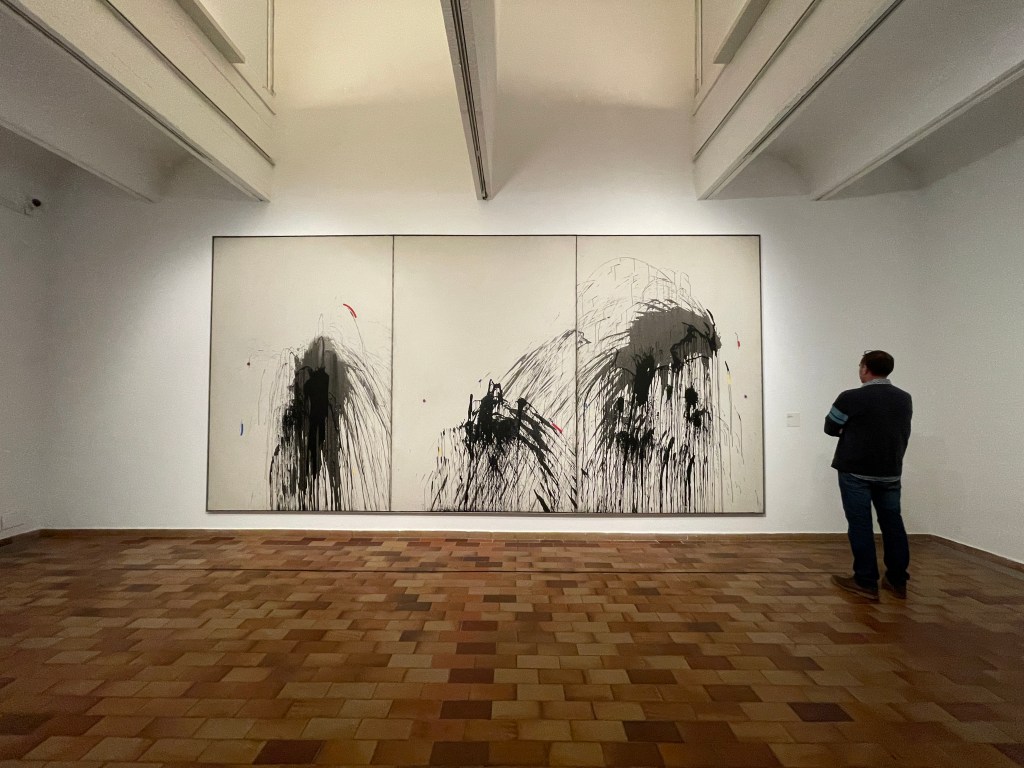
David contemplating Fireworks (1974)

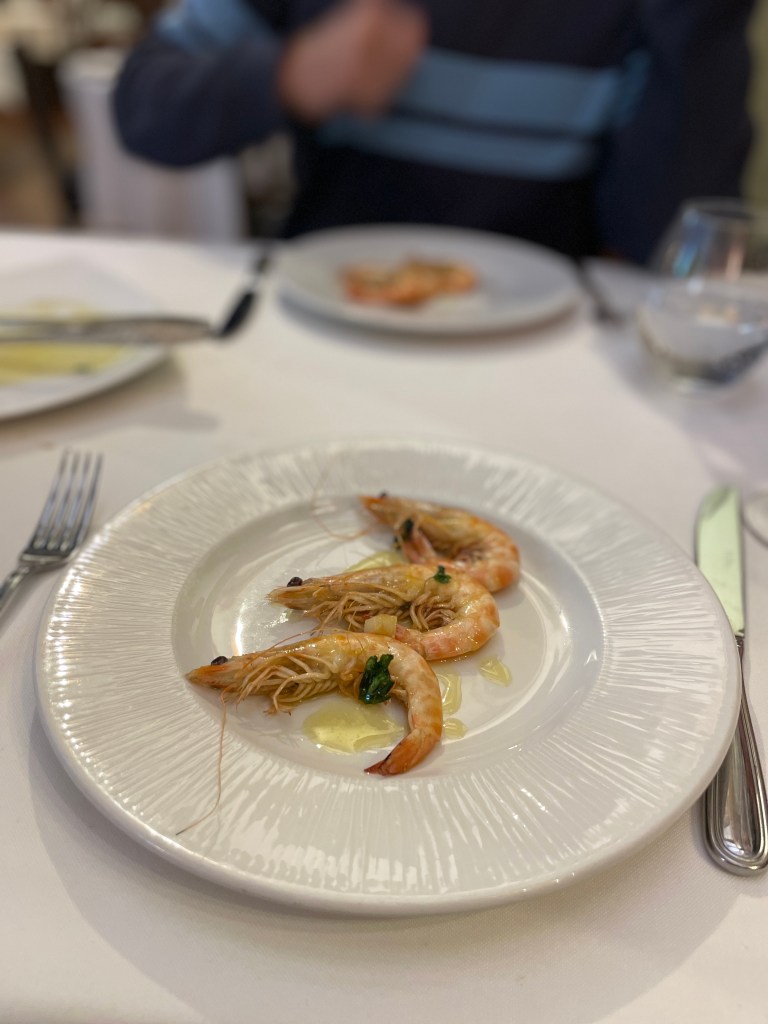
Passadis del Pep is another of our old favourite restaurants that we absolutely had to book when we found out we were returning to Barcelona.  We used to love their welcoming ritual of seating us at the table and immediately popping a bottle of cava and pouring two glasses of their house bubbly!  The deal was that if you didn’t like it, those first two glasses were free, and if you did like it, the bottle was yours. Of course we liked it.  We liked it so much, that the first time we went we had three bottles!!  Unfortunately this custom is no longer offered, which kind of took the shine off the experience for us a little bit.  What was still amazing, however, was the procession of super fresh seafood that they bring out when you choose their chef’s menu.  Plate after plate of glorious, plump, juicy, delicious seafood.  And of course you can still buy as much cava as you like! 
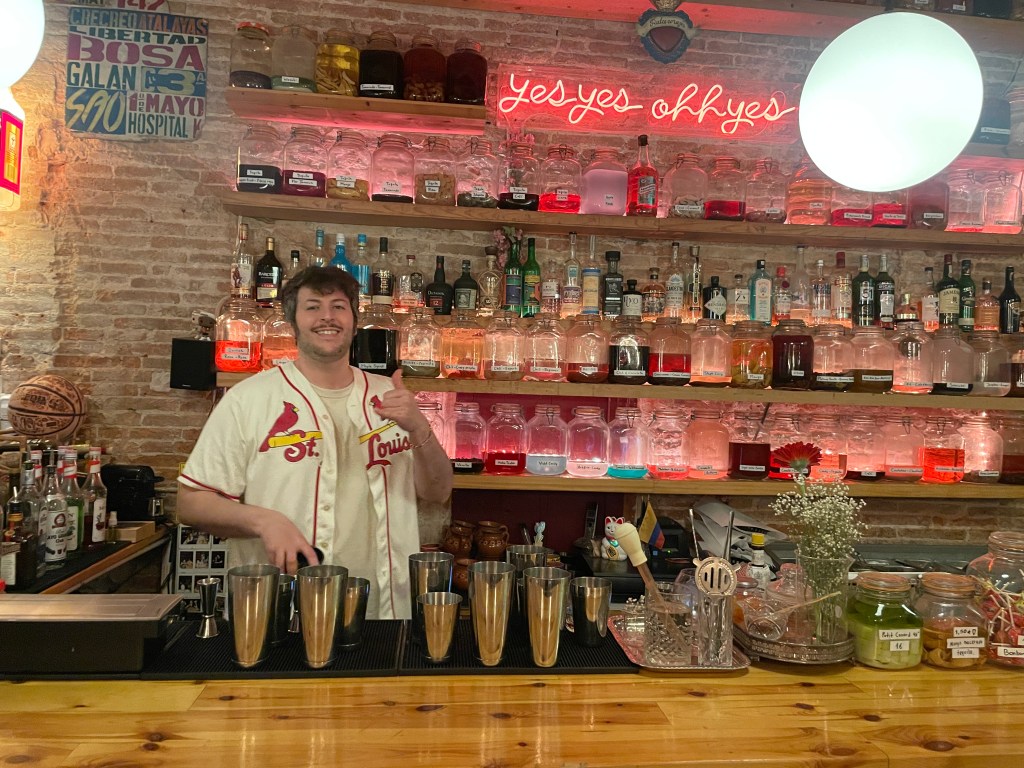
Two of our favourite new bars that we discovered on this trip couldn’t be more different.  The first, Bar Sincopa is a very cool, gritty, old-school dive bar.  Nothing fancy about the place, but the vibe is awesome.  Great rock and roll played loud, and free-poured margaritas.  What’s not to love.  The other cool place is called The Box.  The owner and bartender is a super nice French guy called Matthias and he makes dozens of infusions of rum and vodka and tequila, so the place looks like some kind of apothecary.  His margaritas are also strong, but they are very meticulously assembled, like something in a laboratory.  I’ve never tasted a crisper, more clean tasting margarita in my life.  Day after day after day, it was consistently good.  Which is why we kept going back, day after day after day. 

Bar Sincopa, where the spirits are strong, and the music is louder!
Chin-chin!
Cutie pie Matthias makes extraordinary cocktails (and apparently a very good hotdog!!)

You all know I love travelling.  It feeds an insatiable wanderlust to explore the diverse ways in which other lives are lived, to eat food my tastebuds have never sampled, to see the iconic landmarks and buildings and landscapes of the world with my own eyes.  I want to touch everything.  I want to breathe in the air at the top of that hill, and I want to splish-splash in the waters of that sea.  I want to be Drunk In… Reykjavík and São Paulo and Mexico City and Wellington and Prague and Vancouver and Cape Town and The Trossachs and Zagreb and Essaouira.  We all have this one wild and precious life, and I really like to think that I first plugged into mine when I took that leap of faith as a brave, young woman and travelled halfway around the world to California for what was probably an ill-advised adventure.  But not only did I have a life-changing experience there, I made three lifelong friends.  I learned that the world was bigger than my little corner of it, and I wanted more.  Fifteen months later, driven by itchy feet, I left Australia again, this time to spend a year as an au pair in Connecticut.  A whole other odyssey.  And the snowball kept rolling, kept on growing bigger, projecting me on the journey that I find myself on now towards an extraordinary life.  A life outside the box.  A life dedicated to seeing it all, and to experiencing it all.  That first trip to Pasadena to hang out with Ben at Caltech, that’s my origin story. 

Me and Ben in Rosarito, Mexico 2006, nine years after we’d first met

.

Visiting Ben and his family in Portland, Oregon 2023 (we’ve come a long way, baby)

Ejo #169 – The IDF & The Myth of The Most Moral Army In The World

The Israeli Defence Force (IDF) is frequently called the most moral army in the world, and this is something I’d like to examine further because to my untrained eyes and ears that assertion seems like absolute utter bullshit.  Firstly, isn’t it a little bit disingenuous to call any army moral?  An army is a military apparatus designed to kill people and to perpetrate war.  Nothing moral about it.  But the Israelis will insist on the morality of theirs.  Words are awesome, and personally I love them.  But actions are awesome too.  And actions is where Israel’s army is found to be seriously lacking in morality as I will outline below. 

Most of you are probably aware that there is a genocide happening in Gaza right now. So let’s talk about the role of Israel’s extremely moral army in that genocide. I have been pretty fixated (some might say obsessed) with what is happening in Gaza.  I admit that while I was aware that shit was going down in the Occupied Palestinian Territories before 7th October, I wasn’t paying it a lot of attention.  My bad.  But I’ve made up for that in the last few months.  I’ve been very active on Instagram and Twitter, interacting, liking, sharing and posting on behalf of the Palestinian people.  My heart belongs to the Palestinian people.  And it breaks for them.  So what happens when you’re on Instagram and Twitter at least two hours a day for 116 days, advocating for a group of people who are being slaughtered in a bloody genocide, is that you see some shit.  You see some horrendous, abhorrent, heart-stopping shit.  And all of it, without exception, has been committed by the world’s most moral army, the Israeli Defence Force. 

Before I let loose with a bunch of examples for you to check out, I do want to say that the IDF does not exist in a vacuum.  The Israeli Defence Force is the military arm of what is currently the most right-wing government in Israel’s short but bloodthirsty history.  And in a recent poll, 60% of Jewish citizens stated that Israel is not actually using sufficient force in Gaza.  They believe that the Israeli government should escalate the amount of force it is using.  I’m personally shocked at that, but I suppose I shouldn’t be, seeing as the Jewish citizens of Israel democratically voted in the current ultra-far right, Zionist government.  This is what they wanted. 

Before I start I want to say that everything I’m describing below is linked to a photo or video.  Please don’t feel obliged to watch them, but of course if you feel up to it you are free to do so.  You are also free to verify these videos for yourself.  You do not need to take my word that they are authentic, though I have cross-referenced them myself.  If you do find something that is inaccurate or inappropriately skewed I would really like for you to let me know because I want this to be a factual account of what’s going on with the IDF. 

OK, so let’s start with this super charming little wartime tradition happening in Israel right now where for a few bucks, citizens are invited to write messages on the bombs that the IDF uses to destroy Palestinian lives.  How delightful.  Let me go grab my Sharpie. 

Israelis seem nice

Here’s a super romantic marriage proposal by one IDF soldier to another on a rubble-strewn Gaza beach.  And another fantasy wedding proposal in front of a school that the IDF had just bombed and destroyed.  The guy promises his wife-to-be that they will build their future home on these desecrated grounds. 

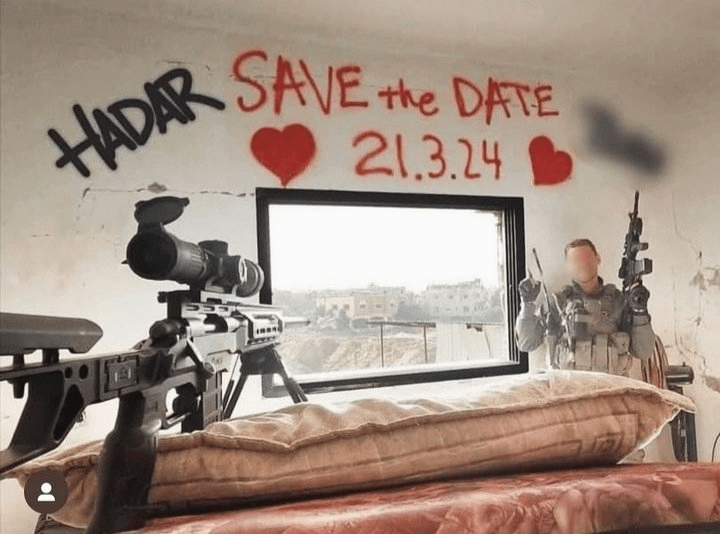
Honestly, if David and I hadn’t eloped, I definitely would have scrawled our save-the-date wedding message in red paint on the remains of a destroyed Palestinian home. Isn’t that what every woman dreams of?

Israelis seem nice

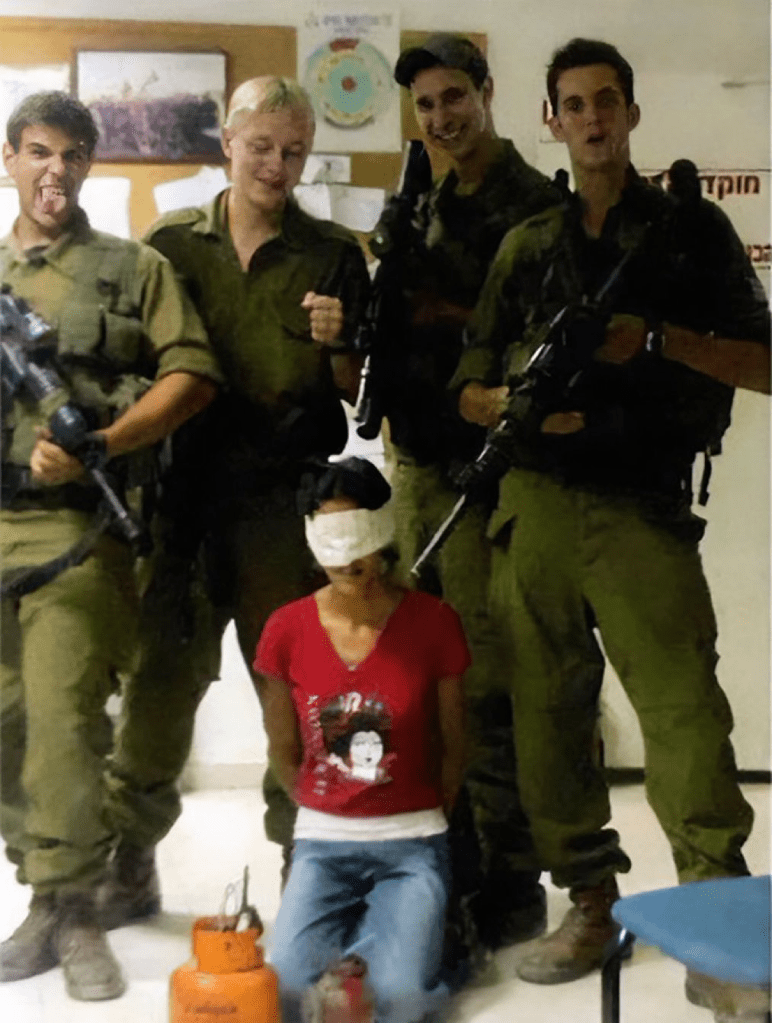
And the morality just keeps on coming.  One Israeli major dedicates the demolition of a Gaza building to his two year old daughter on her birthday.  Gee, thanks dad.  Israeli soldiers whoop and cheer as they celebrate the bombing of a UN school, which had been housing thousands of displaced Palestinian civilians.  Where will they go?  Who cares.  And here are some awesome, moral soldiers taking photos of themselves mocking and degrading a young Palestinian detainee. 

Israelis seem nice

Watch an Israeli soldier on a TikTok chat recount with absolute delight and unadulterated glee how she has personally killed two Palestinians and how she’d love to kill some more.  And here’s another, older, video from 2007, in which a former Israeli soldier reaches back into the darkness of her memories and laughs disquietingly as she recalls her Lady Macbeth moment after killing a young Palestinian boy. 

Yet another young woman serving in the world’s most moral army (coz equal rights = morality, yo!) giggling after committing the war crime of indiscriminately firing a grenade launcher at random homes in the Gaza village of Shuja’iyya.  And then for some crazy reason, deciding to proudly post it on social media. And here, a video that I was initially very hesitant to include because I wasn’t sure if it was for real or not, but it does appear to be an authentic recording of an IDF soldier bragging about killing a 12 year old Palestinian girl and lamenting that there are no more Palestinian babies left to kill.  This kind of shit is all over Middle Eastern media but nowhere to be seen on western news outlets in case you were wondering why you haven’t seen it on CNN.  By the way, a lot of Zionist apologists piped up to defend this guy and say that he was just joking, of course.  Ohhh, it’s a JOKE!!!  So funny. 

A very morally upright Israeli soldier uploaded this video of a Gaza university that was bombed moments later to his Instagram page with the caption: “Once upon a time there was a university in Gaza”.  In the video he says, “We bombed them. That sucks. That’s how you will never become engineers anymore.”  The IDF have been focussed on targeting Palestinian academics, killing at least 94 scholars.  They have completely destroyed 95, and partially destroyed 295, schools and universities.  Can you guess why?  Because it’s the right thing to do??

Here’s one lucky gal bragging on a popular women’s Facebook group in Israel about her IDF boyfriend bringing her heaps of new make-up from Gaza!!  One switched-on babe from the group, responded, “It’s better if you delete the post.  It doesn’t do us a good name at all.  Not because I care about the make-up of that Gazan woman who will never see the light of day again in her life, but because I care about that soldier, who can judge him for it or give him a headache”.

Israelis seem nice

And here’s another video of an honourable, young IDF soldier looting the jewellery box of a Gazan woman who has been… who knows, displaced or killed.  He chooses a beautiful silver necklace which he plans to gift to his lucky girlfriend Noa.  I literally can’t think of a more romantic gift. 

Hanukkah was pretty special last year for one group of IDF soldiers who spent it blowing up a bunch of Palestinian homes in Gaza.  Afterwards, just for fun they desecrated the sanctity of a West Bank mosque by stomping all over the floor in their shoes, and singing Hanukkah songs and intoning Jewish prayers over the speaker.  The extremely virtuous and noble IDF considered this unacceptable behaviour, suspending the soldiers in question.  Round of applause! Obviously the soldiers in this video however, in which they mock, desecrate and destroy another mosque, did so in a far morally superior way and therefore they were not suspended by the IDF.  Here are some more ethical celebrations of blowing up mosques

And if you want to see some extremely upstanding IDF soldiers joyfully and heartily singing, “These are your homes, and we are destroying them” as they bulldoze Palestinian homes in Khan Younis, then you’re in luck. As a bonus, here’s a group of young IDF guns cheerfully mocking Palestinian life in an hilarious video, after which they playfully burn down someone’s home.  And then think it’s a great idea to upload it to TikTok.  WTF???

This jolly fellow thought it would be a bit of a laugh to get dressed up as Santa Claus while firing shells onto Palestinians on Christmas Day.  I can’t think of anything more festive than that! Can you?? And finally, here’s a super fun video (accompanied by an appropriately upbeat soundtrack) showing an IDF soldier dressed up as a dinosaur loading shells into a tank and then bombing the shit out of the civilians in Gaza.  Coz genocide is fun!!?  I’m rendered speechless when I try to put myself in their shoes and figure out what the fuck they’re thinking when they film themselves doing this.  I glitch. 

I’ve seen way too many interviews of former IDF soldiers talking about how they treat Palestinians as less than human, inflicting physical and sexual abuse on them.  Including children.  This is just one sample in which a former IDF soldier describes how her comrades beat up a young Palestinian boy, putting cigarettes out on him, and how her commanding officer was told to cover it up.  Moral as fuck.   

So that was a small sample of the complete disregard and lack of respect IDF soldiers personally have for Palestinians.  But when we talk about an army, we’re talking about a collective unit that has orders from high ranking officials, and ultimately the government.  Maybe they’re not doing so great on an individual level. Perhaps, as they like to boast, on a macro level, the IDF could be considered the most moral army in the world? 

No.  I don’t think so. 

Let’s talk about the neonatal intensive care unit babies that Israeli soldiers forced medical staff to leave behind when they violently evacuated Al Shifa hospital at gunpoint on 10th November 2023.  One would think that since the IDF soldiers had forced the medical staff to leave the babies behind, they would have arranged for those babies to be taken care of somewhere else.  And that’s what they’d promised.  But that’s not what happened.  They just left them there to die.  And the babies died, and there are photos of their tiny little decomposing bodies online from when they were discovered two weeks later.  What special kind of monster is capable of leaving behind crying, premature babies that are unable to breathe on their own, knowing that they are going to die a slow and excruciating death?  Who does that?  I’ll tell you who, it’s the IDF!  It’s the most moral army in the world. 

Is leaving a bunch of premature babies to die better or worse than what another IDF captain did, which was to take a newborn Palestinian baby girl from Gaza back to Israel with him after finding her in the rubble (that his unit had created).  There is no way of knowing whether her parents are dead or alive, but the soldier has since been killed in battle, and the whereabouts of the baby girl are unknown.  This doesn’t feel very moral either, does it?

During December I spent about two weeks tracking the atrocities committed by the Israeli Defence Force.  Eventually I had to exercise my privilege and stop, because it just felt like the information and the images coming out of Gaza were becoming worse and worse with each passing day, and it was starting to take a toll on my mental health.  And things haven’t become better since then, they’ve continued becoming worse.  If you have only been following mainstream news outlets you might be shocked to read my observations from that period, but I can assure you that everything I write here actually happened.  Each fact is verifiable, but again, if you discover any inaccuracies please let me know.

On 13th December, the bodies of 15 Palestinian men, women, children and newborn babies who had been sheltering at Shadia Abu Ghazala School were found piled up in the corner of a room.  They had been shot, execution-style, at point blank range by moral IDF soldiers.  They were not Hamas.  They were not collateral damage.  They were intentionally murdered.

On the same day, several Palestinians sheltering in a UNRWA school at Beit Hanoun were killed execution-style by IDF soldiers.  Including babies.  The most moral army in the world killed babies execution-style.  Not with bombs from afar, not with shells.  Not with a drone.  Not even with hand grenades. But with bullets, from a gun, at point blank range.  There are photos. 

On 15th December, Al Jazeera cameraman Samer Abu Daqqa and chief Gaza correspondent Wael al-Dahdouh were working when they were targeted and hit by a missile from an Israeli drone.  They were both wearing press vests.  Both Abu Daqqa and Al-Dahdouh (whose wife, son, daughter and grandson were killed six weeks earlier by Israeli forces in a targeted bombing of the building they were sheltering in) were injured but only al-Dahdouh was able to make it to paramedics and survive.  Over the next five hours Abu Daqqa lay on the ground and bled out.  Paramedics attempted to approach him, but were shot at by snipers.  The IDF knew that it was all being recorded, and they did that anyway. 

Also on 15th December three Israeli hostages who had been separated from their captors tried to get the attention of the Israeli army.  Doing their best to demonstrate that they were not Hamas fighters, they had taken off their shirts and were waving a white flag.  Despite this, they were shot at by IDF snipers who thought they presented a “security threat”.  Two of the hostages died instantly, while the third, injured, ran for cover in a nearby building calling out for help in Hebrew.  When he came back out again, a soldier opened fire and killed him.  Following the breaking of this story, there was a massive outcry in Israel, but I’m left wondering why there was no massive outcry when the IDF did the exact same thing to thousands of Palestinian civilians?  The reporting of it in international media stated that the IDF had “mistakenly” shot the hostages, but that’s not what happened at all.  They were deliberately shot and killed.  Because it was thought that they were Palestinian. 

On the 15th December, Human Rights Watch accused the state of Israel of starving people in the Gaza Strip.  The NGO claimed that the IDF was deliberately preventing the delivery of water, food and fuel to Palestinians.  That was six weeks ago.  Conditions have now reached famine levels of starvation. 

On 16th December 2023, outside Kamal Adwan hospital, IDF soldiers in bulldozers drove over and crushed several tents, in which sick and injured refugees were sheltering.  Bulldozers!  They buried them alive and then bulldozed over the top of them, killing dozens of innocent people in a sadistic act of senseless cruelty. 

Also on 16th December, an IDF sniper shot and killed a woman seeking shelter with her adult daughter in the Holy Family Parish Catholic church.  When her daughter ran out to help her, the IDF shot and killed her too.  They were Christian.  They were not Hamas.  They were not collateral damage.  They were murdered in cold blood. 

On 18th December, IDF soldiers bombed the maternity ward at the Nasser medical complex in Khan Younis, a city in the south of Gaza.  In case you missed them the first time round, I’m going to repeat the words maternity ward. 

The aftermath

The attack was part of a greater scheme to destroy all of Gaza’s health facilities, including the targeting of doctors and their families.  Several people, including many pregnant women were injured, and one 13 year old girl died.  She is not a statistic.  Her name was Dina Abu Mehsen, and a few weeks earlier she had lost both her parents and two of her brothers in an IDF airstrike on her home.  She also lost one of her legs.  Somehow, she hadn’t lost hope though, and while she was recovering in hospital following her amputation she said that she wanted to become a doctor so that she could help other children.  On 18th December, an IDF tank shell ended that dream when it penetrated the ceiling of her hospital room and hit her in the head, killing her instantly. 

Say her name! Dina Abu Mehsen.

Are you tired yet?  You should be.  This shit is relentless.  On 21st December, Fatima and Ahmed al-Khaldi and their two sons Adam and Faisal ran to a neighbouring house to shelter with around 30 other people after their own home was shelled by the IDF.  When the Israeli soldiers arrived, they threw two hand grenades into the house, after which they entered the room and started shooting indiscriminately.  Fatima, who was seven months pregnant, bled to death.  Her husband and young son Adam were also killed.  Her other son, four year old, Faisal, was seriously injured after IDF bullets ruptured his intestine and bladder.  He needs six surgeries.  There are no hospital facilities left in Gaza to perform these surgeries.  The IDF has destroyed them all. 

Say his name. Faisal al-Khaldi.

On 23rd December, IDF soldiers used their favourite Caterpillar D9 bulldozers to desecrate the recent graves of Palestinians who had died in a northern Gaza hospital.  They dragged the bodies through the dirt, and then used the blade of the bulldozer to crush the corpses.  I can think of absolutely no reason to do something like this, except sheer psychopathy and depravity.  The literal definition of immorality. 

Also in northern Gaza on the 23rd December, a group of pregnant women walking in the rubble, were trying to make their way to Al-Awda Hospital to give birth, and raised white flags when they were approached by an IDF bulldozer.  Each of the pregnant women were shot, and their bodies bulldozed.  Why??  Ethics?  Virtue?? Explain it to me like I’m five years old. 

On Christmas Day, an Israeli photojournalist working with the IDF uploaded this video he’d taken of hundreds of civilians, who had been detained, ordered to strip to their underwear and kneel on the grass on the grounds of Gaza Stadium.  In the background, bulldozers can be seen digging holes in the ground.  Euro-Med Human Rights Monitor and the UN have both confirmed reports that the Israeli Defence Force carried out field executions of many civilians, lining them up on the edge of the bulldozed pits before executing them and burying them in mass graves.  I don’t know why they would do this.  I don’t know why they are doing any of it.  

On 26th December the corpses of 80 Palestinians, which had been taken from various locations around Gaza, were delivered by the IDF to Rafah.  The bodies, in various stages of decomposition, had obviously been tampered with and many were missing organs.  This is a war crime, and it is a crime against humanity.  It is an abhorrent violation of a human being’s sanctity, and a theft of their dignity in death.  It is not the actions of a moral army. 

On 28th December, the IDF admitted that the Christmas Day massacre they committed in Maghazi refugee camp, killing 70 Palestinians, was a mistake because “the type of weaponry used did not match the nature of the mission”.  They also confessed that they had bombed buildings that were not actual targets, resulting in unnecessary civilian casualties.  I take two things away from their statements.  Firstly, there was no apology.  Secondly, it’s implied that the 2000 pound (900kg) bombs they have been using on the rest of Gaza are considered appropriately matched to the nature of their missions.  Which seems batshit crazy, until you realise that their mission is genocide.  And then it makes perfect sense. 

Also on the 28th December, it was reported that the IDF raided nine West Bank money exchanges, arbitrarily declaring them terrorist organisations that were funneling money to Hamas.  In total USD25 million dollars has been reported to have been stolen by the IDF.  Kinda reminds me a little bit of how the Nazis funded a third of their war effort with money stolen from Jewish people under the pretence of increased taxes.  Same morality vibe. 

I don’t know about you but I struggle to find anything (ANYTHING) moral about the way the Israeli Defence Force behaves when it comes to Palestinians.  I find them despicable, deplorable and disgusting. But Israelis appear to have a different definition of morality than the rest of us.  A sick and twisted definition.  In October 2023 Israeli MP Galit Distel Atbaryan called for the complete destruction of Gaza in a Facebook post, saying “Revengeful and vicious IDF is required here.  Anything less than that is immoral.”  I recently watched another video of an IDF soldier questioning the morality of the Israeli army, but then turning around and saying that their morality problem was that they hadn’t killed enough.  That the most moral thing for them to do would be to kill more Arabs. All the Arabs. 

I think there’s something wrong with the narrative that Israelis are fed about Palestinians which feeds into an insane amount of hatred, vitriol and bloodlust.  From a very young age, Israeli schoolchildren are taught that Palestinians are nothing more than unworthy refugees or primitive farmers. Or worse, terrorists. The school system teaches kids that Jewish people are superior to Muslims, and it teaches them how to hate Palestinians. It teaches them how to live with Israel’s occupation of over five million people and be OK with it. And sadly, the soldiers of the IDF are a product of that racist and bigoted system. Can we please stop pretending that there’s anything moral about that. 

Ejo #164 – The Extraordinary People I Know: Mear

Some of you might remember the opus I wrote on NFTs about a year ago.  Even though the heat on NFTs has cooled a little, I’m still involved in the scene, especially on Twitter which has a very strong and vibrant NFT community.  My feed is often filled with gorgeous artworks, posted by artists trying to get their name out there.  About ten months ago I was scrolling Twitter and came across an absolutely stunning piece by a Chinese artist called Mear.  I commented on it, we chatted for a while and got to know each other a little bit, and I decided to buy the NFT.  In fact, I fell in love with the entire series and bought all six pieces.  It feels very special to have supported Mear as she was starting out in the NFT world, and over the months we have come to know each other quite well.  One of the reasons I love NFTs as much as I do is that as a collector you can discover art that you never would have otherwise been exposed to.  And for Mear, as an artist, the converse is also true.  Would she have sold the entire collection of her Swaying series to an Australian woman working as an air traffic controller in Dubai if it wasn’t for NFTs?  I highly doubt it.  I feel very honoured that Mear took time out from her very busy schedule as a full time artist, teacher and prospective PhD student to answer a few questions about her art and about herself.  Mear’s English is way better than my Mandarin so we conducted our interview in English, with a little help from Baidu and Google translate.  I do hope you enjoy our conversation as much as we did. 

Thank you so much Mear, for taking the time to talk to me about NFTs and art, and in particular your specialty, Chinese painting.  I absolutely treasure the six NFTs in my collection that comprise the Swaying series.  Can you tell me the inspiration for the series, what each one of them means and why you chose these individual names: Imagine, Disconnected, Vague, Praise, Flourish and Indigo?  
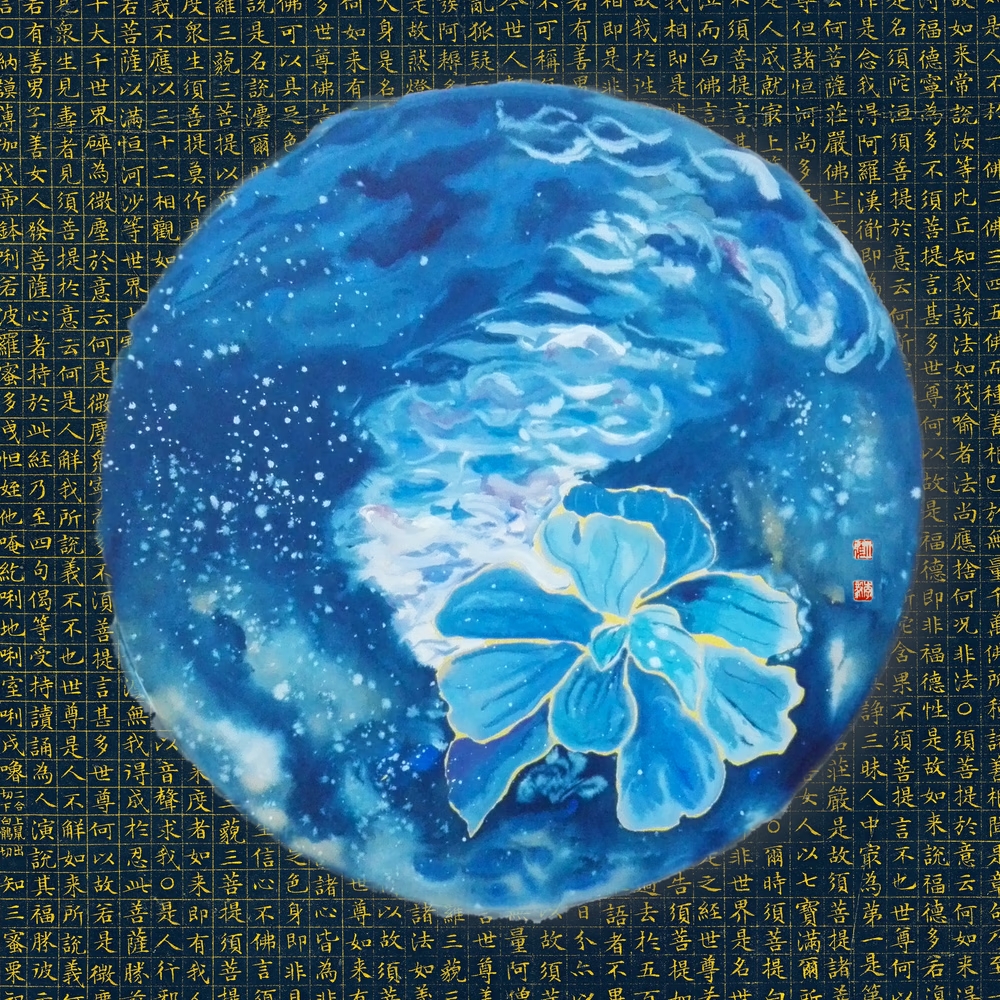
The Swaying series is based on the practice of using heavy colour to create small paintings.  I was inspired by some wildflowers on the side of the road.  It was a rainy day, and the wildflowers were swaying, east and west, causing the water on the petals to produce a magical refraction effect.  I imagined the flowers floating in the buoyant sea, swaying in the water and creating beautiful ripples.  So, I began to draw these pictures from my imagination. 

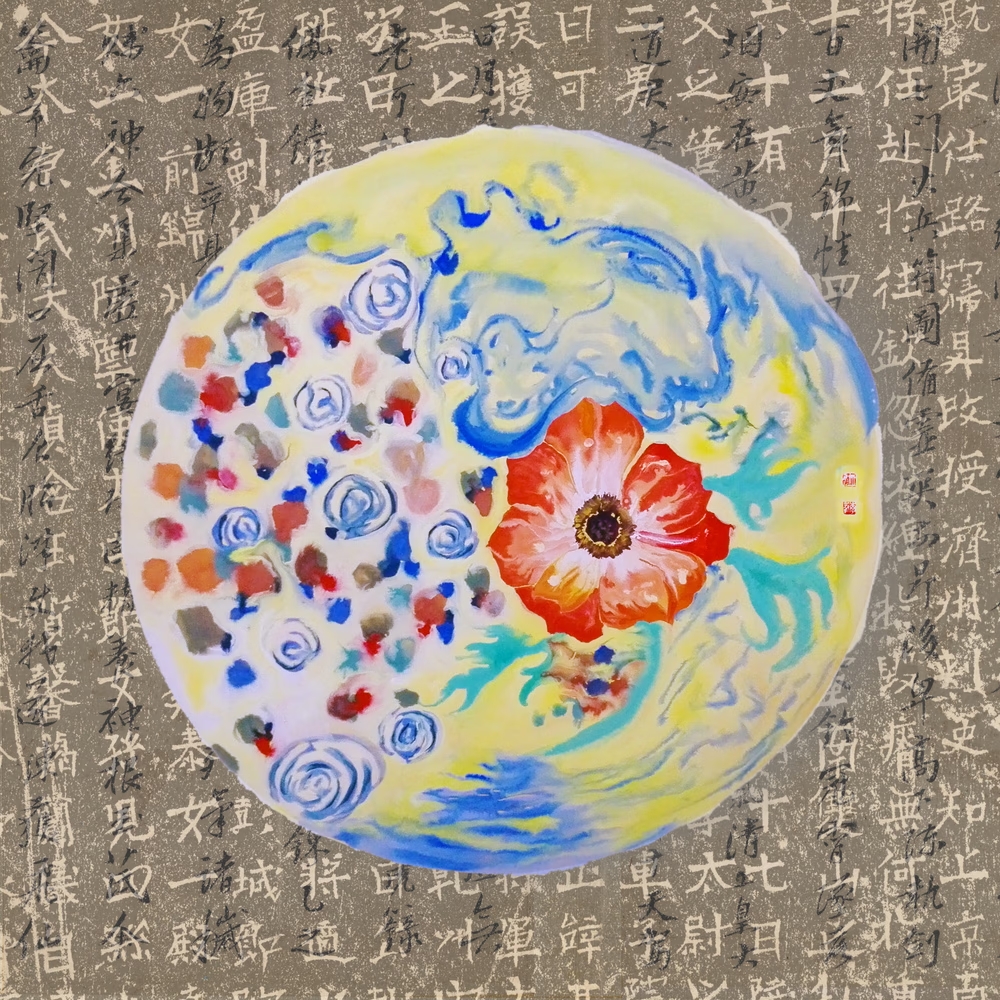
The Swaying series is a dynamic description of petals floating in water.  The Chinese word for each of the paintings is very simple, but very clear.  Imagine is the first painting in the series, and represents the fluctuation of my creative thoughts.  When I was a child I remember watching a cartoon called Bug Division, and a scene from that impressed me very deeply.  So I used rattan yellow and a little gold to try to recreate the gold and black space from the TV show. 

Imagine

Disconnected describes the camellia at night, a bit like smoky moonlight.  Vague uses the purple tone that I like, but purple is very difficult to show, so I added some clam powder to foil to make it stronger.  Praise depicts the summer forest, with a variety of different colours of leaves.  I added the rock colour, to make it look even more gorgeous and thick. 

.

Indigo depicts a four-leaf clover floating in the lake in winter.  The lake is usually blue, and the water is very deep, but clear.  And Flourish depicts a variety of colourful flowers blooming in spring.  It represents the Chinese people walking in the flower filled street during the Spring Festival.  Very rich and beautiful, it indicates strong vitality.

.

You hand painted each one using ink and brush on paper, and digitally added the Chinese characters in the background.  What do the characters say?  Do they have a special meaning?  
The calligraphy pictures in the background are high-definition pictures I downloaded from an app called China Treasure Museum, which are all very good works by famous masters before the Qing Dynasty. 

For example, as the background in Imagine, I chose a short section from Zhu Dao’s Seven Frames of the Interior Classic from the Qing Dynasty, which is a work mainly about the preservation of health.  And in Disconnected, I chose a paragraph from the epitaph of Zhang Sizhong of the Liao Dynasty.  The epitaph is written for the dead, recording the names, titles and life stories of the deceased.  These pieces were chosen as the backgrounds because the calligraphy is really very good, and worthy of our observation and study.

I’d love to go back to the beginning, if that’s OK.  Your formative years, your childhood, where you grew up, how you grew up. Were you raised in an artistic family? 
People who know me well are aware of my cheerful disposition and how I love to crack jokes. My mother often refers to me as the “happy nut” in our family. However, in public, I tend to come off as introverted and shy, speaking very little. This is for two reasons. Firstly, I’m near-sighted and don’t like wearing glasses, making everything seem blurred. This causes me to overlook many people and things, but it also makes me more focussed on myself, rather than paying attention to external gazes and discussions. Secondly, my dad taught me from a young age that, “The more one talks, the more mistakes one can make”, so I’m always extra careful when I speak or act outside.

I suppose my personality could be classified as a people-pleaser.  Much of it has to do with my parents’ subtle influence. My sister and I are twins, and we were born when my father was quite old, so he’s always been particularly protective. Even to this day, he often warns us about dangers (which I understand, considering he grew up in a time of turmoil, poverty and hardship). For instance, he advises us to be cautious about falling when using an elevator, to keep looking behind us when walking in case someone is following, to not accept food from strangers and always to bring him along for job interviews (though I’ve never actually done so).

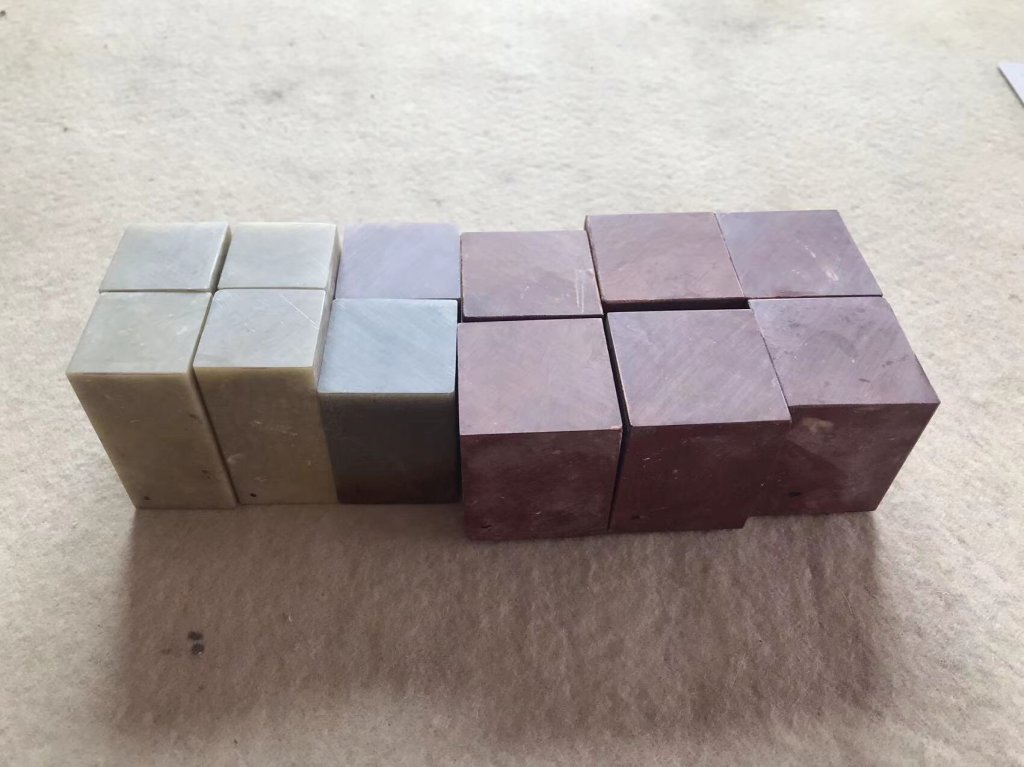
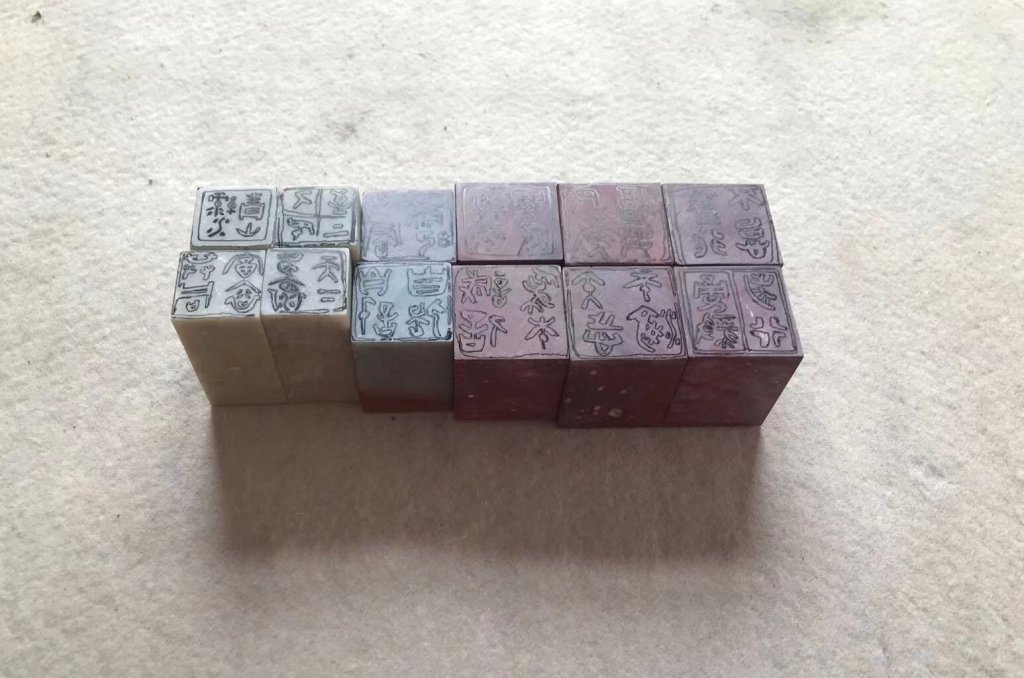
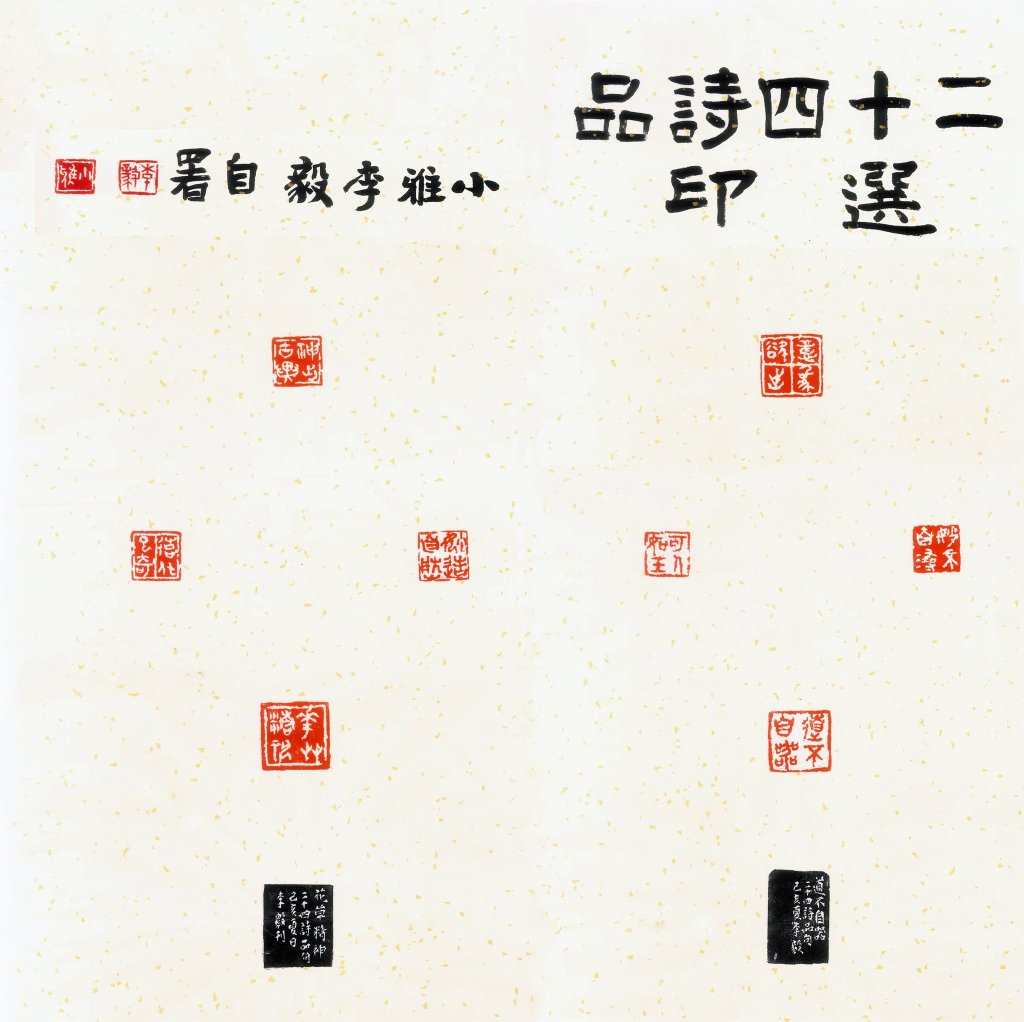
I was born and grew up in Guangzhou, China. Cantonese and Mandarin are my mother tongues. My English education began with my mother, who served as my father’s translator in the 90s; she isn’t so proficient now due to lack of practice. My father only speaks his dialect and isn’t keen on learning new languages. From an early age, he taught us calligraphy and seal carving, but because I was too playful, I didn’t learn calligraphy well, which I regretted later in university (where I was even more playful, haha!). We visited parks every year for our birthdays, so it’s fair to say we’ve explored all the parks in Guangzhou. I joined a sketching training camp one summer in middle school which meant I woke up at 5am and finished at around 5pm every day.  And in the final semester of high school, I attended a painting training camp.  My sister and I were admitted to one of China’s top art colleges. Traditional Chinese painting is something that I picked up in university and have been studying since.

I have to admit that my dad is a good teacher.  His knowledge is extensive and he is incredibly smart.  At my graduation, he was able to discuss poetry and classical texts with my tutor for an entire afternoon.  He has indeed taught me a great deal.  However, he can be too dominant, overly protective and he limits our actions a lot.  By the way, he is a Leo, and I have decided never to marry a Leo man, haha!  

I enjoy discussing artistic concepts and creative processes.  And I also really enjoy painting and I love the surprises that uncertainty brings to my work.  If the surprise is upsetting, I laugh it off, change it and make it beautiful.  Its beauty then reaches others who come in contact with it.  If the surprise is just right, I am overjoyed and celebrate.  

Can you tell us about what you learned at art college?  Have you been working as an artist since then? 
When I was admitted to college, I chose to major in Chinese painting, which is completely different from sketch and colour. It is the pursuit of two-dimensional performance, such as painting figures in exquisite black, white and grey. The description of the painting “object” must be very accurate and careful in order to create a three-dimensional sense from it. Traditional Chinese painting pays attention to artistic conception. Artistic conception is hazy beauty, or transcendent beauty, from limited to infinite.  The concept of “mood” is richly embodied in Chinese painting. The theme, its composition, depiction, emotion, and overall arrangement must all convey this mood, sometimes described as the soul of a painting. Chinese paintings are often called silent poetry. The harmony between an object’s characteristics and the artist’s emotions is what gives a painting its poetic essence, creating art that intrigues and resonates. A painting that deeply conveys emotions and has strong expressiveness captivates its viewers.

Traditional Chinese painting is done with a brush. The front of the brush can be long or short, and the amount of hair will affect its water absorption. Therefore, there are often uncertain factors when using a brush, so strong control ability is needed. When I was an undergraduate, the teacher let us learn landscapes, figures, flowers and birds, and then choose the direction we wanted to further our study. I chose landscape painting. To draw a landscape, we must first practice the basic elements of the painting method, such as: trees, stones, clouds, water flow, etc. And then, we do a lot of copying. We copy the excellent traditional paintings of ancient times, for example Wang Meng’s Seclusion in Qing Bian, Fan Kuan’s Journey to Xishan and Huang Gongwang’s Residence in Fuchun Mountain, etc.  

.

Huang Gongwang’s Residence in Fuchun Mountain

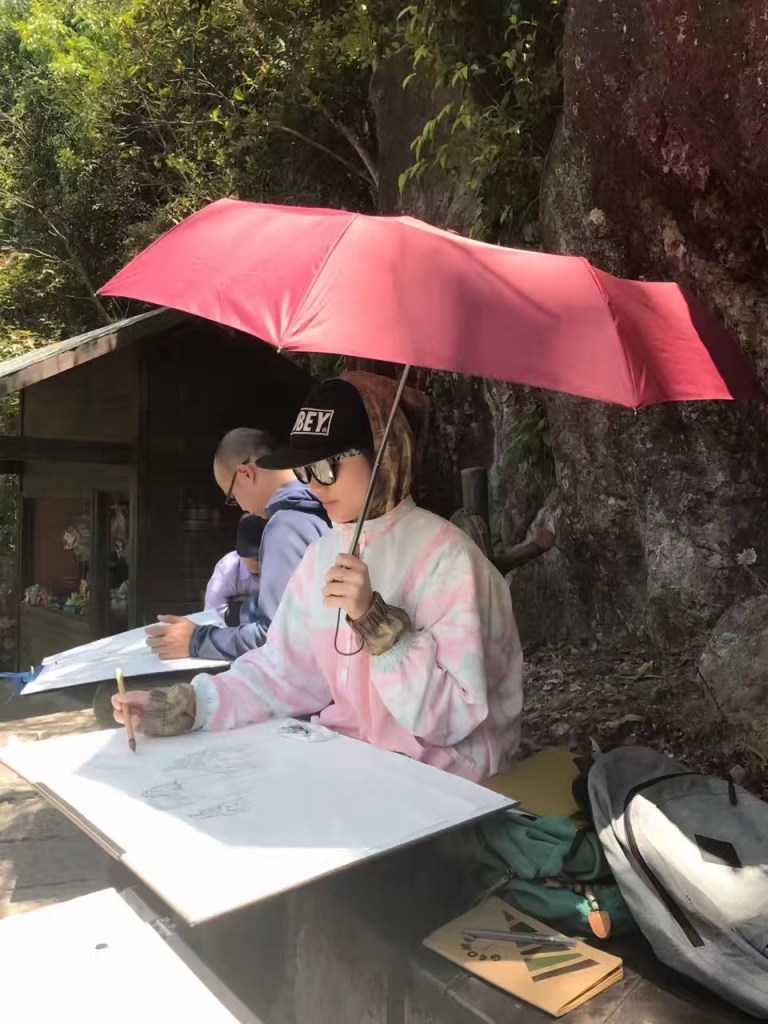
And then, we go back to sketching again.  Every year, we follow our teachers all over the country to sketch.  Places such as Taihang Mountain in Henan Province, Tiantai Mountain in Zhejiang Province and Jinggangshan Mountain in Jiangxi Province.  And finally, the creative stage.  Creation stage is the hardest; to draw a picture from present life, and to combine the techniques learned to make the performance work.  In this process, I often experience long periods of self-doubt because a brush stroke might not meet my expectations.  It’s just a very struggling process.

Taihang Mountain

I am a professional artist, but not full-time, I am an art teacher for children because I need a stable job to guarantee my life.  My teacher at college told me to “Live first, and then pursue the ideal”.  I am an idealist in the bottom of my heart and a very romantic person, but I also know that I must face reality. 

Two of Mear’s students earnestly creating their masterpieces

How did you first hear about NFTs, and how did your classical art training translate to digital art? 
I heard about it from my friend.  At first, I didn’t care about it, but later, when more people discussed it, I gradually learned more and then became interested.  I draw with pen and paper and then take photographs of the artwork, which I adjust through the computer to form an NFT.  I use simple retouching tools like Sketchbook, because I feel that the computer is hard to operate, at least for me.

What advice would you give to artists who know nothing about the NFT space, but are interested in trying it? 
At present, I often mention NFTs to my classmates, but because we have to use a VPN to get access, many people are not willing to really understand it.  They think it is a new field, or that it is very troublesome, and that it is better to just draw their own paintings.  I would like to say to the artists who are interested in NFTs, that you are very welcome to the world of NFT. Although it is a little difficult to cast into it, isn’t it good to share your works and to find people who like them?

I agree totally, and I’m so glad that you did join the NFT community! Finally, Mear, can you please share with us what you are working on at the moment? And what are your wishes and hopes for the future? 
At present, I am drawing some large landscape paintings, and plan to participate in more exhibitions held by provinces, or by the state. Of course, it is difficult to get the qualification for these exhibitions, but I will try my best. For the future, I hope to become a successful professional painter, just like the famous painters in history.

If you are interested in checking out (and even better, buying) some of Mear’s work, you can find her art at OpenSea and Foundation marketplaces.