wellness

Ejo #172 – Oils Ain’t Oils

Everyone knows that polyunsaturated fats are healthier for you than saturated fats, right?  But hang on, how does everyone know that?  Like, where are the randomised control trial papers?  Where’s the actual evidence?  Where is the data?  Well, there is none.  Absolutely none.  It’s just accepted wisdom, and nothing more.  Seed oils (aka polyunsaturated fats) do lower cholesterol.  Absolutely they do.  There’s no denying that.  And the way they do it is via their high concentration of cholesterol-like molecules called plant sterols, which lower the cholesterol in your blood.  Winner winner, tofu dinner, right?  And if the ultimate goal were to lower your cholesterol levels, then replacing saturated fat with polyunsaturated vegetable oils would be the way to do it. 

But isn’t the real goal here to improve our health?  To live a longer, and healthier life?  As I spoke about in my ejo, Countdown For What, high cholesterol isn’t the villain it’s made out to be.  In fact, it is inversely associated with mortality in people over the age of 60.  In other words, the higher your cholesterol, the longer you’re expected to live.  And the lower your cholesterol, the quicker you’re expected to die. 

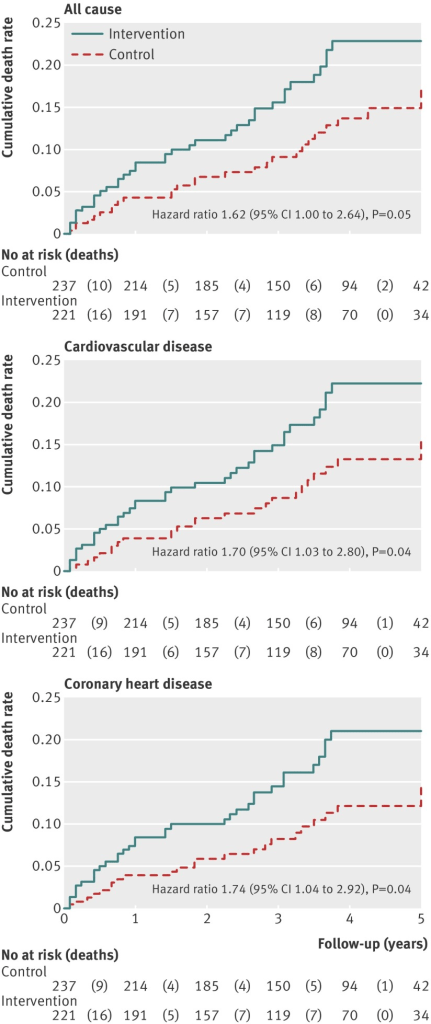
So, why on earth would you want to lower your cholesterol?  Well, you wouldn’t.  And you shouldn’t.  But, for argument’s sake, let’s say you think I’m full of shit and you do want to get (or keep) your cholesterol numbers down.  Seed oils can help you do that.  Whoop-de-doo, you know what else they can do?  Increase your risk of heart disease.  So, please take the time to think about your objective here.  Is it to lower your cholesterol, just for the arbitrary sake of it?  Or is it to have a healthy heart?  I, personally, pick Option B, but a lot of us have been fooled into thinking that high cholesterol causes heart disease, and that lowering your cholesterol helps you to avoid it.  However there isn’t a skerrick of evidence to support that hypothesis.  Not one single gold standard study has ever shown a direct cause between cholesterol and heart disease.  On the other hand, there’s plenty of evidence that consuming industrial seed oils actually does cause heart disease.  For instance, a recent meta-analysis of the Sydney Diet Heart study conducted in 1966-73 showed that the subjects who replaced the saturated fat in their diet with seed oils had a significantly higher rate of death than the control group (including from all-mortality, cardiovascular disease and coronary heart disease). 
Eww

Another study showed that “omega-6 polyunsaturated fat linoleic acid promotes oxidative stress, oxidised LDL, chronic low-grade inflammation and atherosclerosis, and is likely a major dietary culprit for causing coronary heart disease, especially when consumed in the form of industrial seed oils commonly referred to as vegetable oils”. Damning.

Yet another study, conducted in 2016, re-evaluated the data collected during the famous Minnesota Coronary Experiment and concluded that replacing butter and tallow with seed oils resulted in a 22% higher risk of death for each 30 mg/dL (0.78 mmol/L) reduction in cholesterol.  Once again, the results conclusively show that lower cholesterol equals more death.  The reason the study is so famous is that these were not the results that the scientists were looking for.  So instead of publishing them, they buried the data, hiding it in a garage where it collected dust for years. 

So, the problem with polyunsaturated fats is that they are unstable, which makes them prone to oxidation (usually occurring within days of the oil being produced).  All of those pretty, golden bottles of canola oil, soybean oil, sunflower oil, safflower oil, rice bran oil and peanut oil that you see on the supermarket shelves, with a “Heart Healthy” label slapped on them are chock-full of rancid shit.  And simply put, consuming rancid shit, i.e. oxidised oil, causes oxidative stress in your blood, which causes your blood to clot, which causes thickening and hardening of your arteries, which causes heart disease. 

Eww

So, my suggestion to you is that if you want to avoid heart disease, you might want to think about avoiding oxidative stress in your blood.  And that means avoiding things like pollution, smoking and industrial vegetable oil, which is widely used as an ingredient in most processed foods, from baby formula to salad dressing to anything that’s been deep fried. 

If we were to do a “This is Your Life” retrospective of the seed oils that we are so fanatically encouraged to shovel down our gobs, we would have to take a long trip back in time to the 1870s when William Procter, an English candle-maker, and James Gamble, an Irish soap-maker went into business together making, you guessed it, candles and soap, both of which at the time were produced using rendered pork fat.  When the price of pork fat got too expensive they started looking around for cheaper alternatives, and their enterprising gazes settled on cottonseed oil, a waste product of industrial cotton farming which had previously only been used to light lamps and lubricate industrial machinery.  It was a brilliant innovation and they started mass producing cheap bars of soap using the stuff.  Then one night, Bill and Jim obviously scored some pretty good drugs and got high as fuck, because they decided that hey man, this shit kinda looks like lard, maybe we could make a cooking oil out of it.  And thus was born Crisco, the world’s first cooking oil.  Yum, yum. 

Eww

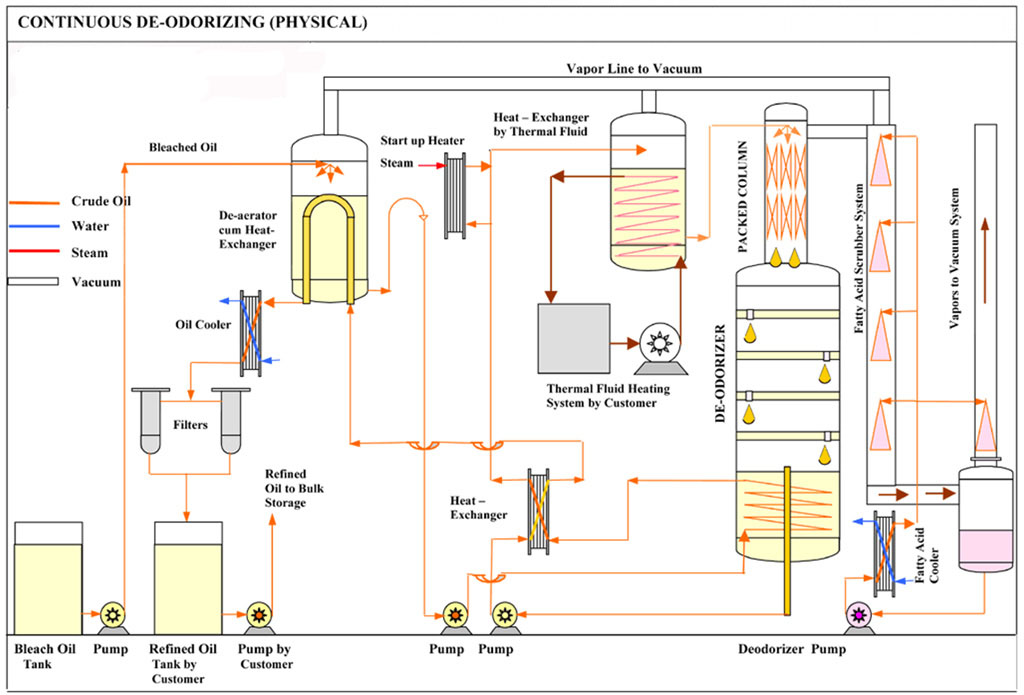
So let’s talk about why these seed oils are commonly referred to as industrial oils.  From plant to bottle, the product goes through several synthetic chemical processes that include hydrogenation, which uses high pressure, high heat and a petroleum based solvent to ensure the oil remains liquid at room temperature.  The end product of hydrogenation is a rancid oil that needs to be deodorised to remove the bad smell, it needs to be bleached to remove the sludgy colour, and it needs to be winterised to keep it all stable and to extend its shelf life.  Then they have to inject vitamins into it, because all of the above just stripped the oil of any nutritional value it might once have had.  And then you’re supposed to eat this shit. 
Eww

And let’s not forget about the dimethylpolysiloxane, which is a silicone polymer ingredient commonly used as an anti-foaming agent in frying oil.  Oh, and it’s also used in cosmetics, industrial lubrication, caulk, shampoo, condom lubricant and Play-Doh.  So healthy. 

Just knowing how these industrial oils are produced is sufficiently gross that I don’t think I really need to talk too much about their inflammatory effects.  Or that most of them are GMO, and sprayed with glyphosate, a known carcinogen.  Or that heating seed oils produces aldehydes which actually fuck with your DNA, and are associated with the development of Alzheimer’s disease.  Or that strokes are far more common in people who have diets that are low in saturated fat.  Or that they are ridiculously high in omega-6.  I’m just going to stick with the fact that they’re not even something your body recognises as food. 

But, since I mentioned it, what is this omega-6 that people are worried about, anyway?  It’s an essential fatty acid, something that we need to consume a little bit of in our diet because our body doesn’t make it.  Humans are designed to consume omega-6 and omega-3 (found in eggs, and fatty fish like salmon and tuna) in a ratio of 1:1 in order for our bodies to function properly.  But, thanks to the proliferation of seed oils, the standard human diet has seen that ratio balloon out to as high as 20:1, with seed oils making up a whopping 10% of all calories consumed in the standard American diet.  Dr. Artemis Simopoulos, President of The Center for Genetics, Nutrition and Health, in Washington, D.C. says, “A lower ratio of omega-6/omega-3 fatty acids is desirable in reducing the risk of many of the chronic diseases in Western societies.”  And she’s right.  Consumption of omega-6 fatty acids has been shown to increase cardiovascular diseases, inflammatory diseases and autoimmune diseases. 

Oh, and cancer.  Researchers have recently observed a disturbing trend in the uptick of cancer cases, especially amongst young people, with an astonishing 79% rise in diagnoses in the last thirty years.  And they estimate that the global number of new, early-onset cancer cases will increase by another hefty 31% in the next six years.  Sadly (weirdly), the British Medical Journal thinks that the cause of this cancer trend is a diet “high in red meat and salt, and low in fruit and milk”.  So, less meat and more milk would reverse this trend?  For real?  Never mind that the average consumption of red meat is down in the last thirty years.  Never mind that the production of industrial seed oils over the same period is up.  Coincidence?  Maybe.  But probably not.  Doesn’t it make sense that putting something so chemical and synthetic into your body, would do it damage? 

Kinda obvious tho?

The LA Veterans Administration Study published in 1969, was originally designed to determine whether a diet that lowers cholesterol also prevents atherosclerosis.  But what they actually found was that the group replacing animal fat with seed oils had an 82% higher chance of dying of cancer than the control group.  This result was alarmingly replicated in a number of other randomised controlled clinical trials over the years, causing the National Institutes of Health to review the data in the 1980s.  And despite the overwhelming evidence pointing to industrial seed oils as the culprit, the official conclusion from the NIH was that the mandate to lower cholesterol was of such high importance that it overrode the cancer results from the studies.  I shit you not. 

Eww

So, I have some questions.  If consuming seed oils causes all this drama, why on earth are they touted as a healthier alternative to saturated fats like butter and lard?  Well, how about $335 billion dollars?  Coz that’s the expected global market share of seed oils in 2025.  Fun fact: in 1948, Proctor & Gamble donated $1,740,000 (worth $17 million today) to the fledgling American Heart Association.  And in 1961, the AHA returned the favour by making the world’s first public health recommendation to replace animal fats with seed oils.  Ain’t capitalism grand? 

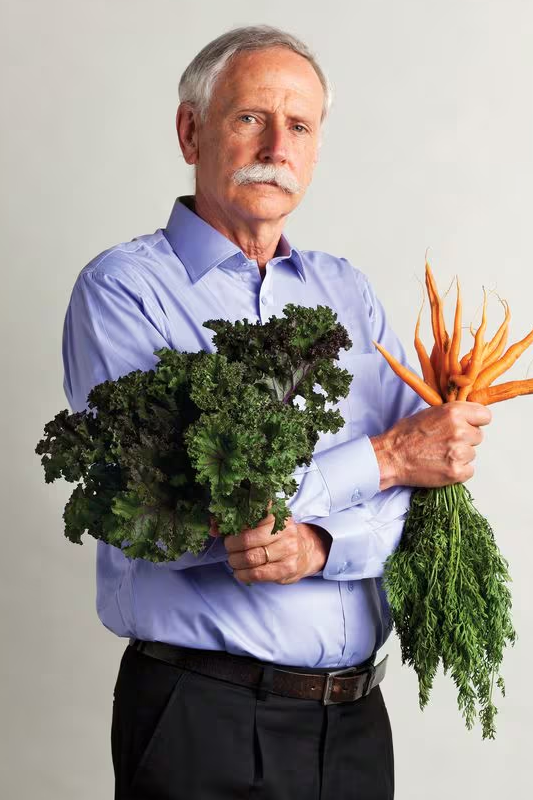
Apart from following the money trail, there is another, quite significant, reason for the widespread misconception that industrial seed oils are a healthier alternative to natural animal fat.  And his name is Walter Willett.  As head of nutrition at the Harvard T. H Chan School of Public Health from 1991 to 2017, Willett, a lifelong vegetarian, and an outspoken critic of red meat, has exerted considerable influence over the school’s curriculum, partnerships, research direction and policy advocacy. 
Eww

I think most of us would assume that an institution like Harvard University would practise scientific integrity, transparency and objectivity, right?  I mean, they have a reputation to uphold.  But when we scratch the surface we find that, over a period of decades, Harvard has continuously promoted Willett’s academic papers, despite none of his anti-meat hypotheses ever being confirmed or backed up by a single experiment. 

Critics argue that Willett’s research methodology lacks scientific rigor, heavily relying as it does on epidemiological studies, and regularly dismissing evidence that doesn’t suit his biased objective.  Furthermore, Willett’s personal beliefs, advocacy for a plant-based diet, financial ties to vegetarian-aligned groups, compromised objectivity and numerous conflicts of interest raise concerns about his undue influence, also calling into question the credibility of the Harvard School of Public Health.  Willett is known for aggressively pressuring scientific journals to retract opposing papers, as well as bullying his pro-meat peers and colleagues, further undermining the school’s academic integrity.  So when you see a headline from Harvard stating “Scientists Debunk Claims of Seed Oil Health Risks”, you now know not to take that at face value.  You now know that large corporations and large institutions do not necessarily have your best interests at heart.  You now know better. 

Eww

Yes, seed oils are convenient (they’re cheap, easy to cook with and readily available), but the rate of their consumption consistently parallels the increasing rates of chronic disease.  And if I’ve introduced even a shadow of a doubt in your mind about the risks of consuming these oils (and I hope I have), then my work here is done.  And you are welcome.
Ejo #168 – Just You Shut Your Mouth

When I was a kid, I always wanted to be a doctor.  I mean I didn’t really, I just thought I did.  I was obsessed with this big, fat book my parents owned, which sat on the bookshelf in our living room.  It was a medical encyclopaedia, an atlas of the body and all its wondrous processes and mysterious biological magic.  I loved that book so much.  I would pore over it for hours on end, and I knew it back to front, which is why I was able to plagiarise from it so frequently and extensively for essays and projects throughout primary school and my early years of high school.  I was so in thrall of the inner workings of the human body, that, even though not a lot of thought went into it, it kind of seemed like a no-brainer that I should, of course, go to medical school and become a doctor. 

English was my best subject in high school, closely followed by Physical Education, which I studied up until Year 12.  I loved English, because I loved writing.  And I loved PE because I loved learning about the human body.  Biomechanics, anatomy, human physiology.  I learned about how muscle fibres contract, aerobic versus anaerobic respiration, all the systems of the body including skeletal, muscular, cardiovascular, respiratory, digestive and reproductive.  I learned about stimulus-response incompatibility, the psychological-refractory period, the single-channel theory and other brain-body functions.  Learning about the human body never felt like work to me, it felt like a gift, and I suppose that added fuel to the whole doctor fantasy. 

As it turned out, however, I didn’t really want to be a doctor after all.  And I certainly wasn’t smart enough, or motivated enough, to make the grades required to get into medical school anyway.  The hours I should have spent studying maths, chemistry and biology in high school were hours I spent writing poetry, short stories and love letters instead.  So when I got my Year 12 results I wasn’t at all surprised that they were well short of the scores required for medicine.  Stubbornly and mindlessly holding onto the ridiculous notion of one day getting into med school, I applied for a Bachelor of Science degree at Monash University with the idea of excelling in my first year and then transferring to a degree in Medicine. I really should have applied for a Bachelor of Arts instead, because hahaha, I did not excel.  Not at academic pursuits anyway.  I did learn how to play a skillful game of poker though, so it wasn’t a total waste of time. 

The dream of becoming a doctor was slowly beaten out of me by reality (thank fuck), and I dropped all interest in the human body for many years.  Until about four or five years ago.  Which is when I started aching.  First it was my elbows, fingers and wrists, and then the aches migrated to my ankles, knees and hips.  I went to several doctors and they all told me that it was just good old wear and tear, and that I was at the age now where shit just all starts sliding downhill.  And I accepted that.  Coz… doctors!!  They know what they’re talking about, right?  Actually, no.  I’m going to let you in on a little secret.  They don’t know what they’re talking about.  They really don’t.  They mean well, but they are not the be-all and end-all. 

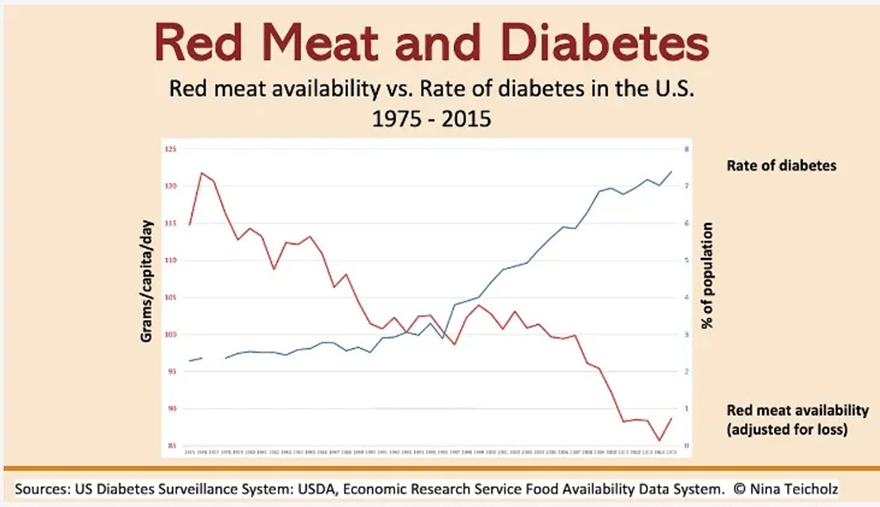
It was a bit of an epiphany when I realised that doctors are fallible because they are taught things in medical school that are either based on unchallenged junk science, or on science that hasn’t been updated in 50 years.  I think the first time my respect for doctors was seriously challenged was when I did the thirty day carnivore experiment a little over three years ago.  As always I did a metric shit tonne of research for that ejo, and what I learned shook my foundations.  I learned that the Dietary Guidelines for America (which inform those of the rest of the world) are based on very little science at all.  I learned that eating from the food pyramid actually causes rather than prevents obesity, heart attack and diabetes.  I learned that high cholesterol is not bad for you, and yet statins are the most prescribed medication in the world.  And I learned that red meat is unjustly vilified, so why on earth would I listen to a doctor who tells me I need to stop eating red meat when I look at charts like this:

Um… what’s up doc?

So I started getting interested in the body again. Especially my body. And what I’ve done since is just step off the medicine wheel.  I no longer want to do the things that allopathic medicine says I need to do in order to be healthy.  I don’t want to take medicine for high cholesterol, because I know that high cholesterol is protective, rather than something to freak out about, especially for people my age.  I don’t want to have to eat fibre, because I know that fibre is useless (and in a lot of cases, actually harmful).  I don’t want to reduce my salt intake, because I know that salt doesn’t increase blood pressure

Over the last few years I’ve really enjoyed the freedom to pursue the best health for myself by completely ignoring what doctors say, and exploring outside of the constrained realms of modern medicine.  I’m at a stage in my life where I want to experiment with improving my own health.  I want to try the kinds of things that I would have laughed and scoffed at, or just dismissed out of hand, in my youth.  Stuff that I would have considered woo-woo or as having no scientific basis.  Coz why the fuck not?  What have I got to lose?  Modern medicine has its place, for sure, but unless I’m in need of surgery or life-saving treatment I’m no longer interested in allopathy as a source of information for my general health and well-being.  I don’t want to be prescribed pills, thank you very much.  For anything.  Ever.  My health is in my own hands, and that is so empowering.    

So yeah, I’ve tried some weird shit.  The carnivore diet is pretty weird, but it works for me.  Coffee naps are weird, but they work for me.  Cold showers are very weird, but they work great for me.  Getting early morning sunlight in my eyes to help me sleep better that night is weird, but it works for me.  Putting red filters on my phone and computer at night to block out all the blue light also works.  And yes, it’s also weird.  But if it works, who cares!! 

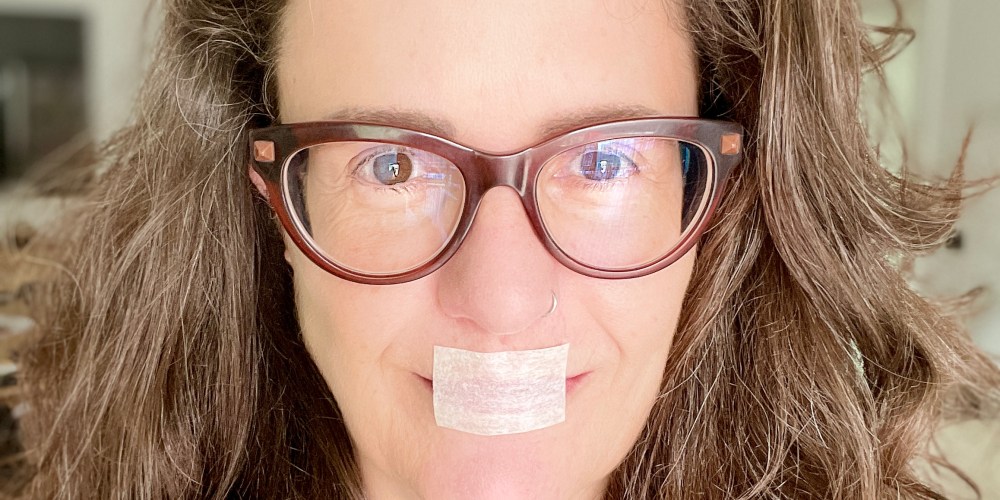
Another weird little bio-hack that I want to talk about, that I started doing a couple of years ago, was taping my mouth shut at night.  Yes, I know I’m probably getting some strange looks from some of you about this one.  But I swear there’s something about it that is very comforting and very calming, and which is amazing for helping me go to sleep.  And not only that, there is a lot of evidence to suggest that nasal breathing is far superior to mouth breathing for lots of other reasons.  Not just when you’re sleeping. 

I’ll admit I first came across mouth taping on Instagram accounts that I follow for carnivore tips.  At first I just ignored it as one of those weird, wellness, social-media fads that has no basis in science at all.  I mean, for very good reasons I do not normally get my health advice from Instagram.  But then I listened to a podcast by Dr. Andrew Huberman where he delved into the reasons why it might actually be a good idea to try it.  So I tried it.  And I slept like a baby.  In fact, the first time I taped my mouth for the whole night was the first time in a very long time that I didn’t need to get up four or five times to go to the toilet.  Two years later, I’m still sleeping like a baby.  And I tape with wild abandon.  I tape at night, I tape for my twenty minute coffee naps, and I tape at work on the night shift during my two hour breaks.  If I don’t tape my mouth before sleeping, I feel weird, I feel naked.  But you know what the funny thing is?  If I do happen to find myself without tape, I now sleep with my mouth closed anyway.  I’ve trained myself to keep my mouth shut whether it’s taped or not!  And that’s actually the goal, to become a natural nasal breather. 

Andrew Huberman, Ph.D. (@hubermanlab)

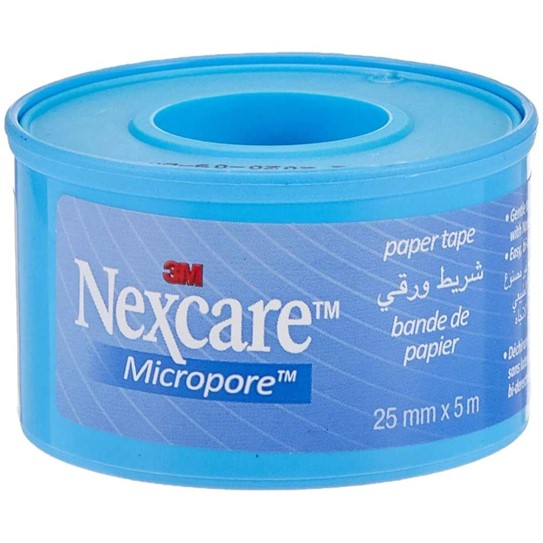
If you have any breathing issues like sleep apnoea, collapsed nostrils, chronic sinusitis or a deviated septum it’s probably a good idea to check with your doctor before trying mouth taping, but if you’re relatively healthy and just looking for a good night’s sleep I reckon you can do what I did and just give it a shot.  Make sure you get special medical tape, and don’t even think about using masking or gaffer tape unless you want to rip the skin off your face.  And you don’t have to wrap the tape all the way around your head like a mummy.  You’re not trying to seal your mouth, just keep your lips together, so a small strip is more than adequate.  David and I use 3M Nexcare Micropore (2.5cm) tape, which is recommended by people in the know.  It’s super cheap, flexible and doesn’t irritate our skin. 

You can get fancier mouth tape, but we don’t bother. 
We’re basic bitches.

So, what’s the point?  Sure, there aren’t a lot of large scale studies on the benefits of mouth taping, but there are a couple of small ones which do show significant improvement in sleep, particularly in those who suffer from obstructive sleep apnoea.  According to Dr. Huberman, nasal breathing allows for greater lung inflation by increasing resistance to breathing.  And it increases the production of nitric oxide six-fold.  Nitric oxide is a miracle molecule that you want to (naturally) produce as much of as possible. It increases oxygen uptake and lowers blood pressure.  And it does that because it’s a vasodilator, it dilates the blood vessels.  So, for those of you guys who might be having a little trouble in the trouser department (wink wink, nudge nudge), nitric oxide is the molecule that is released by Viagra to help with erections.  And you can get the same effect just by becoming a nasal breather.  I told you it was a miracle molecule!!  And if that’s not enough, nitric oxide also kills viruses.  Whaaat? Is there anything it can’t do?! 

Breathing through your nose filters out all the airborne shit flying around in the air and keeps your nasal and respiratory passages moist.  This sounds gross, but trust me you want them to be moist.  When air enters your lungs via your nose, it’s been warmed and humidified and purified, which allows for a better exchange of oxygen and CO2 when it hits your lungs.  Not only that, it helps to prevent the spread of infection, it reduces snoring (which impacts the quality of your sleep), and improves dental hygiene and facial alignment.  In contrast, chronic, habitual mouth breathing has the potential to negatively impact respiratory function and can even result in aesthetic changes to your face (psst… not for the better).  James Nestor, author of the book “Breath: The New Science of a Lost Art”, says, “Inhaling air through the mouth decreases pressure, which causes the soft tissues in the back of the mouth to become loose and flex inward, creating less space and making breathing more difficult”.  So why would you breathe through your mouth?

In 2018, Nestor participated in an experiment in which he blocked his nose for ten days in order to see what impact mouth breathing would have on his health markers and feelings of wellbeing.  Five years later he says he is still suffering PTSD from being forced to breathe through his mouth 24 hours a day.  He also says that it triggered almost immediate hypertension and obstructive sleep apnoea.  His cortisol levels skyrocketed, and his heart rate variability took a dive.  And he went from not snoring at all to progressively snoring for most of the night, which of course affected the quality of his sleep.  Immediately after that experiment, he switched to ten days of nasal breathing (helped along with mouth taping at night) and he said his health went from completely wrecked to completely normal, just by changing the pathway through which he breathed air.  In other words, breathing through your nose is the best default state for respiration.  So if you can train yourself to be a nasal breather, like I did, you’ll see lots of benefits beyond a good night’s sleep. 

It is a little scary at first, taping your mouth shut when you’re going to sleep.  Like, am I going to be able to breathe?  Am I going to die in my sleep?  The answer to that is no, you’re not going to die.  Your body is a marvellously high-tech, fine-tuned instrument and, even if you have a blocked nose, it can sense that your mouth is closed and will always clear a nasal passage for you to be able to breathe (this might not be true of everyone, but it does apply to most people).  I was even able to tape my mouth shut when I had covid, during which my nose was so blocked that absolutely no air was going in or out.  Remarkable, huh?  I’d tape up and lie down and boom, I could suddenly breathe through my nose.  Sometimes it took a few minutes to unclog and clear up properly, but it always did.  And the other great thing about taping during covid was that even though I had a terrible cough, I never coughed at night. 

If you’re a bit nervous about asphyxiating in your sleep (which I promise you, will not happen), you can place the tape vertically, rather than horizontally, which will allow you to breathe through the sides of your mouth, even as your lips are encouraged to sit together.  Another tip is to start taping while you’re awake, just to get used to the idea.  Build up to it, starting with ten minutes a day.  Then half an hour.  Whatever it takes to acclimate to it.  And then you can start taping at night, and realise all the wonderful health benefits of nasal breathing.  If you do try this, I would really love to hear about your experience so please shoot me an email and let me know how you went. 

Happy new year, goodnight and sweet dreams.

Ejo #162 – Chaos & Order

Chaos and order are not two sides of a coin, but rather two extremities on a continuum, and most of us strive to strike a balance between the chaos and order in our lives, hopefully finding a resting place somewhere near the middle.  Of course there are some people who seem to court chaos, living a tumultuous life of pandemonium, mayhem and strife.  And others who tend towards being super methodical and organised, never allowing themselves to stray outside of a life of perfectionism.  At the extremes, these characteristics become problematic and can even be indicative of serious mental health disorders.  What is needed is a balanced blend of both, as both are necessary for a good life.  A steady foundation of order is needed to provide a safe haven to operate from, but too much stifles and smothers our development and growth.  Chaos is also needed to some degree, in order to prevent us from vegetating in our comfort zones.  It helps us to remain adaptable to change, which is a good thing.  But too much can be catastrophic, plunging us into destabilising anguish and distress. 

Would it surprise you to learn that every single month, the task of writing my ejo manifests as an epic symphony co-created by the opposing forces of chaos and order that coexist within my mind?  This usually plays out as a cage fight in three parts.  The first part is the idea.  A theme.  A topic.  I never start writing straight away, but normally allow the concept to just be.  Knowing that it’s there, I simply allow it to linger in my brain.  To marinate. Sometimes within my awareness but mostly not.  And though it may appear that I am doing nothing, this period of dormancy is a vital part of the creative process for me.  My subconscious makes connections, kneading out the flesh of the idea.  Lines are cast, and concepts coalesce.  I make no conscious effort towards this. 

When the time is right, part two begins.  This is the disgorging of words.  And it really is kind of like a mental vomit.  Words just hurl out, accreting into clunky, awkward fragments.  Sentences spew forth before amassing into ponderous paragraphs.  Sometimes it makes sense, other times it’s a dog’s breakfast.  Sometimes it’s projectile, and sometimes it’s chin dribble.  But I write it all down, no matter how much barf it’s covered in.  And sometimes, when the words won’t come, I have to do the mental equivalent of sticking my fingers down my throat.  It’s not easy, but you do it in order to feel better.  This part of the process is pure mayhem.  Unadulterated chaos.  There is absolutely no order, rhyme or reason to this madness.  I just have to trust that from the bucket of puke I end up with, an ejo can be forged.  And it always is.  Part two is not writing, it’s a tornado.  The result is barely intelligible, and a first draft bears almost zero resemblance to what ends up being published. 

Part three is when the writer comes out.  The writer’s job is not to write, but to rewrite.  To make sense of the vomit.  To move the carrot chunks around, so to speak, in order to turn them somehow into something beautiful.  This is really hard work.  This is the part that requires a structured way of thinking, and it requires order and discipline.  It is repetitive, monotonous and can appear mechanical.  But it is from this drudgery that the magic happens.  In fact the magic cannot happen without it.  Part three requires skill, and the meticulous application of that skill.  It is the opposite of chaotic. 

Writing my ejos is actually a pretty monumental task.  One that I’m proud of accomplishing month after month after month for more than 12 years.  As soon as one ejo is published, I immediately start the process again with the next one.  The three parts of my writing method take up the entire month, so my ejos are something that I am always engaged in.  They are also probably the most elegant illustration of how the complicated interplay of deep-seated chaos and order can give birth to something unique and singular.  But this is unusual.  Most of the time it just gives birth to a goddamn mess. 

I may come across as being someone who is spontaneous, free and easy.  And I can be.  I am capable of it.  But that is not my nature.  My nature loves order.  And abhors chaos.  Unscheduled spontaneity is chaos to me, and as much as I love the idea of it, the reality can send me into a tailspin.  This is something that I have only recently become concretely aware of, and something that I would like to change about myself.  But my nature is strong.  My nature wants routine, it wants rules, it wants discipline and order.  I do better, mentally and physically, when I have that structure in my life. 

Of course, as you’d expect, this aligns beautifully with air traffic control, where a very high standard for detail is required.  But when I first applied for the job way back in the late 90s, the business consultants and HR execs that comprised the interview panel expressed concern about one of the hobbies I’d mentioned in my application.  Writing.  The impertinent mofos had the gall to say, “We don’t think you’re suitable for the job because there’s no room for creativity in ATC”.  Firstly, they were wrong, because there is room for creativity in aviation.  In fact flexibility, and the capacity to change tack is absolutely necessary in such an unpredictable environment.  No two days are ever the same in this job.  And something that might work one day, will not work the next.  You have to be able to think on your toes.  Secondly, they were wrong, because I am suitable for the job.  The need for hyper-vigilance in ATC actually suits my personality to a tee.  I’m such a stickler for the rules, I’d go so far as to say that I’m famous for it round these parts (and you’d best not think about that too much).  I can’t afford for any elements of chaos to enter my workplace, and thus high-level order is my default work state. 

Unfortunately, this fastidiousness spills over into my personal life where it isn’t necessarily as warranted, or even desired.  Turns out I can be a little bit obsessive (my saving grace is that I am not also compulsive).  I just need some things to be a certain way, and it can be potentially distressing for me when they’re not.  Exempli gratia, the toilet paper needs to be rolled over, and not under (and I will not be accepting comments on this matter).  For over a decade, I waged a relentless, unspoken battle against the toilet paper roll in David’s parents’ house, switching the roll so that the paper rolled over, and not under, every single time I went to the bathroom.  And I’m still not sure if it was David’s mum or dad, but someone was fighting back.  The last couple of years we’ve visited them, however, I’ve started questioning myself.  Why am I doing this?  Who’s house is it anyway?  Why should I exert my will over their toilet paper alignment preferences?  Of course it still irritates me when I go to the loo at their place and have to unroll the toilet paper from underneath.  It’s like an itchy scab being picked in my brain.  But I now resist the urge to flip the roll over, and that’s huge for me.  Interestingly enough, studies have shown that people who prefer their toilet paper rolled over (which is actually the correct way) have more dominant personalities, and so are also more likely to change the orientation of the toilet paper roll in other people’s homes.  I think the end of the Adelaide toilet paper saga was the beginning of a softening of the uncompromising rigidity which has ruled my adulthood.  I no longer feel I need to strive for perfect order in every single facet of my life.  I think I just don’t care so much any more.  I think this is what getting older looks like.  And I rather like it.

That doesn’t mean I can just suddenly become loosey goosey about everything though.  One zany example of this is my locker at work.  Everything contained within the thin metallic walls of my work locker is there because of a previous lacking, and the desire to not ever be found lacking again.  I once arrived at work only to realise that I had forgotten to put on deodorant, shock horror!!  So now there is a can of deodorant in my locker.  Another time, I woke up after my night shift nap with dry eyes, so now I always have eyedrops in my locker.  On a recent night shift, I had to share the break room with a colleague and had trouble sleeping thanks to his snoring.  You can bet your sweet ass the next day I brought ear plugs to work and popped them in my trusty locker.  I may never need them again, but if I do they’ll be there.  And just the other day, I forgot to bring a coffee pod to work for my afternoon shift coffee nap, and was forced to steal one from the training department!  So now my locker has a couple of extra coffee pods in it.  Also, aloe vera tissues, face towels, tampons (even though I haven’t had a period in over three years), a spare 50dhs note, dental floss refill, a mini-vial of perfume, a couple of lip balms, a jacket, a toothbrush and toothpaste, lipstick, Band-Aids, Ibuprofen and Paracetamol, hairpins and hair ties, a mug (that I never use, but you never know), beef jerky (in case I need a snack), a magazine, electrolytes, a couple of spare face masks, a bowl, a fork, a spoon and a knife, and a mini-can of hairspray to tame my flyaway tresses in Dubai’s unforgiving humidity.  Also, a spare set of glasses.  This is actually a requirement from the regulator, but I’d have them anyway after once cleaning my specs at work with a dish scourer, scratching the shit out of them so badly that I couldn’t continue working and couldn’t even drive home.  As you can see, I’m now ready for anything. 

I’ve been thinking a lot lately about why order and structure and routine make me feel better than freewheeling spontaneity does.  And I believe the reason is comfort.  For better or worse, it would seem that comfort is my highest priority in life, greater than ambition, or the desire for success or money.  Greater even than the need to be liked (though of course I am more comfortable when I am liked).  I do think that my propensity towards order is borne from this desire, or at least amplified by it.  If I have everything I need around me, ordered in a certain way, then the odds of me being uncomfortable are reduced.  Which sounds great, but is actually kind of really shit when you think about it.  And completely at odds with the way that I intellectually and spiritually strive to live my life.  It’s the opposite of going with the flow and letting go.  In Volume 3 of my Words With Chryss ejo I talked about my attempts to transcend difficult feelings and situations.  Part of my ongoing endeavours to improve myself involve learning to find comfort in discomfort (yoga is amazing for this).  Alas it’s so extremely counterintuitive for me, that I have to work really hard to achieve it.  Sometimes I do, but mostly I don’t.  But learning to keep your equilibrium no matter what is happening around you is a very powerful trick to have up your sleeve.  It’s freedom from the shackles of needing order to be happy.  It’s freedom from needing anything to be happy.  What I’d really like is to no longer have to arrange things to be just right.  I want to be happy even if I run out of lip balm.  Which sounds inconceivable to me right now, but is something worth pursuing.  Do I sound like a hot mess?  It’s because I am.

I have a disease.

Entropy is the ultimate expression of chaos.  Life, the universe and everything are all mercilessly advancing towards randomness and disorder.  This explains why we die.  It goes no way towards explaining why we exist in the first place.  But here we are.  Little pockets of order, we resist the irresistible.  We oppose the inexorable.  For a short while anyway.  Life, while at times chaotic, is the ultimate expression of order.  Still, this order has no choice but to yield to the rules of the universe.  Life is fleeting, and order is just an illusion after all.