Learning About Dubai

Ejo #25 – Sheikh Zayed: The Father Of The United Arab Emirates

Every day I drive to and from work on a freeway called Sheikh Zayed Road.  It’s a 16 lane behemoth, flanked on either side (in the downtown area) by the soaring skyscrapers that define the city’s skyline.  It’s a very impressive thoroughfare and so it should be, for it is named after a very impressive man.  That man is the topic of this month’s ejo.


Sheikh Zayed bin Sultan Al Nahyan is widely regarded as the father of the United Arab Emirates.  Before 1971, the country as we know it didn’t even exist.  The seven emirates that make up the country (Abu Dhabi, Dubai, Sharjah, Ajman, Fujairah, Umm Al Quwain and Ras Al Khaimah) were then collectively known as The Trucial States.  They were called that because in 1820 they all signed a treaty with Britain, called the Perpetual Maritime Truce.  In layman’s terms, the treaty gave Britain exclusive rights in the region in exchange for protection against external threats, particularly from Europe.  England allowed the emirates to rule themselves but oversaw governance – which involved, amongst other things, arbitrating the frequent disputes between the sheikhs.


Almost 150 years later, in 1968, England announced that they planned to withdraw from the region and Sheikh Zayed (ruler of Abu Dhabi at the time), sensing an opportunity to form a coalition with the other emirates, proposed to them that they unite to become an independent country.  Of course, now it seems obvious that they would do so.  But at the time, this idea was revolutionary.  The states may have agreed to form a trucial union way back in 1820 as a British protectorate, but the ruling Sheikhs of 1968 were prone to disputes, and in particular Abu Dhabi and Dubai had clashed a number of times.  They weren’t exactly on friendly terms.  In addition to this obstacle, some of the other states (namely Bahrain and Qatar) had plans for their own independence and wanted no part of Sheikh Zayed’s preposterous idea.


However, such was the Sheikh’s conviction that unity would provide strength, that he diplomatically persisted for three years until he convinced the others to sign on.  On 2nd December 1971 six of the emirates signed an agreement to form the country the United Arab Emirates.  A few months later, Ras Al Khaimah joined them and the country as we know it was born.  Last year marked the 40th birthday of the UAE (an excellent vintage, if I do say so myself)!  Now, if you think the USA puts on a good show for their Independence Day (4th July) celebrations, you ain’t seen nothing!  The citizens of the UAE are not just proud of their country, they absolutely adore it.  The National Day celebrations each year are bigger than anything else on the social calendar, including New Year’s Eve.  Emiratis, and expats alike, adorn their cars with the national colours of red, white, black and green.  Ribbons, stickers, flags, paint (yes, people paint their cars) and streamers.  They fill the streets, covering everything with glitter and silly string.  They sing, they dance, they do cartwheels.  They beep their car horns and shriek with glee.  There are parades and concerts and fireworks.  It’s quite something to behold and you really can’t help getting caught up, not just in the excitement but also the great sense of national pride.  And of course the undisputed hero of National Day is the man that made it all happen, Sheikh Zayed.


National Day car decorations


Zayed was born in 1918 into Abu Dhabi’s ruling family.  When he was ten years old his father died, leaving Zayed’s older brother Shakhbut ruler of the emirate.  Back then the entire region was poor and underdeveloped – oil hadn’t been discovered yet and the economy relied heavily on pearling and fishing, which provided scant income.


Zayed spent most of his youth in Al Ain (a desert oasis outpost), hanging out with his Bedouin tribesmen.  They taught him their way of life, skills and traditions – a love of which stayed with him for the rest of his life.  In fact even after he became very powerful he preferred to spend time with the Bedouin rather than with people of his own status.  It was in the desert that he felt most comfortable, and it was there that he was taught, and became passionate, about hunting and falconry (though when he was 25 he famously gave up rifle hunting to set an example for wildlife conservation – another of his passions).


When Zayed was 28 his brother appointed him ruler of Al Ain and his political life was born.  He started travelling extensively, particularly throughout the Middle East, Europe and the USA and it was on these travels that he noticed the high standard of education and health care available in the more developed countries.  He saw how large the divide was between the Trucial States and the rest of the world, and he believed that it was imperative to bridge that gap.  Unfortunately, as long as his brother Shakhbut was in charge, Zayed’s hands were tied and he was unable to effect any change.


When oil was discovered in 1958 things started to look up economically.  Sheikh Shakhbut, however, was a frugal and cautious leader accustomed to a more austere lifestyle in keeping with Abu Dhabi’s historically hard times.  Members of the ruling family became unhappy with how slowly he was progressing with oil exploration and development and in 1966, with Britain’s backing, they decided to oust him and appoint Sheikh Zayed as new ruler of Abu Dhabi.  Zayed took to the role as though born to it.  Using his own funds, he immediately set about making many changes and improving the emirate – developing housing, schools, hospitals.  Later on when the oil money started pouring in he spent it on ports, roads, an airport and other infrastructure.  He also began a lifelong project of conservation, responsible for the planting of millions of trees throughout Abu Dhabi (becoming known in the process as “The Man Who Turned The Desert Green”).


After taking power, he also realised that for Abu Dhabi to truly prosper it would need to co-operate and join forces with its neighbours.  And when Britain declared its withdrawal from the area his vision for the UAE was ignited.  At a time when the Sheikhs of the other emirates were looking at how they could gain advantage over each other, Zayed was looking at a bigger picture.  He saw that if they got together they could achieve much more than if they remained separate entities and just a few short years later, his vision became a reality and the country experienced unbelievable growth (bolstered of course by the discovery that Abu Dhabi sat atop nearly 11% of the world’s natural oil reserves).


When the UAE came into existence in 1971, Sheikh Zayed was naturally elected President.  He continued to be re-elected, and serve as ruler of the country, until his death in 2004.


Sheikh Zayed in the desert wearing traditional Bedouin clothing


When he died at the age of 86, the entire nation went into deep mourning.  They were shattered.  They had lost not just their leader but their father.  And Zayed loved his people in the same way.  He was once asked in an interview why he donated land and housing to his people, why he gave them free utilities, education, health care and many other advantages.  To paraphrase, his response was, “Don’t you feed your children?  Don’t you put a roof over their heads, put them in school and take care of them when they’re sick?  That’s all I’m doing too – I’m taking care of my children.”  His vision of the UAE as a powerful force in the world wasn’t restricted to economics, or finance, or oil.  He wanted his people to be educated and healthy so that they could in turn contribute to their country, and to the world.  Idealistic?  Perhaps.  But it was these ideals that made him one of the most adored rulers in history.


Why was he so loved?  The basic answer is that he took care of his people.  But it goes much deeper than that.  He actually loved them, and no matter how powerful he became he never presented himself as being better than anyone else.  He remained accessible.  He prayed in the mosques with the common men, he sat and drank tea with the Bedouin, and if someone approached him in the street with a gripe he would listen.  And yes, he would walk the streets.  The idea of locking himself up in a palace didn’t appeal to him.  Even after he’d amassed a personal fortune of over USD20 billion it wasn’t in his nature to act the privileged Sheikh.  To the end he remained within reach and open to his people.


Perhaps what made Sheikh Zayed different was that he understood he was lucky, and he generously shared his wealth, not just with the citizens of the UAE, but with other countries in need.  He donated fantastic sums of money to charities and causes around the world.  He was also famously moderate in his views, believing in and encouraging women’s rights in the workforce.  And even though he was devoutly Muslim, he was open-minded enough to allow the building of temples and churches in the UAE.  This was something that more conservative Muslim countries such as Iran and Saudi Arabia thought was outrageous.  But Sheikh Zayed firmly believed that tolerance, not tyranny was the right way to govern.  His intelligence and perspicacity made him a visionary leader.  His warmth and wisdom and approachability made him a loved one.  Sheikh Zayed was considered the country’s national treasure, and today the UAE is a living memorial to his greatness.
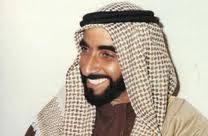
 

The friendly and wise Sheikh Zayed


I have developed a deep respect and love for the father of my adopted home.  Every day when I drive past his enormous memorial poster on Sheikh Zayed Road, I look up and think about what kind of man he was, I think about everything that he achieved, and how to this day I have not heard one bad word said about him.  There seems to be something almost magical about Sheikh Zayed.  And every day, his warm eyes and wise countenance look down upon me and it feels as though, even though he’s now long gone, somehow he’s still watching and looking over all his children.
Ejo #24 – Christmas In Dubai (And How We Can Help The Construction Workers Just A Little Bit)

Well, this is my twelfth ejo for the year, which means I have achieved my goal of writing an ejo a month.  Taking my cue from a lovely friend who set herself nine goals in 2009, I specified 11 things that I wanted to accomplish in 2011 and this marks one of them as completed!  I am so pleased with how motivated I’ve been to finish my goals that I will definitely continue it next year and beyond (though I imagine that 45 goals in 2045 won’t be nearly as much fun as 12 for 2012, or 13 for 2013)!


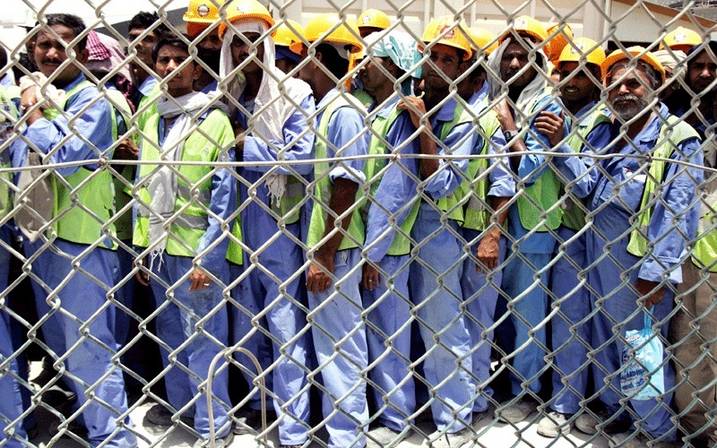
I’m lucky enough to live and work in a country that provides me with a great deal of fodder and I’m never at a loss about what to write about next.  This month I have chosen to write in a little more detail about the men who have created the amazing city David and I live in.  I’m not talking about the Sheikhs who run it, and I’m not talking about the architects who designed it.  I refer to the hundreds of thousands of Indian, Pakistani and Bangladeshi men who, day by day, brick by metaphorical brick, have built this city from a handful of low-rise buildings scattered across the desert thirty years ago, to the skyscraper filled metropolis of today.  I am talking about the construction workers and labourers.


Construction workers being herded onto their bus

Before I get into that though, I’ll briefly touch on what at first may seem like a completely unrelated topic.  Me.


I am not ashamed to admit that I have suffered depression exactly twice in my life.  I don’t have a predilection for it, unless you count my melancholic teenage years when I would lock myself in my room for hours on end, writing awful poetry and listening to George Michael’s “Careless Whisper” on repeat (c’mon, it was the eighties!).


The first time I experienced real depression was when my Dad became ill and died of lung cancer.  It knocked me sideways.  Forcefully.  I sought medical help and, slowly, I climbed out of the depths of despair that I’d fallen into and back into a normal life.


The second time was when David and I moved to Dubai.  You might remember that, initially, I wasn’t offered an ATC job as promised, and this gave me a great deal of professional anxiety.  Would I work as an ATC again?  Who the hell was I, if I wasn’t an Air Traffic Controller?  Also, even though I loved living in Dubai, I found it a cold and indifferent place.  I didn’t make many friends and started feeling that there was something wrong with me.  My self-confidence crumbled.  I hadn’t realised how important the support network of all my friends and family back home was.  And without that support, I floundered.  I forgot who I was.  In addition to all this, I found the obscenely large divide between the ‘haves’ and ‘have-nots’ of Dubai a constant slap in the face – this alone would be enough to distress even the hardiest of optimists.


There were two things that helped me get out of my Dubai depression.  The first is a woman called Zimmy Khan, a clinical hypnotist and theta healer, who in just a few sessions stripped away all the fear and doubt and negativity I’d accumulated, leaving behind the person I’d been when we first moved here (someone I’d actually feared was gone forever – that’s what depression can do to you).  Even though I am perfectly OK now I still see her every couple of months to make sure that I stay that way.  I can honestly say that she totally changed my life for the better and I would recommend her to anyone going through any kind of crisis, big or small.


The other thing that helped lift me out of my doldrums was the labourers that work outside our apartment building (Ejo #3).  How could they possibly help, you wonder?  Well, they didn’t exactly come up to the apartment and make me cups of tea while we chatted about what was getting me down.  No, they helped me in another way.  By smiling.  In 48ºC heat, sweltering in their yellow, full-body jumpsuits, big heavy boots and protective helmets, whenever they spotted my car they would cheerfully smile, salute, jump up and down, and wave.  Our neighbours, who we’ve lived next door to for three years, can’t even muster up the courtesy to respond when we say hello (let alone smile when they see us).  Literally, they ignore us when we say hello!  But these labourers, whose lives are crappier than our neighbours’ by a factor of about a billion, act as if we’re Bollywood superstars whenever they see us.


What have we done to deserve such fanfare?  Not much.  From time to time during summer, when we were out shopping for groceries, we would pick up a few extra bottles of fruit juice and hand them out to the guys when we got home.  That’s it.  In fact, I don’t think it’s the juice that they appreciated so much as the fact that we noticed them and treated them like regular people.  To us, unlike many others, they are not just part of the infrastructure.  To us, these guys are human beings who simply have the misfortune of being born into a life so crappy that the best option for them is to leave their home and come to work here.  And to put into perspective how bad that life must be, the average monthly wage of a labourer in Dubai is about 800dhs (~ AUD215).  To earn that, they must work outdoors for 12-14 hours a day, 6 days a week, 52 weeks a year – for three years.  And then they reach their use-by date and get sent home.


Because they get paid so little they are forced to live in the labour camps outside the city.  They are housed a dozen men to a room.  There’s no air-conditioning or heating (and yes, it does actually get cold at night in winter) and sometimes there’s not even running water.  The conditions are abysmal.  Even worse than this, these men are deemed sub-human by almost everyone.  It’s absolutely disgusting and shameful.  And whilst it’s the construction companies that mistreat and underpay them, I personally blame the government for allowing it to happen.  It’s not as if they’re illegal workers.  The government allows them into the country on work visas.  But once they’re here, they aren’t allowed to form unions, they aren’t offered any wage protection or even minimum conditions of service.


And it’s the rulers of Dubai who benefit from these men the most.  It’s the shiny, glittering buildings that attract the tourists – and tourism, not oil, is where the government makes most of its money.  The men that build these amazing skyscrapers and towers almost never see the inside of them once they’re completed.  Referred to as “bachelors”, they are considered the lowest class of citizens in the UAE.  What pisses me off the most is that without them, Dubai would still be a dull, desert village that virtually no-one had heard of.  There would be no Palm Jumeirah.  There would be no Burj Khalifa.  The city shows no gratitude, no respect and no acknowledgement of what they’ve done or what they continue to do.  So when David and I occasionally get them a drink to quench their thirst on a hot day, they are thankful not only for the cold drink but also for the gratitude and respect that we show them.  They are thankful for the mere fact that we acknowledge their existence.


These guys (and their cheerful smiles) forced me to put my own angst into perspective.  I have an (air-conditioned) roof over my head and I live a very comfortable life.  They live like animals, get paid a pittance (most of which they send back home to their families), and for them a treat is going to the movies twice a year.  And these guys SMILE at ME!  Their predicament strikes very close to my heart.  My father was a labourer so it’s very easy for me to put him (or even myself) in their shoes.  And to be honest, I don’t know if I would have the same strength and fortitude that they do.  So, sometimes, when they smile at me it almost makes me want to cry.


I’ve thought long and hard about where these smiles could possibly spring from.  The simple explanation is that the human spirit is incredibly strong.  Even under the harshest of circumstances, it will not break.  My problems are trivial in comparison to what these guys face every day.  Putting that into perspective certainly helped me conquer my own demons.  But feeling better as a result of comparing my life to someone’s less fortunate isn’t really enough.  I realised that if I could do something to actually help them, it would make me feel better still.  I didn’t want to ignore the issue, as so many others here do (because it’s so easy to do).  I didn’t want to be complicit with the problem, or contribute to it by turning a blind eye.


Recently, I got in touch with a woman called Roshni Raimalwala who runs an organisation called Karama Kanteen.   Roshni accepts donations of food, clothing and other goods from schools, companies and individuals, and she organises volunteers to distribute these to the labourers at the camps – often providing between 200-500 labourers a week with a hot meal.  This month she has distributed Christmas hampers to 1500 workers.  In November I bought food to provide 200 labourers with a meal.  I can’t tell you how good that made me feel.  Amazing, actually.  One of my twelve goals for 2012 will be to do this on a regular basis.


Karama Kanteen's Xmas hamper distribution


With Zimmy’s help, and by learning from my worker friends that I can be happy regardless of what the world throws at me, I am now mindfully grateful for what I have.  And I worry far less about what I don’t have.  I am hoping that, during this holiday season, you too are grateful for everything that you have.  In fact, I’m hoping that you are so grateful you’ll also consider donating to this cause.  Even just $5 will buy a couple of hot meals.  I’m not growing a moustache, running a race or even wearing a red nose to raise money.  I’m just asking, and hoping that out of the very goodness of your hearts (and that’s all it would be as it’s not tax deductible), you’ll want to do something, give something, to help make a fellow human being’s day just a little bit better.  A little less bleak.  After all Christmas is a time for giving.  Of course it feels good to give to your loved ones.  What I’ve found is that it feels even better to give to those truly in need.  If you’re interested, please let me know and we can sort out a way to transfer the money.  I’ll make sure every cent/fil goes towards food and clothing for the workers.


To finish, I’d like you to meet Najimasker.  He’s a 34 year old Pakistani who’s been in Dubai for two years.  He’s a little guy with an enormous heart and even though we have nothing in common (and probably wouldn’t have anything to talk about, even if we were to sit down for  cup of tea) I consider him my friend.  He brightens up my day, and it is my sincere hope that I do the same for him.  That’s what friendship is about, right?


My friend Najimasker


Merry Xmas everyone.

Ejo #23 – Arranged Marriages in Dubai; Or How I Tried To Find Leewin A Suitable Wife

Allow me to introduce you to Leewin Nainan, another colleague of mine.  His family is from Kerala, India and today he is turning 31 years old.  Leewin is funny, intelligent, sensitive, thoughtful, easy-going, handsome and nice to his mother.  He’s interesting, sporty and sociable.  He’s also really good at his job (which is to provide assistance and support to the air traffic controllers at Al Maktoum International Airport).  Working with him is a real pleasure as he’s very switched on – which makes my job a lot easier.  Leewin (pronounced LEE-ven) is currently single and well, to be honest, he’s quite a catch!


Does what I’ve written so far sound like a single’s ad?  Well, it kind of is.  You see, Leewin is looking for a wife.  Hang on, that’s not quite right.  It’s Leewin’s family that are looking for a wife for him.  Yep, Leewin is in the market for an arranged marriage.


Now, before I go on, I want to emphasise that not all marriages arranged by family are for the greater good.  Often, a young bride is betrothed against her will to a man as payment or reward or some other, less than savoury, reason.  I think everyone would agree that this is wrong.  But it would also be wrong to condemn arranged marriages on the basis of these incidents.  They are not the same thing and it’s not what I’m discussing here.


OK, so let me tell you a bit more about Leewin.  He was born and raised in Dubai to Indian parents.  Mum, Saramma, was a nurse.  Dad, Nainan, worked for the Department of Civil Aviation (DCA).  He has one brother and one sister, both older.  After graduating from high school, Leewin enrolled in a Bachelor of Commerce degree at a local university.  Sadly, in 1999, just six months into Leewin’s degree his father passed away and it was left to Leewin to support the family, meaning that he had to drop out of school (it was decided that it would make more sense for his older brother, who was in his final year of university, to finish his degree).  Leewin was able to get a job with DCA through his Dad’s connections and over the years he has gained experience in several different areas within the department.  His current role as an air traffic control assistant rounds off this experience, putting him in the unique position of having a broad overview of the entire system.  Coupled with his intelligence and ambition, I have no doubt that he’ll be very successful.


The pressure to get married started when Leewin was 25 years old.  But at that stage it was just gentle, nudging encouragement.  After all, his older brother had just married so there was no real rush.  Family members were just interested to know when he too would start looking for a wife.  Leewin, however, was in the first flush of romance with a girl he’d been friends with for a few years.  He was more interested in exploring that relationship than thinking about getting married.  Unfortunately though, it was doomed from the beginning as Leewin is Christian and his girlfriend was Muslim.  Neither of their families approved of the relationship because of their different religious beliefs.

Naturally, the topic of marriage was raised during the three years they were together, however in the end the pressure exerted by their families became too great and they broke up.  He was not welcome at her house, and if she wanted to spend time with him she had to lie to her family about where she was.  Leewin and his girlfriend loved each other but the strain just got too much and they decided to call it quits.  He’s been single for the last two years.


Over the years, the pressure to get married has intensified.  When Leewin turned 30 however, it escalated to the point where he was no longer being asked to get married, but being told.  He’s not too happy about that, but he is a good son and feels obligated to fulfil the wishes of his mother and their extended family.  If he refuses he risks being disowned and outcast, bringing shame on his mother.  It’d be considered a selfish act and the entire clan would be disappointed and humiliated.  So, he has agreed to go along with it.  His brother, who also now lives in Dubai, immediately sprang into action and registered Leewin to a number of matrimonial websites (check out www.m4marry.com to get an idea), the marriage equivalent of “online dating”.  The same premise applies.  You advertise yourself – your age, height, build, education, religion, profession, hobbies and interests.  And you can also specify what you are looking for in a prospective partner.  The only difference is that the “first date” does not involve the guy and girl meeting over coffee, or a candlelit dinner.  Instead, they meet accompanied by both families.  And as opposed to the Western version, talking about marriage and babies on a first date is NOT considered a social faux pas.  It is, in fact, encouraged.


So, whilst Leewin has acquiesced to his family’s demands that he actively search for a wife, he is steadfast in his determination that he do it his way.  He was not raised in the small town of Pathanapuram, Kerala with the attendant small town mentality.  He’s big-city, born and bred, and he’s been exposed to big city ideas, influenced by the modern, Western world.  So the woman he weds must also have the same liberal viewpoint (otherwise it couldn’t work, right?).  He’s insistent that the first meeting between him and the girl be arranged by the two of them, without any interference from her family.  Also, he’d like to meet the girl without their entourages, over a coffee or perhaps lunch.  This, to most people I know, seems perfectly reasonable.  However, the culture that Leewin is from deems it unacceptable.


Leewin has kindly shown me the profiles of a couple of the girls that have taken his fancy on the m4marry.com website.  But so far, he hasn’t had much luck.  When (as is customary) his brother made the initial, introductory phone call to the parents of one of the girls, they rejected his request for Leewin to contact her directly.  As far as Leewin is concerned, that’s instant disqualification.  He doesn’t want to marry into a family so restrictive.  His brother approached the family of another girl who’d caught Leewin’s eye but they rejected him because, even though he is Christian, he is not a “born again” Christian.  Huh?  It seems that the girls out there (or, more likely, their parents) are extraordinarily picky and demanding.  Fair enough – but sometimes their demands are unreasonable.  Almost all require that the future groom be university educated with the majority insisting on at least a Masters.  That’s fine.  But when they demand that the guy’s parents also be educated to this level, it’s not only silly but eliminates a lot of hopefuls (Leewin being one of them).  The irony is that a great many of these “desirably educated” men will end up as bank clerks, while Leewin (who only has a high school diploma) will almost certainly be successful at whatever he puts his mind to.  Ultimately though, he’s not bothered by the extreme conditional requirements as it simply buys him more time as a free man.


Leewin is not alone in his enforced quest to find a wife.  All his friends around his age are also now being “persuaded” to marry.  One friend recently went back home to Kerala to meet a girl that his parents had lined up.  After the meeting he told his family he’d need time to think about it but they told him that the girl’s parents had given him only two days to decide.  When those two days were over, his parents asked him again what he thought of her and he told them that she seemed nice.  Unbeknownst to him they took this to mean that he approved and they started proceedings for the marriage to go ahead.  By the time he found out, it was too late to back out.  The engagement ceremony is scheduled for this month and he is getting married in January.  He hopes that his quickly formed assessment of his future wife is accurate.  Too bad if it’s not.  (Incidentally, he found out afterwards that the reason her family had wanted an answer so quickly was that if he hadn’t been interested, they had another guy waiting in the sidelines.  If you think the Western dating scene is a meat market, you ain’t seen nothing!)


At a recent gathering of people he’s known since he was a child, Leewin was told by one older gentleman that if he wanted to attract a wife he would have to cut his hair (which he’s actually growing long).  His reply of “I don’t want to marry any of your daughters, so what do you care?” didn’t go down too well.  But the incident demonstrates that if his own people are so willing to judge him on the way he looks, any young woman’s family are likely to do the same.  If they can’t get past the long hair, they’ll never find out about his character, which is above reproach.  And unfortunately, the arranged marriage process allows for only a perfunctory (and thus shallow) examination of a potential partner’s attributes.  Looks, education and interests are usually considered just a starting point where I come from.  It’s then normal to take the time to actually learn more about that person before committing to marrying them.  But in Leewin’s world, it is these characteristics which decide whether a marriage will go ahead or not.  Learning about your partner occurs after the wedding.


Is there any way of saying which is the better method for forming a union between two people?  It depends on your definition of a successful marriage.  If it is to join two families together, and to further develop and strengthen that coupling by having children, then arranged marriages probably make a lot of sense – you aren’t just marrying one person but their entire family.  If, however, your notion of a successful marriage is to find a soul mate, someone to share the rest of your life with and (if you so choose) to make your own family with, then the very idea of someone picking your partner for you is abhorrent.  In the West it is seen as a freedom and a right to choose for yourself.


And that, fundamentally, is where the two schools diverge.  In Leewin’s world, marriage is not a selfish endeavor where you get to select someone because you are attracted to them (the way they look or the kind of person that they are).  It is a pursuit for the greater good of the entire family (taking into consideration, of course, that if you have common interests and backgrounds you will, over time and with effort (yes, effort!), come to love each other).  We all know that romantic love does not last.  The honeymoon period is just that, a period.  Even the most in-love couple in the world will need to compromise and work at the relationship in order to make a marriage last the distance.  Euphoria and lust are pleasant but they aren’t enough.


What the arranged marriage does is remove the trippy flirtation of those initial, heady emotions.  When they’re taken out of the equation, both types of marriages are left with the same amount of work to succeed.  But in the West, we are raised to crave those emotions and to believe that they are in fact what constitutes love.   When it fades, we sometimes believe that the love has also faded, and the union is doomed.  And whilst an arranged marriage has no guarantee of success, the incidence of divorce is significantly lower than the 30-40% divorce rate in countries such as USA, UK, Europe and Australia.


I have divided Leewin and myself into the very different categories of East and West but it’s not entirely accurate to do so.  Just one generation ago, in Greece, my Mum was faced with the prospect of an arranged marriage.  Let me tell you her story.  My mother comes from a very poor family that lived in a small village in Greece.  As a young girl her family couldn’t afford to send her to school so she worked as a shepherdess, tending the family’s sheep.  From the time she was about fifteen, her father would bring men home to look her over as a prospective wife.  At first she didn’t realise that was what was happening, but soon her mother started asking her what she thought of the men.  My Mum retorted that she thought nothing of them – they were old.  And ugly to boot!


By the time she was sixteen though, her parents were desperate to marry her off as young as possible because they didn’t have the money for a dowry (which it was necessary for the bride’s family to provide to the groom’s).  My Mum would pretend to forget that a man had been scheduled to visit, and stay at her cousin’s house as late as possible chatting over whatever it was sixteen year olds chatted about back then.


When my mother turned seventeen her father told her, in no uncertain terms, that she must accept the marriage proposal offered from an older business man who was involved in a deal to buy some of the family’s sheep.  If she didn’t accept, they told her, they were going to have to ship her off to Australia so she could earn more money to send home.  My mother was angry, sad and scared but she decided she would rather immigrate to a strange country than marry a disgusting old dude.


The day she left her home to go to Australia she sat in the taxi, crying her eyes out.  Her father took her in his arms and told her she didn’t have to go.  My Mum just looked at him and said, “I’ll be OK,” before being driven away.  It took many years to heal the fractured relationship with her parents.  She felt betrayed and abandoned by them, and they had thought she was acting selfishly.  They were all wrong.  My mother’s parents loved her but they didn’t have the means to marry her without a dowry and they didn’t want her to end up poor, alone and unhappy.


Whilst it must have been a horrible experience for my mother to go through at such a young age, I must admit I’m glad that she said no to the arranged marriage and went to Australia –after all, if she hadn’t I wouldn’t be here today and you wouldn’t be reading this.  I think we should all be grateful, really!!!


Leewin is now in the unenviable position of having to fulfil an obligation to his family to get married which clashes with his own desire to marry someone of his own choosing in his own time.  This month’s ejo serves not only to explore the topic of arranged marriages but also to put Leewin’s story out there in the hope that perhaps a young, modern, Indian girl with liberal views and realistic expectations will notice him and give him a chance.  That way, both his and his family’s needs can be met, and everyone will be happy.  He really is a great guy and will make some lucky girl a wonderful husband.  If you think that girl might be you, please get in touch with me (via a comment) and I’d be happy to (just this once) play matchmaker.