Photographs

Ejo #74 – An Indian Wedding In Dubai (Part 2)

OK, so long time readers of mine will remember how much I loved going to an Emirati wedding a few years ago.  I mean, it was pretty amazing.

BUT…

… Indian weddings are better.  I’m just telling it how it is.  Apart from the visual spectacle, there is a tangible and incredibly intense sense of joy that permeates every aspect of an Indian wedding festival.  It’s a celebration, in the truest sense of the word.  A carnival of feasting, dancing, eating, singing, loving and laughing.  Following is an account of our first (but hopefully not our last) experience of a wonderful Indian wedding, the union of Deena Mansukhani & Bhavin Asser.

DAY ONE – THE SANGEET

We arrived at the sangeet at 9pm to find the party in full swing.  The event was held in the grand ballroom of one of the city’s finest hotels, and was beautifully decorated with gorgeously adorned tables for all the guests.  But the first thing I noticed was that all the tables were empty.  Everyone was up on their feet, socialising and dancing, chatting, eating at the buffet, drinking at the bar and having fun.  We spotted our friend, Love, at the bar and greeted him with hugs and kisses.  It was so great to see him again after so many years.  He introduced us to his friends and organised some drinks for us.  The rest of the party, to be honest, went by in a blur.  But here are some highlights.

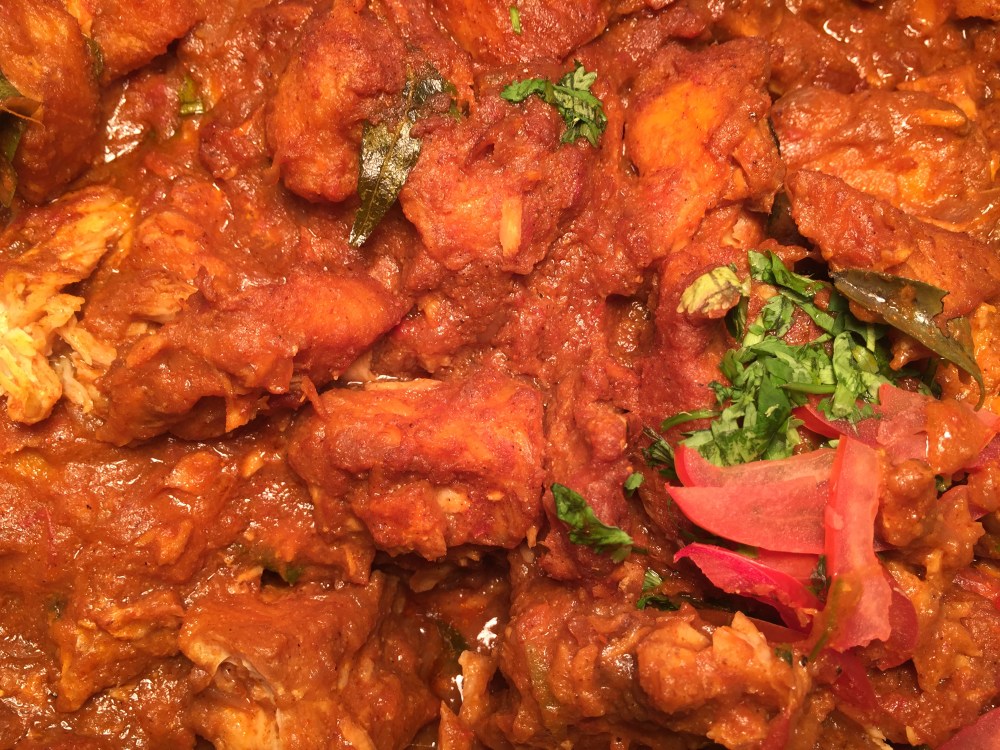
  • The food: Oh, the food. So much glorious food.  We piled our plates up high and went back for seconds (maybe thirds??).
07

Tasty, oh so tasty, chicken

08

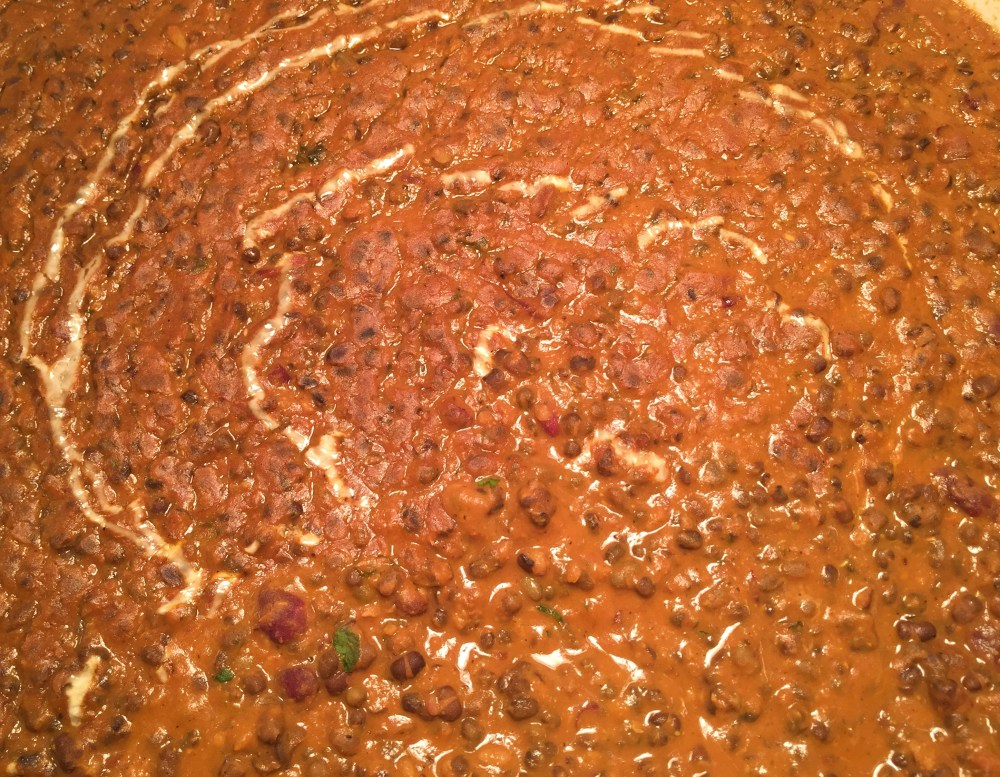
I could happily have drowned in this huge vat of daal. It was amazingly delicious.

  • The people: Everyone was SO friendly.  Like nothing I’ve ever experienced in Dubai before.  People just happy to chat and dance and laugh with us as if they’d known us for years.  The social anxiety I usually feel when I go out here completely melted away in the presence of such warmth and acceptance.  We instantly felt like we belonged and it was a wonderful feeling that I will always cherish.
  • The dancing: Apart from the dancing free-for-all, there were many choreographed performances from both the groom’s and bride’s sides of the family. Traditional Indian music was interspersed with more modern western music so there was something for everyone to enjoy.

A choreographed dance.

  • I met a LOVELY woman on the dance floor towards the end of the night who gave me some impromptu lessons on Indian style dancing (it involves a lot of hand twirling and hip shaking).  She didn’t speak much English and the music was loud anyway so we communicated using the international languages of dance and smiles.  It was an incredibly fun experience and the next day my cheeks hurt from smiling so much (though, to be frank, my cheeks weren’t the only things that hurt – which leads me to…..)
  • The booze: OK, so Love had mentioned something about a free flowing bar when he’d invited us, but he never said anything about the bartender going around pouring shots directly from the bottle into people’s mouth (with a courtesy towelette to catch any spillage, mind you – this was a classy affair, after all). Everybody knows, once the shots start, it’s game over.  I don’t remember a lot after that, though I do vaguely recall catching a taxi at around 3am.
02

Uncle insisted on being in this picture.

DAY TWO – THE CEREMONY

The invitation stated that the ceremony would begin at 2pm in the gardens of another five star hotel.  So, hungover as hell, we dragged ourselves out of bed at 11am, got ready in our kurta and sari and crawled into a cab.  Traffic was bad and we started stressing that we were going to be late.  Hahahaha!!  When we arrived, the hotel staff hadn’t even finished setting up the stage and chairs.  In fact, it would be several more hours before most of the guests would all arrive.  Our bad.  We didn’t realise that a 2pm Indian wedding actually meant 6pm.  Next time we’ll know better.  It wasn’t too bad though.  We got to chill out by the pool and drink lots of coffee and water and wait out our hangovers with a few more of Love’s friends who had also, foolishly, turned up on time.  One great thing about being there so early was that we got to see everything come to life.  The red carpet was rolled out and strewn with marigold petals, and the bride’s guests started arriving in their brilliant saris and kurtas.  In keeping with tradition, the groom’s party would be joining in later.

02 (2)

I doubt I’ve ever looked so glam whilst also feeling like I was dying.

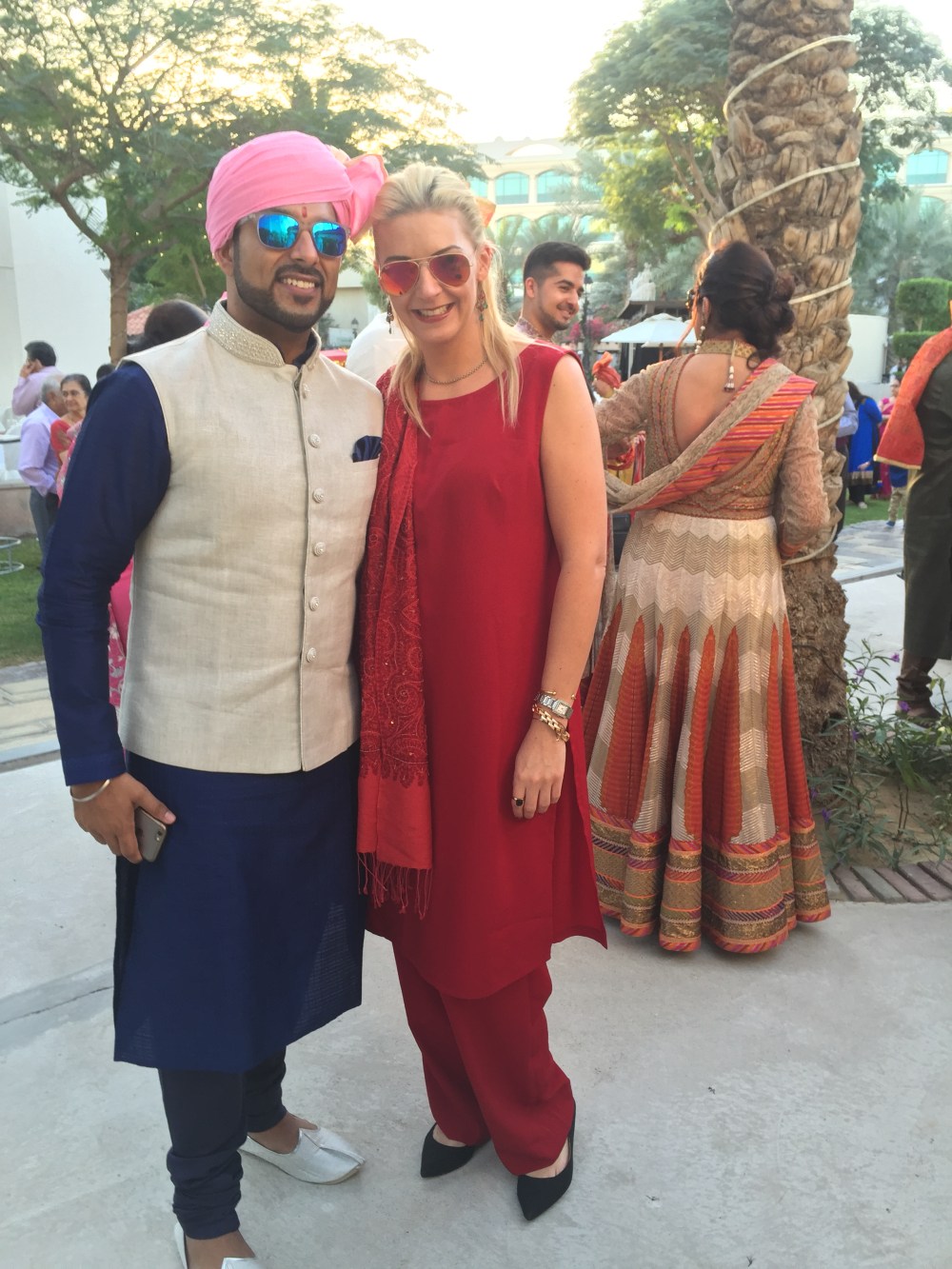
One of the awesome marriage rituals was that the close male members of the bride’s party had their heads wrapped in beautiful dusky pink turbans.  I tried to convince David to wear a turban but he lay down the law on that one.  Plus, it may not have been appropriate as we weren’t actually close to the bride, so I let it go.  Still, I’m sure you’d all agree that he’d look pretty fabulous in a sexy pink turban.
08 (2)

The brother of the bride, our friend Love in his gorgeous pink turban posing with Lulu.

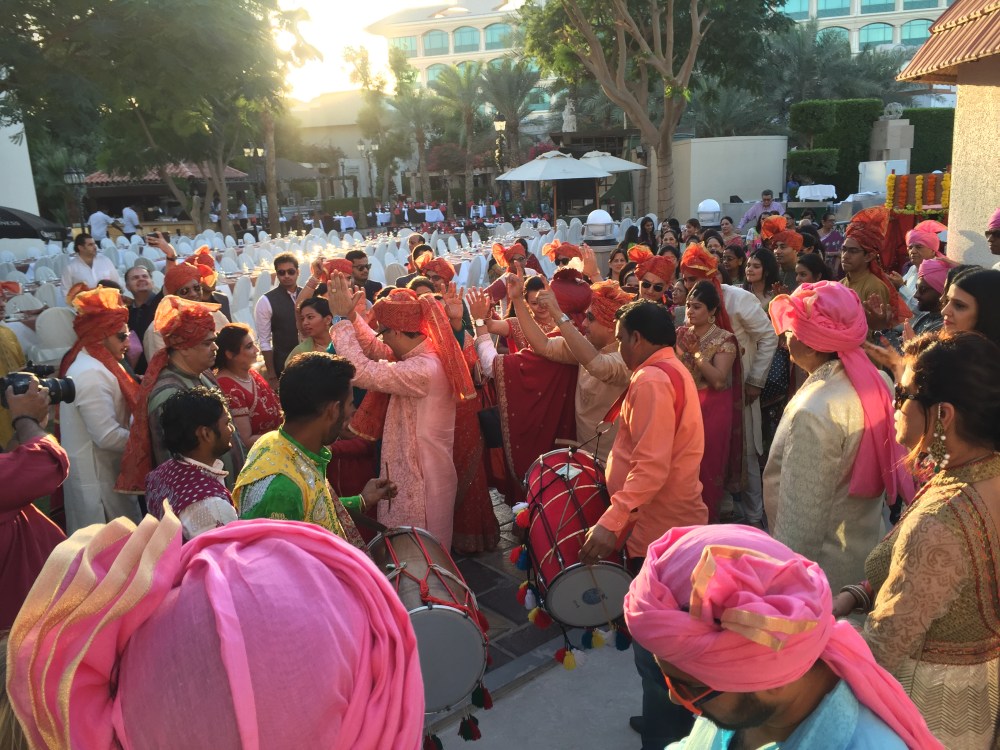
Apart from the turban wrapping, there were plenty more traditions and rituals.  One of the major ones is the Baraat – the arrival of the groom’s wedding party and guests.  Their imminent entrance was heralded by the rhythmic commotion of a couple of dhols (traditional double-headed drums) which had, in fact, been playing softly all afternoon but which became louder and more persistent to mark the Baraat.  We could hear the groom’s orange turbaned posse before we could see them, cheering and whooping in time to the fervent, tribal drum.
03 (2)

The Baraat. Pink turbans meet orange turbans. Everybody looks fabulous!!!!

And, as they descended upon the venue in a whirlwind of dancing and flourish, Bhavin, beaming from ear to ear, made his grand entrance on an elaborately decorated rickshaw.  The entire performance was a joyful cacophony of high-spirited merriment which was impossible not to get swept up in.  I did wonder at the difference between what we were witnessing and the sometimes somber aspect of western weddings.  Yes, a wedding is a serious affair but that doesn’t mean it can’t be fun too.

06 (2)

Usually the groom makes his Baraat entrance on a white mare, but for practical purposes this rickshaw made do.

Once the elders from both families had formally greeted each other, the entire congregation moved back into the venue, where the shindig continued.  The wedding ceremony turned out to be a lot more subdued than the night before (thank goodness!).  There was no alcohol served and all the food was vegetarian.  When I asked Love about it, he told me it was Jain food, made by a ‘Brahman’.  In terms of the Indian caste system, Brahmans are the highest of the bunch, the priests!  The others are Kshatriyas (warriors), vaishyas (farmers and merchants) and shudras (workers).  Food cooked by a Brahman is considered to be pure, and since a wedding is a religious affair, the symbolism of purity is of the utmost importance.  Let me just say though, that as pure as the food was, it was decidedly delicious (the best pappadums I’ve ever had).

The wedding ceremony itself was a series of rituals that took place over the course of a few hours beneath a canopied altar known as a Mandap, which was ablaze in colour, flowers and decoration.  Unlike a traditional western wedding, the guests at a Hindu ceremony don’t sit and watch the entire thing but instead check in from time to time, interspersing those viewings with social mingling and grabbing a bite to eat.  So, in between eating those delicious pappadums and chatting with the other guests, every now and then we would sit down and watch the priest conducting his formalities with the two families in attendance.  Arguably, the most important of these were the four pheras, the bride and groom circling a fire four times to signify their desire to fulfill the purpose of their lives, together.  Intense.

11

The bridal party in the background prepare for Deena’s role in the ceremony. The priest has already started the proceedings with Bhavin in the Mandap.

At one point I noticed that Bhavin was barefoot and wondered about that to Love.  He explained that four of the younger girls from Deena’s side had stolen Bhavin’s shoes during the ceremony.  What????  Cheeky!!!  This was yet another of the quirky wedding traditions.  Negotiations to return his shoes continued during the course of the evening until at last, near the end, they wore him down and he relented, giving them each a gold chain and pendant for their efforts.  What a nice memento!  At this point of the evening, exhaustion was starting to set in for us and we made our way home for an early night in preparation for the final day of celebrations.

DAY THREE – THE RECEPTION

As I mentioned in last month’s ejo, we had a dinner party to attend first, which happened to be retro-themed.  David and I got dressed up in our finest 50’s and 60’s glad rags and went along to a lovely dinner before heading out to Day Three of the wedding, the reception.

01

50s and 60s stylin’

Once more, this was set in a hotel ballroom, and once more everything was beautifully decorated and everybody was beautifully clothed.  And of course, just like Day One, we started the night off with a couple of welcome shots.  How easily hangovers are forgotten.

03

Welcome shots. Trouble.

The reception was another night of celebration, the difference being that this time the bride and groom were hosting as a married couple.  There was the Indian version of a bridal waltz (much sexier!!!) and a very cool chaise lounge upon which Deena and Bhavin sat to accept guest’s good wishes.

Like no bridal waltz you’ve ever seen before!

08

Love doing…. reverse, one-arm push-ups??? Or pulling some pretty impressive dance moves, Saturday Night Fever style!!! Bhavin and Deena greeting their ardent fans.

It was all very regal (except for the fact that the party was raging on around them, boisterously).  There was more dancing, more drinking, more fun.  In fact, I haven’t had so much fun in ages.  It was very exciting to be part of something so exotic and interesting and exhiliarating.  I want to thank Love for inviting us and Deena and Bhavin for having us at their amazing wedding.  It was a fabulous three nights I will never forget.


Ejo #73 – An Indian Wedding In Dubai (Part 1)

I have two buckets lists. A reality bucket list – with just one item on it. And a fantasy bucket list with lots of items on it. The difference between these two lists, if you haven’t been able to glean it from their descriptions, is that one of them is achievable through my own action and will. Here is a copy of my current reality bucket list:

Achievable.

Achievable.

The other is basically wishful thinking. Here is my fantasy bucket list:

Dreams.

Dreams.

As you can see, these are things that aren’t really very probable at all.  They’re not impossible.  Just not very likely.  They are things that I have a very low-level, background, desire to happen – with the complete understanding that they probably won’t.

So, something happened recently that got me rather excited.  I got a message out of the blue from someone that David and I had met when we first moved to Dubai (way back when), a great guy called Love (yes, that’s his real name).  It had been a few years since we’d caught up, though I’d maintained a friendship with him on social media (yay Facebook!!!).  Here’s the message:

“Hey, u been to an Indian wedding before?  I’d like to invite you & David to my sister’s wedding in December.”

Imagine my delight!  I literally jumped for joy.  Fantasy bucket list, bitches!!!!!!  Naturally, the first thing I did was start researching what to wear.  Love had said that we could just wear regular western style clothes to each of the events, but that’s not my style.  If there’s an excuse for dress ups, I’m going to get dressed up (hell, sometimes I like to do it for absolutely no reason at all).  And I’m lucky enough to be married to a man that doesn’t mind getting into it either.  Damn, we were going to an Indian wedding!!!  Of course we were getting dressed up.

The parts of the celebration that we’d been invited to were the three main events, held over three days.  The first event was the sangeet, a pre-wedding function where the bride’s and groom’s respective posse’s have the chance to mingle and get to know each other.  It’s basically a monster party full of music, choreographed dancing, tonnes of food and loads of drinking.  The second event was the actual ceremony itself, a more subdued affair, but no less colourful or joyful.  And the third day was the wedding reception, the bride and groom’s first event as husband and wife (which is basically just an excuse to throw another big party – did I mention that Indians like to party?!).

So, my hours of meticulous research led me to the conclusion that I would be suitably attired if I chose to wear a ghagra (which consists of a long, embroidered skirt, a cropped blouse and a dupatta (or shawl) draped over the shoulder) to the sangeet party, a sari (which you’re probably more familiar with) to the ceremony and western clothing to the reception.  Perfect!  Now all I had to do was get myself a ghagra and a sari.  Lucky for me, we live in a city where more than 40% of the inhabitants are Indian so there is no shortage of places to shop.  It’s just a matter of knowing where to go.  Too bad for me, I had no idea.  But, I do know a lovely Indian woman at work called Dayini.  So I asked her if she could recommend somewhere to buy these exotic threads and to my delighted surprise, she offered to take me clothes shopping herself.  How wonderful!!!

We ended up at Karama Centre, a small mall in old Dubai which houses a number of Indian clothing and jewellery stores.  When we walked into the Silky Calicut shop my eyes widened at all the beautiful fabrics lining the walls, creating a jewelled rainbow of colours.  Crimson, purple, aqua, sapphire, chartreuse, gold, magenta.  So much beading, so much embroidery, so many sequins.  How on earth was I going to choose something?  My friend asked the assistant to show us a selection of ghagra fabrics.  He fanned out a golden lace skirt with green accents, and bright red fabric for the blouse.  I fell in love with it instantly.  But I couldn’t possibly choose the first thing I saw, so we insisted he show us a few more options.  Wouldn’t you know it, none of them dazzled me like that first golden skirt, so I tried it on (with a sample gold blouse for sizing).

Check out that shit-eating grin.

Check out that shit-eating grin.

The tailor came out to measure me up and, with Dayini’s help, asked my preferences for buttons, zips, edging, sleeve length, blouse length etc.  I was so grateful that Dayini was there to translate and help me make these decisions, or it would have been a lot more difficult to convey what I wanted – or to even know what I wanted at all.  I mean, I know what I like, but I’m no expert on Indian attire.  So, thank you Dayini, for all your input and recommendations.

With the ghagra sorted we returned to the shelves to select a fabric for the sari.  Once again, I chose the first one I saw (hey, when you know, you know).  It was a beautiful magenta and gold number that I just couldn’t say no to.  Now, for those of you who aren’t aware, wrapping a sari is a nightmare of an ordeal.  There are several YouTube video tutorials about how to do it but it’s difficult as hell AND there’s always the chance that it will come undone at the slightest provocation.  So I’m more than happy to admit that I chose to have my fabric sewn into a “cheat” version of a sari.  Basically the tailor stitches the yards of fabric into a skirt which buttons up (thus preventing an unfortunate wardrobe malfunction), leaving the rest to be draped around in the traditional style.  Unless you’re looking very closely, I think it’s pretty hard to tell the difference.

A week later, Dayini and I went back to the store so I could try on the finished product.  I was thrilled.  Looking in the store mirror, I felt like something halfway between an exotic princess and a character at a themed costume party.  I am quite conservative in my day to day dress.  I wear a uniform of jeans and t-shirts, in predominantly dark colours (Melbourne girl alert!!!), which might be why I like the opportunity to exhibit a little fashion flair when the occasion calls for it.  But wearing those sparkling, colourful clothes, even with just the shop assistants as my audience, I was transformed into a different person.  I felt regal and glamorous.  I felt amazing.

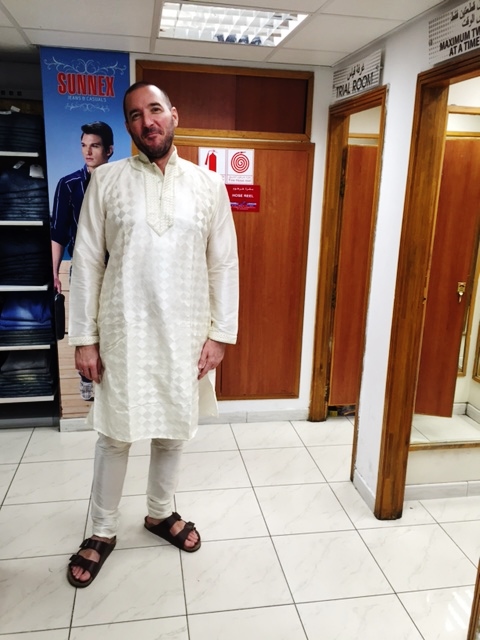
But hey, I hear you ask, what about David?  I was sorted, but now we had to find something for him to wear.  Male guests to Indian weddings have their choice of kurta, a posh sherwani or a suit.  The store that had made up my clothes didn’t do male attire but they recommended a few shops in the area that did.  Unfortunately, while we did find a very reasonably priced kurta in one of those stores, it was one size too small so we had to keep looking.

Just a little small around the shoulders and the calves.

Just a little narrow around the shoulders and tight in the calves.

We bade Dayini farewell and went strolling through old town Dubai.  After a well-earned pit-stop at an Arabian teahouse, we set out on foot again and serendipitously happened upon a clothing store that looked like it might have what we needed.  We explained to the assistant what we were looking for and he pulled out a kurta that not only perfectly matched my outfits and fit David like a glove, but which made him look like he was born a Raja.  Why are men so much easier to buy clothes for??!!!  Too easy.  We were ready for the wedding.

Tune in next month to hear all about the actual event itself.  I promise you, it’ll be fun.

Ejo #70 – Is My Beloved Australia Racist?

I’ve been wanting to write an ejo about racism for a very long time now, as I live in a country in which it’s rife. A place where someone might think it’s OK to make comments like, “I could never date a black girl because I’d feel like her skin was… always dirty,” scrunching his nose in distaste at the thought. A place where the job classifieds can specify, “Indians and Pakistanis need not apply”. A place in which an entire hierarchy is based on where you were born and the colour of your skin. It is a minefield, and perhaps one day I’ll sort out the mess that this blatant racism causes in my head and I’ll write about it. But in the meantime, I’m compelled to write about a place where racism of this magnitude and brazenness does not exist. A place where it’s illegal to discriminate or vilify someone based on the colour of their skin. A place where, if he’s good enough, an indigenous man is afforded the opportunity to play elite professional sport, alongside his non-indigenous counterparts. A place where, on the surface at least, racism has been stamped out. Australia.

Several weeks ago the Australian media (including social) blew up over a topic that proved incendiary and divisive. What happened was that a certain football player was being booed every time he was on the field. I’m not talking about the kind of booing that happens when a player does something you don’t like. I’m talking about an ugly, jeering, vicious kind of booing. Booing filled with hate and malice. Terrible, terrible booing.

So, what did this player do to deserve this treatment? A few people justified it by saying they didn’t like the way he played footy. Interesting. The 18 year Australian Football League (AFL) veteran has had the rare distinction of being twice awarded the league’s highest honour, the Brownlow medal, given to the season’s best and fairest player. For emphasis: BEST and FAIREST player of the entire league. This is no small feat. What else? He is a two-time premiership player (which means his team has won the Grand Final – twice!). Again, a great achievement. Obviously he’s doing something right, when we’re talking about his football prowess, which kind of negates the argument that the disproportionate booing is for the way he plays.

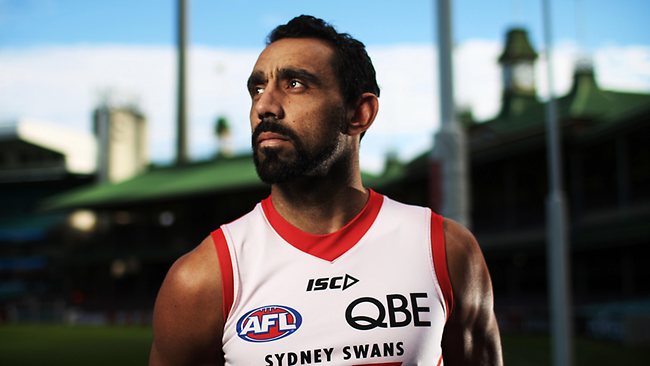
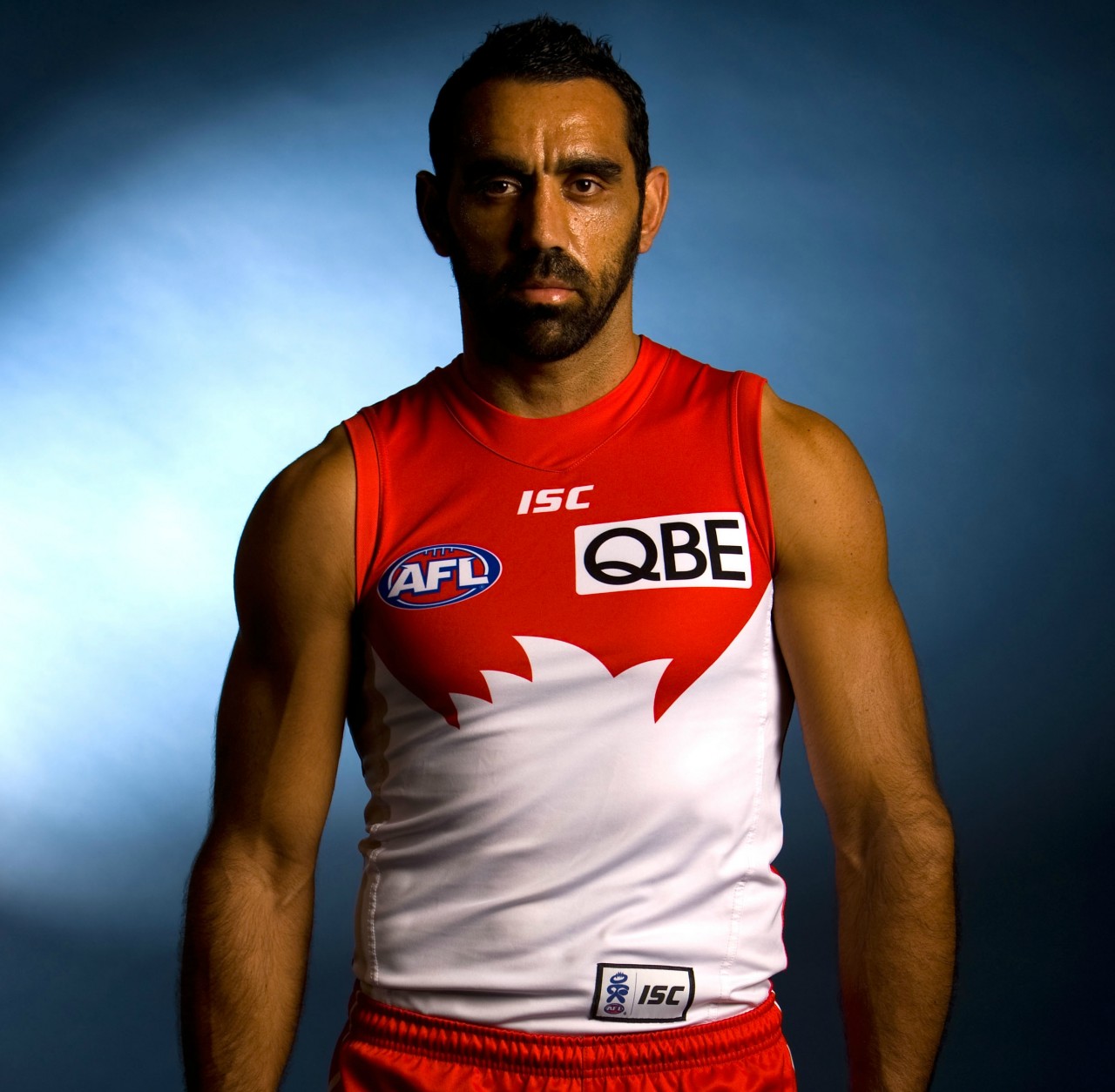
I guess this is as good a time as any to introduce the player under discussion. Beloved readers, meet Adam Goodes, an Adnyamathanha Aboriginal man and one of the most successful indigenous players in the history of the AFL.

Adam Goodes. My hero.

Adam Goodes. My hero.

I might as well also mention that in addition to his sporting achievements, Goodes was elected 2014 Australian of the Year for his work with underprivileged indigenous youth and tireless campaigning against racism. Adam Goodes also advocates against family violence, having experienced it in his youth. Oh, and he took his mother as his date to the 2003 Brownlow medal ceremony, an event usually attended by the players’ “glamorous” WAGs. What an asshole. Boooooooooooooooooo!!!

When I started looking into why people were booing him so much, it became fairly obvious to me that the underlying reasons, sadly, were racist in hue. Let me summarise them below, and you can make up your own minds.

When Goodes was chosen as 2014 Australian of the Year, he made a comment at the ceremony that Australia Day was a day tinged with sadness for Aborigines and Torres Strait Islanders, the indigenous peoples of Australia. He referred to it as “invasion day”. This didn’t go down well with some (racist?) Australians. The comment was said to be divisive and offensive. Why don’t we have a look at what he actually said:

There was a lot of anger, a lot of sorrow, for this day and very much the feeling of invasion day. But in the last five years, I’ve really changed my perception of what is Australia Day, of what it is to be Australian and for me, it’s about celebrating the positives, that we are still here as indigenous people, our culture is one of the longest surviving cultures in the world, over 40,000 years. That is something we need to celebrate and all Australians need to celebrate.

“There are people out there thinking that today is a great day for Australia — well, it is. It’s a day we celebrate over 225 years of European settlement and right now, that’s who we are as a nation but we also need to acknowledge our fantastic Aboriginal history of over 40,000 years and just know that some Aboriginal people out there today are feeling a little bit angry, a little bit soft in the heart today because of that, and that’s OK as well.”

I don’t see how anyone can be offended at that. It is conciliatory, whilst bringing focus to the fact of our country’s history – something that often gets swept under the rug. Australia was forcefully taken from its indigenous people. Bringing attention to that shouldn’t be deemed offensive, or ungrateful. It’s just a fact, and one that should actually be part of the conversation when we celebrate each year on 26th January. And from my perspective, if you boo him for this reason, you are booing him because you are racist and you don’t like hearing it.

He has also said that the Australian Constitution is a racist instrument. People didn’t like that either, suggesting that not only was it inflammatory but that he had no idea what he was talking about and that he should keep his opinions to himself. But if you look at it from the point of view of indigenous people, the Constitution is racist. In fact, in 2012, Dr. Helen Szoke, the Race Discrimination Commissioner of the Australian Human Rights Commission stated that an Expert Panel, established by the Prime Minister at the time, had “made a number of recommendations that seek to address the embedded racism in our country’s Constitution”. What were those recommendations? To repeal the provisions (Section 25 and Section 51 (xxvi)) allowing the government to “discriminate on the basis of race”. In addition, the panel recommended that several new sections be inserted. One that “explicitly respects and acknowledges Aboriginal and Torres Strait Islander people”. One that prohibits the government from “making laws that discriminate on the basis of race”. And finally, a section that “proposes the recognition of Aboriginal and Torres Strait Islander languages as the “original Australian languages”.

So, Adam Goodes wasn’t being inflammatory at all. He was simply championing a cause that he strongly believes in (and that the Australian Human Rights Commission also believes in) – the very reason he was given the honour of Australian of the Year in the first place. If you were booing him for this reason, then you were booing him because you are racist.

Let’s take a look now at when the extreme booing started. I call it May of this year when, during a game, Goodes celebrated kicking a goal by doing a little war dance which ended with him throwing an imaginary spear into the opposing team’s crowd. A lot of people didn’t like this, calling it offensive, aggressive, provocative, threatening and foolish. Let’s have a look at what he actually did.

To me, this is simply entertainment. Pure theatre. A joyful celebration. I cannot see how it could be construed as offensive. What I’m seeing is a proud Aboriginal man, celebrating his accomplishment with a ritual of cultural significance to him. And let me point out that this incident occurred during Indigenous Round. For fuck’s sake! It’s nothing less than sheer perfection. If you’re offended by this, and this is why you booed Goodes, then you’re booing him because you’re racist.

Finally, one of the main reasons proffered for the booing was an incident that occurred over two years ago. Here’s what went down. While playing a match during Indigenous Round (yes, again), Goodes heard someone in the crowd call him an ape. Before I go on, can we all agree that this is racist and absolutely unacceptable? The AFL has very strict rules about racism. Fans are immediately ejected and subject to police investigation. And rightly so. When Goodes heard himself referred to as an ape, he didn’t let it slide. He stood up for himself. He put his foot down. He stopped playing and he pointed in the direction of the slur.

Refusing to take racist shit lying down.

Refusing to take racist shit lying down.

To me, this picture is a powerful image of a proud Aboriginal man refusing to accept racism. This picture invokes in me, a strong swell of admiration, empathy, respect and support for Adam Goodes. I love him because of this picture. Unfortunately, a lot of people had the opposite reaction. Especially when the racist turned out to be a 13 year old girl.

What happened next is that the girl was taken away from her guardians, detained for several hours and questioned by police. Adam Goodes has been blamed for that ever since. Which is a joke. Blame the police, blame the AFL, but don’t blame Adam Goodes. He didn’t choose to be racially vilified that day (or any other day). He didn’t choose for that young girl to be the culprit. Did she deserve for Adam Goodes to point a recriminating finger at her? Absofuckinglutely. Did she deserve the treatment that came after? I don’t know, but I know that blaming Adam Goodes for it is wrong. He has been called “vile” and “revolting” for what happened. What I think is vile and revolting is booing a man who stands up against the kind of racism he has experienced over and over again, his whole life. The kind of racism where he’s told to shut up and stop sooking. Where he’s told to stop playing the victim. Where he’s told to harden the fuck up.

And so the debate raged online. It shocked me, it disappointed me, it made me angry and it made me ashamed to be Australian to hear people say that Adam Goodes deserved to be booed for any of the reasons outlined above. It seemed that racism was alive and well in Australia after all. And after living outside my beloved country for the last seven years, that was a slap in the face. I admit that I became quite emotionally involved in the debate. I simply couldn’t understand it, and I did a lot of research because I wanted to wrap my head around what was happening. The conclusion I came to is that racism might be too specific a brush to paint the booers with. I stand by my opinion that Adam Goodes was subject to intense, prolonged and persistent racism. But it’s not that simple. What I’ve come to realise is that Australia embodies an axiom of white hegemony. What is hegemony? The dictionary defines it as “authority”, “leadership”, “power”, “predominance”, “command”. When you put the word “white” in front of all those, you start to get a picture of how Australia subsists.

If you don’t believe that white hegemony exists in Australia, let’s look at some numbers. If Australia was truly racially equal, then the 3% of the population that is indigenous should be represented fairly across the board. What you’ll find is that this is not the case. Nowhere near. Indigenous infant death rates are twice as high as those for non-indigenous children. Life expectancy for indigenous men and women is almost ten years less than for non-indigenous people. Indigenous Australians are four times as likely to need hospital care for chronic conditions, three times as likely to develop diabetes, and three times as likely to die during childbirth as non-indigenous Australians. Even though they only make up 3% of the population, indigenous suicide accounts for 50% of all Australians taking their own life. Half!! Even more disturbing is that for youth suicides that number goes up to 80%. Indigenous Australians are 27% less likely to finish school, and five times as likely to be unemployed as non-indigenous Australians. The average income for indigenous households is about half that of non-indigenous households; and the rate of domestic violence assault requiring hospitalisation is between 25-32 times that of non-indigenous people.

And the numbers keep on coming. Though they made up just 2.3% of the adult population, in 2013, 27.4% of the adult prison population was comprised of indigenous Australians. In Western Australia that number increases to 45%. In fact Western Australia has the proud distinction of leading the world in incarcerating indigenous people. Must be great for business.

So try telling me that the white man in Australia doesn’t have authority, power, predominance and command over indigenous people. Try telling me that white hegemony is a construct. And I’ll tell you that we are systemically crushing Aborigines and Torres Strait Islanders through fear and denial.

So, how does this relate to Adam Goodes? Well, to paraphrase from an article by Trey Lyon: racism is the philosophy, but white hegemony is the system. I truly believe that a lot of the people booing Adam didn’t realise that what they were doing was “racist”. So there was a lot of offence being taken around the place. In fact, it seemed to me that being called a racist was more offensive than actually being one. But when you look at the numbers above, it is really clear to me that we all have a responsibility to do everything we can to stop suppressing indigenous Australians. To insist that booing Goodes was not racially driven is to deny Australia’s tainted history. What I heard a lot was that if he wanted the booing to stop, he should have shut his mouth and stopped calling Australia racist. What I heard was that if he didn’t want to get booed, he should never have done the spear throwing dance. He was asking for it. Like a woman wearing a short skirt is asking to get raped. It’s victim blaming.

Let’s look, instead, at where the blame truly lies.

It lies in the fabric of Australian society, which, through white hegemony, is so finely and intricately woven with racism that if you look at it as a whole you might not even see it. In fact, you might even convince yourself that it doesn’t exist. But as long as being Aboriginal means being a second class citizen, it exists. The Australian Human Rights commission has identified that it exists. To say that Australia, as a country, is not racist is to either be wilfully ignorant, or to be a denier. Both are harmful.

I guess the problem with identifying racism lies in the fact that it’s not as obvious as it used to be. Aborigines not having the “right” to vote until as recently as 1967 was obvious racism. Referring to indigenous Australians as “abos”, “coons” and “boongs” was obvious racism. Not allowing Aborigines to play football because of their race was obvious racism. All of these things have now been rectified – but that doesn’t mean that racism has been eradicated. It’s just been normalised – to the point where people may not even be aware that their thoughts and actions are racist. People like that young 13 year old girl who called Adam Goodes an ape. Whether she knew it was racist or not is not provable (and of course she denied it). But whether she knew it or not is irrelevant. Ignorance is not an excuse for racism. It’s the cause.

This is why the debate gets so messy. I can’t get into people’s heads and say with absolute certainty that the reason they were booing Adam Goodes on the football field was racist. As far as I’m aware, not one single person put their hand up and admitted that they were booing him because of his race. As if. We live in a society where that kind of behaviour is not accepted. But…. I can say with absolute certainty that the reasons people gave to justify their booing of Adam Goodes were in fact 100% racially motivated. Maybe not directly, but there is most certainly a causal link between his outspoken stance against racism in Australia and his being booed on the football field.

Adam Goodes retired last week after a long and illustrious career. He was booed right up to his very last match, which just breaks my heart. It’s a shame that such a fine player will probably be remembered for this ugly chapter in Australian sport. But I will choose to remember him as someone to admire, someone to look up to. I choose to honour him and I truly hope that he continues his amazing work with indigenous youth and educating Australia about racism.

Champion

Champion.  Spunk.  

I can’t do much to fight racism myself, but this is what I can, and will, do. I can write about it, and attempt to bring awareness of the subject to a wider audience. When I encounter instances of racism, I will always, always, stand up and say “No, that’s not right”. This occasion has been the first time that I’ve been turned upon for doing so (and you can read about that in next month’s ejo) but you know what, I don’t care.

You can attack me all you like for calling out racism. It doesn’t say anything about me – but it says a lot about you.