interview

Ejo #164 – The Extraordinary People I Know: Mear

Some of you might remember the opus I wrote on NFTs about a year ago.  Even though the heat on NFTs has cooled a little, I’m still involved in the scene, especially on Twitter which has a very strong and vibrant NFT community.  My feed is often filled with gorgeous artworks, posted by artists trying to get their name out there.  About ten months ago I was scrolling Twitter and came across an absolutely stunning piece by a Chinese artist called Mear.  I commented on it, we chatted for a while and got to know each other a little bit, and I decided to buy the NFT.  In fact, I fell in love with the entire series and bought all six pieces.  It feels very special to have supported Mear as she was starting out in the NFT world, and over the months we have come to know each other quite well.  One of the reasons I love NFTs as much as I do is that as a collector you can discover art that you never would have otherwise been exposed to.  And for Mear, as an artist, the converse is also true.  Would she have sold the entire collection of her Swaying series to an Australian woman working as an air traffic controller in Dubai if it wasn’t for NFTs?  I highly doubt it.  I feel very honoured that Mear took time out from her very busy schedule as a full time artist, teacher and prospective PhD student to answer a few questions about her art and about herself.  Mear’s English is way better than my Mandarin so we conducted our interview in English, with a little help from Baidu and Google translate.  I do hope you enjoy our conversation as much as we did. 

Thank you so much Mear, for taking the time to talk to me about NFTs and art, and in particular your specialty, Chinese painting.  I absolutely treasure the six NFTs in my collection that comprise the Swaying series.  Can you tell me the inspiration for the series, what each one of them means and why you chose these individual names: Imagine, Disconnected, Vague, Praise, Flourish and Indigo?  
The Swaying series is based on the practice of using heavy colour to create small paintings.  I was inspired by some wildflowers on the side of the road.  It was a rainy day, and the wildflowers were swaying, east and west, causing the water on the petals to produce a magical refraction effect.  I imagined the flowers floating in the buoyant sea, swaying in the water and creating beautiful ripples.  So, I began to draw these pictures from my imagination. 

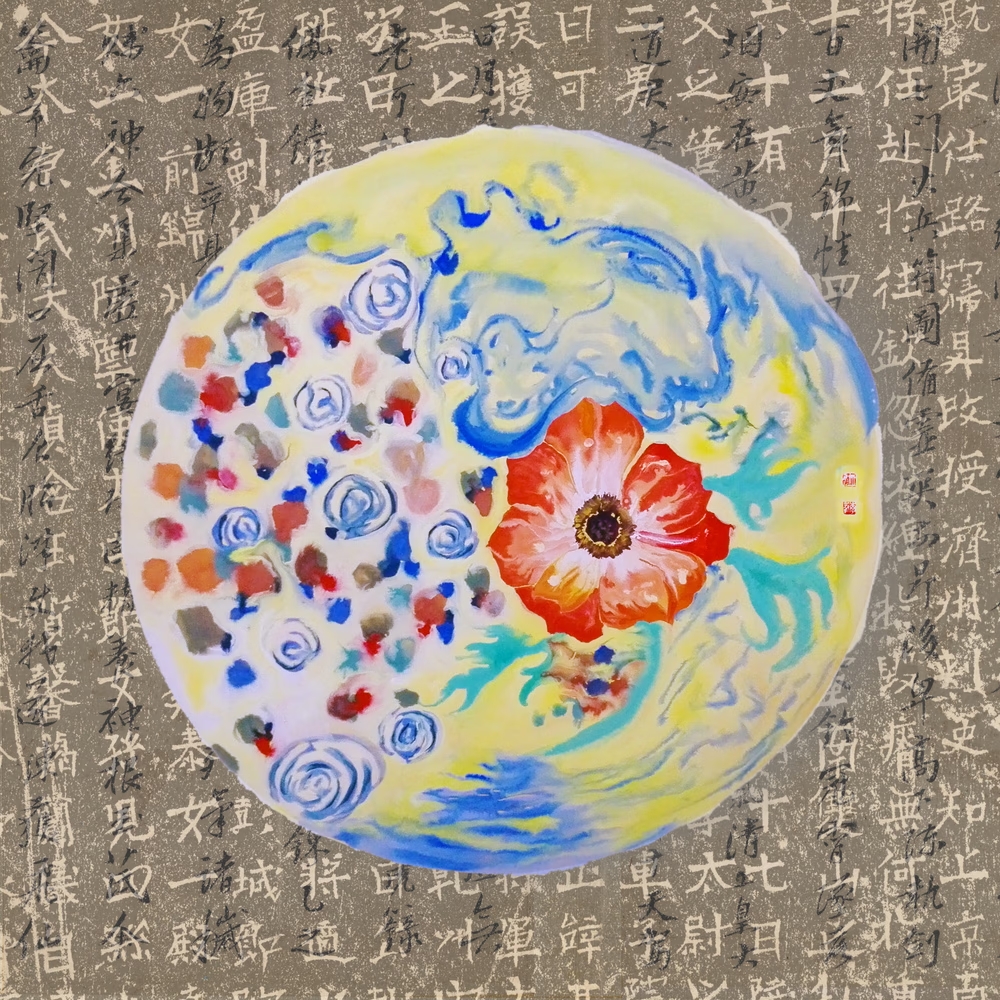
The Swaying series is a dynamic description of petals floating in water.  The Chinese word for each of the paintings is very simple, but very clear.  Imagine is the first painting in the series, and represents the fluctuation of my creative thoughts.  When I was a child I remember watching a cartoon called Bug Division, and a scene from that impressed me very deeply.  So I used rattan yellow and a little gold to try to recreate the gold and black space from the TV show. 

Imagine

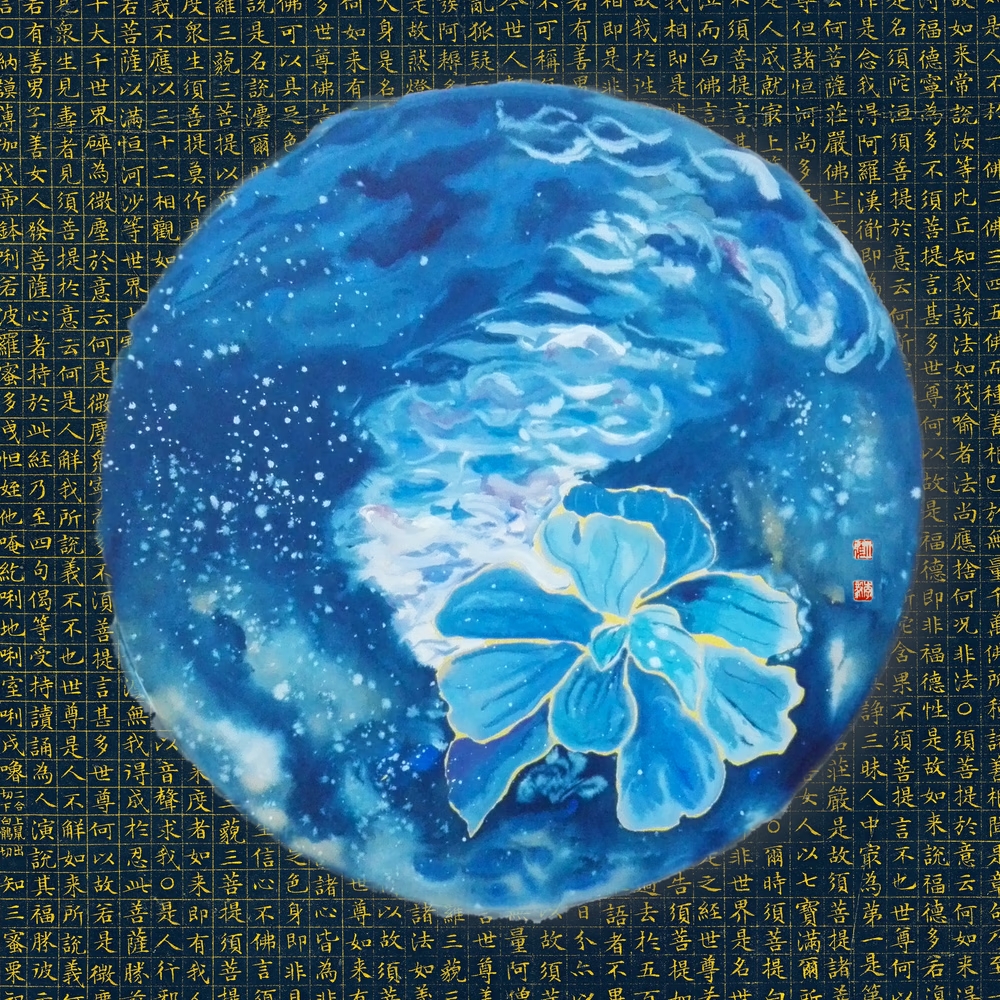
Disconnected describes the camellia at night, a bit like smoky moonlight.  Vague uses the purple tone that I like, but purple is very difficult to show, so I added some clam powder to foil to make it stronger.  Praise depicts the summer forest, with a variety of different colours of leaves.  I added the rock colour, to make it look even more gorgeous and thick. 

.

Indigo depicts a four-leaf clover floating in the lake in winter.  The lake is usually blue, and the water is very deep, but clear.  And Flourish depicts a variety of colourful flowers blooming in spring.  It represents the Chinese people walking in the flower filled street during the Spring Festival.  Very rich and beautiful, it indicates strong vitality.
.

You hand painted each one using ink and brush on paper, and digitally added the Chinese characters in the background.  What do the characters say?  Do they have a special meaning?  
The calligraphy pictures in the background are high-definition pictures I downloaded from an app called China Treasure Museum, which are all very good works by famous masters before the Qing Dynasty. 

For example, as the background in Imagine, I chose a short section from Zhu Dao’s Seven Frames of the Interior Classic from the Qing Dynasty, which is a work mainly about the preservation of health.  And in Disconnected, I chose a paragraph from the epitaph of Zhang Sizhong of the Liao Dynasty.  The epitaph is written for the dead, recording the names, titles and life stories of the deceased.  These pieces were chosen as the backgrounds because the calligraphy is really very good, and worthy of our observation and study.

I’d love to go back to the beginning, if that’s OK.  Your formative years, your childhood, where you grew up, how you grew up. Were you raised in an artistic family? 
People who know me well are aware of my cheerful disposition and how I love to crack jokes. My mother often refers to me as the “happy nut” in our family. However, in public, I tend to come off as introverted and shy, speaking very little. This is for two reasons. Firstly, I’m near-sighted and don’t like wearing glasses, making everything seem blurred. This causes me to overlook many people and things, but it also makes me more focussed on myself, rather than paying attention to external gazes and discussions. Secondly, my dad taught me from a young age that, “The more one talks, the more mistakes one can make”, so I’m always extra careful when I speak or act outside.

I suppose my personality could be classified as a people-pleaser.  Much of it has to do with my parents’ subtle influence. My sister and I are twins, and we were born when my father was quite old, so he’s always been particularly protective. Even to this day, he often warns us about dangers (which I understand, considering he grew up in a time of turmoil, poverty and hardship). For instance, he advises us to be cautious about falling when using an elevator, to keep looking behind us when walking in case someone is following, to not accept food from strangers and always to bring him along for job interviews (though I’ve never actually done so).

I was born and grew up in Guangzhou, China. Cantonese and Mandarin are my mother tongues. My English education began with my mother, who served as my father’s translator in the 90s; she isn’t so proficient now due to lack of practice. My father only speaks his dialect and isn’t keen on learning new languages. From an early age, he taught us calligraphy and seal carving, but because I was too playful, I didn’t learn calligraphy well, which I regretted later in university (where I was even more playful, haha!). We visited parks every year for our birthdays, so it’s fair to say we’ve explored all the parks in Guangzhou. I joined a sketching training camp one summer in middle school which meant I woke up at 5am and finished at around 5pm every day.  And in the final semester of high school, I attended a painting training camp.  My sister and I were admitted to one of China’s top art colleges. Traditional Chinese painting is something that I picked up in university and have been studying since.
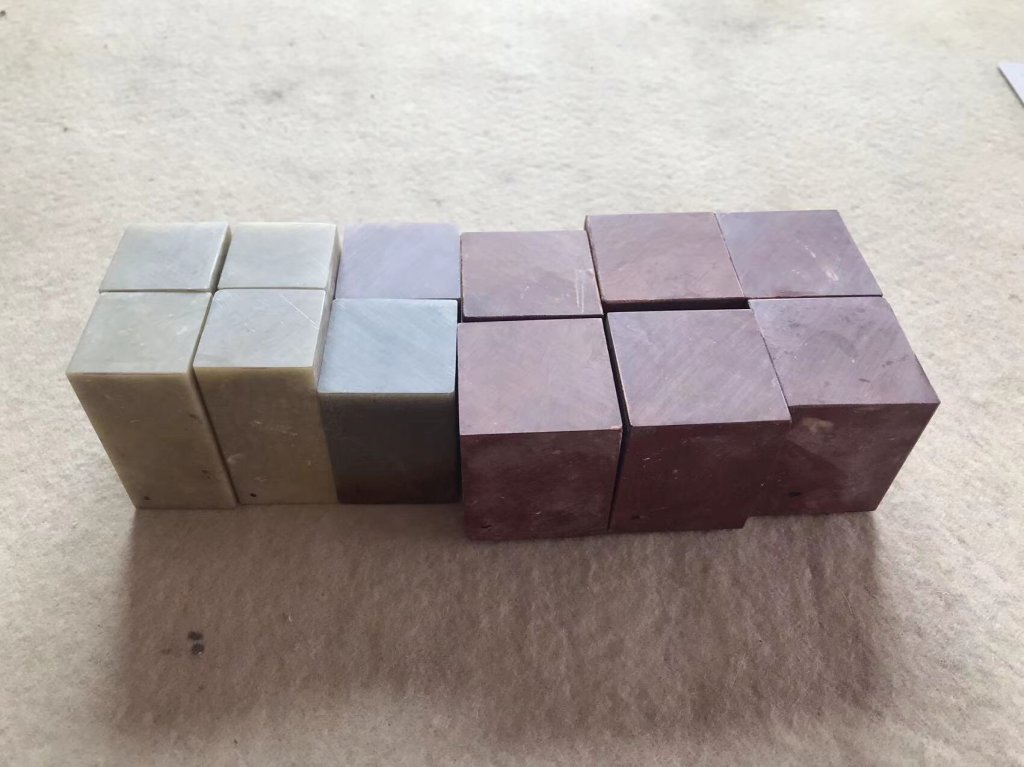
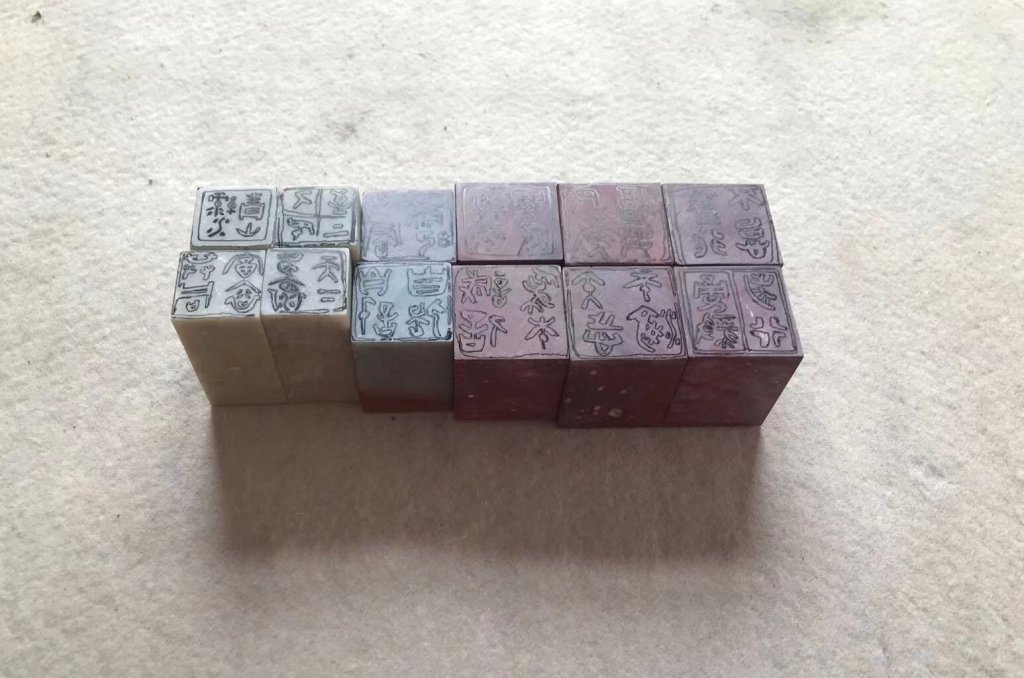
I have to admit that my dad is a good teacher.  His knowledge is extensive and he is incredibly smart.  At my graduation, he was able to discuss poetry and classical texts with my tutor for an entire afternoon.  He has indeed taught me a great deal.  However, he can be too dominant, overly protective and he limits our actions a lot.  By the way, he is a Leo, and I have decided never to marry a Leo man, haha!  

I enjoy discussing artistic concepts and creative processes.  And I also really enjoy painting and I love the surprises that uncertainty brings to my work.  If the surprise is upsetting, I laugh it off, change it and make it beautiful.  Its beauty then reaches others who come in contact with it.  If the surprise is just right, I am overjoyed and celebrate.  

Can you tell us about what you learned at art college?  Have you been working as an artist since then? 
When I was admitted to college, I chose to major in Chinese painting, which is completely different from sketch and colour. It is the pursuit of two-dimensional performance, such as painting figures in exquisite black, white and grey. The description of the painting “object” must be very accurate and careful in order to create a three-dimensional sense from it. Traditional Chinese painting pays attention to artistic conception. Artistic conception is hazy beauty, or transcendent beauty, from limited to infinite.  The concept of “mood” is richly embodied in Chinese painting. The theme, its composition, depiction, emotion, and overall arrangement must all convey this mood, sometimes described as the soul of a painting. Chinese paintings are often called silent poetry. The harmony between an object’s characteristics and the artist’s emotions is what gives a painting its poetic essence, creating art that intrigues and resonates. A painting that deeply conveys emotions and has strong expressiveness captivates its viewers.

Traditional Chinese painting is done with a brush. The front of the brush can be long or short, and the amount of hair will affect its water absorption. Therefore, there are often uncertain factors when using a brush, so strong control ability is needed. When I was an undergraduate, the teacher let us learn landscapes, figures, flowers and birds, and then choose the direction we wanted to further our study. I chose landscape painting. To draw a landscape, we must first practice the basic elements of the painting method, such as: trees, stones, clouds, water flow, etc. And then, we do a lot of copying. We copy the excellent traditional paintings of ancient times, for example Wang Meng’s Seclusion in Qing Bian, Fan Kuan’s Journey to Xishan and Huang Gongwang’s Residence in Fuchun Mountain, etc.  

.
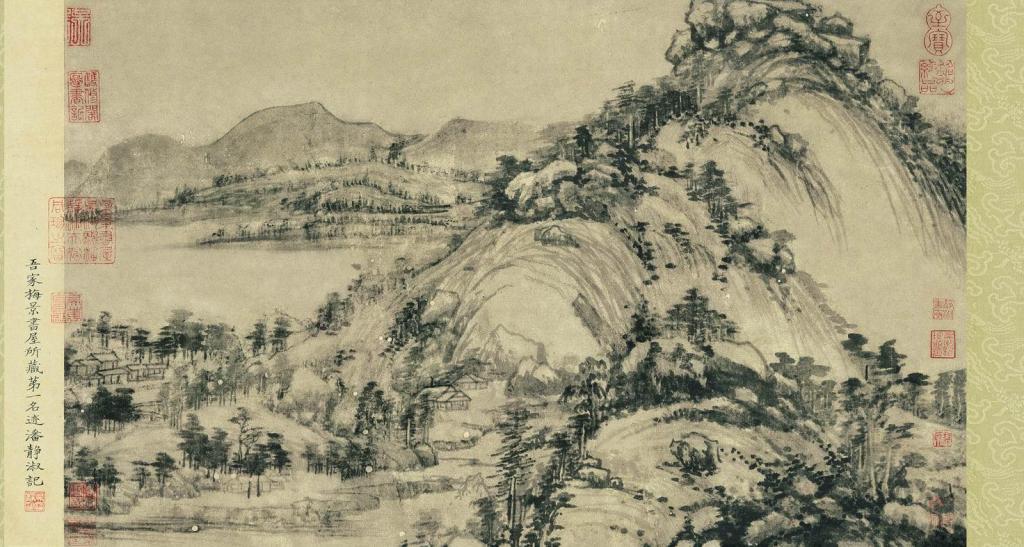
Huang Gongwang’s Residence in Fuchun Mountain

And then, we go back to sketching again.  Every year, we follow our teachers all over the country to sketch.  Places such as Taihang Mountain in Henan Province, Tiantai Mountain in Zhejiang Province and Jinggangshan Mountain in Jiangxi Province.  And finally, the creative stage.  Creation stage is the hardest; to draw a picture from present life, and to combine the techniques learned to make the performance work.  In this process, I often experience long periods of self-doubt because a brush stroke might not meet my expectations.  It’s just a very struggling process.
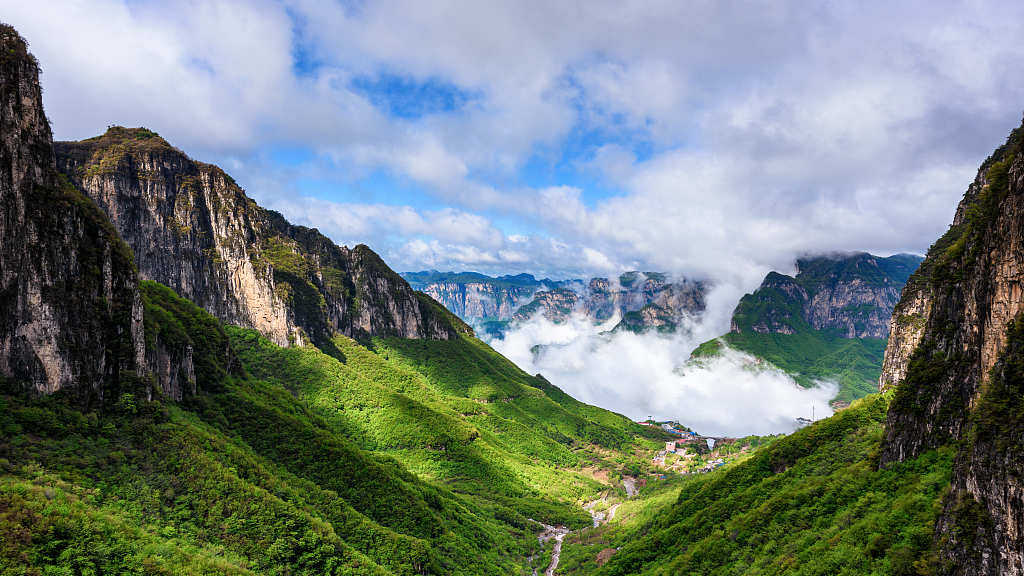
Taihang Mountain

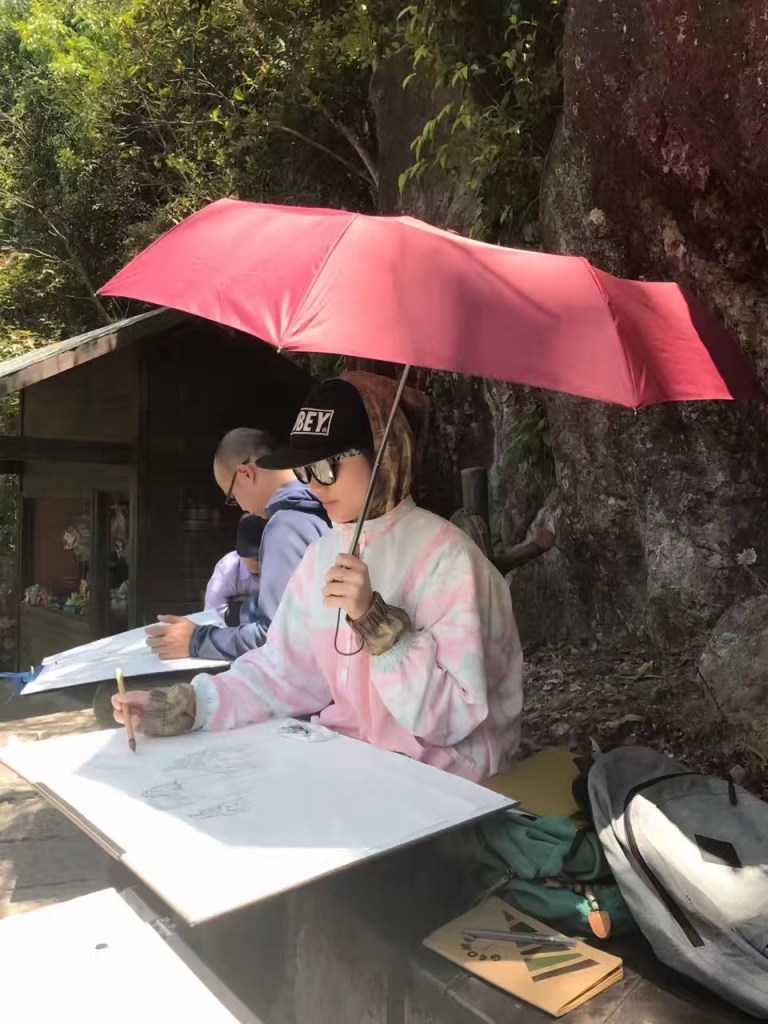
I am a professional artist, but not full-time, I am an art teacher for children because I need a stable job to guarantee my life.  My teacher at college told me to “Live first, and then pursue the ideal”.  I am an idealist in the bottom of my heart and a very romantic person, but I also know that I must face reality. 

Two of Mear’s students earnestly creating their masterpieces

How did you first hear about NFTs, and how did your classical art training translate to digital art? 
I heard about it from my friend.  At first, I didn’t care about it, but later, when more people discussed it, I gradually learned more and then became interested.  I draw with pen and paper and then take photographs of the artwork, which I adjust through the computer to form an NFT.  I use simple retouching tools like Sketchbook, because I feel that the computer is hard to operate, at least for me.

What advice would you give to artists who know nothing about the NFT space, but are interested in trying it? 
At present, I often mention NFTs to my classmates, but because we have to use a VPN to get access, many people are not willing to really understand it.  They think it is a new field, or that it is very troublesome, and that it is better to just draw their own paintings.  I would like to say to the artists who are interested in NFTs, that you are very welcome to the world of NFT. Although it is a little difficult to cast into it, isn’t it good to share your works and to find people who like them?

I agree totally, and I’m so glad that you did join the NFT community! Finally, Mear, can you please share with us what you are working on at the moment? And what are your wishes and hopes for the future? 
At present, I am drawing some large landscape paintings, and plan to participate in more exhibitions held by provinces, or by the state. Of course, it is difficult to get the qualification for these exhibitions, but I will try my best. For the future, I hope to become a successful professional painter, just like the famous painters in history.

If you are interested in checking out (and even better, buying) some of Mear’s work, you can find her art at OpenSea and Foundation marketplaces.

Ejo #158 – The Extraordinary People I Know: Melinda Norris (aka My Gratitude Partner)

Last month I wrote about the gratitude practise that I have shared with my beautiful friend, Dr. Melinda Norris, for over eight years.  This month the two of us sat down (virtually speaking) and had a chat about our project, its benefits, and how easy it is to incorporate an everyday gratitude practice into your own life.  Please give a very warm welcome to my close friend, and longtime gratitude partner, Mel. 

I’m still basking in the afterglow of the wonderful day we spent together when David and I were in Australia last month. After dinner at your place, I noticed a copy of your thesis for your doctorate in Psychology being used (egad!!) as a keyboard stand.  And I was absolutely blown away by it.  It’s such an impressive work.  Can you tell us a little bit about it?
Of course. My thesis was an applied PhD as part of a longitudinal project with Victoria Police.  I followed 7,000 staff over three years with a focus on wellbeing.  My research particularly looked at how people cope effectively with the daily hassles and stresses in work and life.  Which strategies are most effective?  How stable is our behaviour over time?  And, how much can be predicted by our personality, versus learnt by life lessons.  It highlighted the value of humour and seeking emotional, and practical, support as three highly effective coping strategies.  It also showed that a lot of our stable patterns of behaviour are just as much, if not more, learned rather than purely a product of our personality.  Which is great, as it means we can learn new ways, and improve how we cope with the challenges that life throws at us!  

Mel’s opus

This might be an obnoxious question, but do you ever take inspiration from our gratitude practise and incorporate it back into your work as an organisational psychologist? 
It’s really rewarding to tap into my passion, research and personal experiences to help others.  So I do take inspiration from our gratitude practice all the time, and build it into work, formally and informally.  For example, I try to explicitly express my gratitude for any support and collaboration with leaders and team members.  This builds relationships and trust quickly, leading to more effective collaboration as a result.  It also helps me to appreciate the small things every day, and to get through setbacks better.  I notice I don’t get stuck in a negative mindset anymore.  I can bounce back quicker, and find a more optimistic outlook. 

Trust me, I’m a doctor.

I think I got really lucky that you asked me to be your gratitude partner. You’re someone who’s made the wellbeing of others their life’s work, and I don’t think it gets any better than that! Do you remember how our gratitude challenge started all those years ago? 
Yes, I clearly remember how it started.  I was reading your Freedom ejo in our kitchen and getting really engrossed in your story.  I got the clear sense that you were committed to staying in Dubai for a variety of good reasons (career, travel opportunities etc.), but that you missed Australia desperately (your friends, family, the environment and climate).  And I got the sense you were struggling with the downsides of your day-to-day life.

I still miss my friends so much.

I could relate.  I too was struggling to feel the joy in my daily life, but for different reasons.  I was working in a high pressure, deadline-driven job with a lot of responsibilities.  Working four days a week, but squeezing what felt like at least five days of work into those days.  I was also a parent to two gorgeous young boys, and I wanted to be more a part of their lives.  I felt so much guilt and sadness, having to utilise before, and after, school care.  I found a solution with a nanny for a few years.  Kim picked the boys up from school, helped them with homework, and prepared dinner three days a week.  Still, I felt incredibly torn.  I wasn’t succeeding in all my roles in life like I wanted to.  And that was just the two most consuming roles.  I also wanted to be a better wife, a better friend, and a better sister.  There just weren’t enough hours in the day, the week, the year!  I was efficient like a ninja, making every minute count.  Doing so much work on my daily commute, so that I could drop everything when I got home and be fully present.  But I still couldn’t help feeling torn between my career and my family. 

I’d been trying different strategies to enhance my wellbeing and help make my life more enjoyable, and less stressful.  As a psychologist, I knew of the power and benefits of practising daily gratitude, empathy and mindfulness.  I tried writing a gratitude journal, but found it tough to stick with, so that strategy didn’t work well for me.  Something was missing.  A key ingredient.

As I read your ejo that day Chryss, I was inspired by the idea of a gratitude partner.  Adding a social component to any wellbeing strategy has an amplifying effect on the benefits.  Just like exercising with a fitness partner; you enjoy it more, you keep up the habit, and therefore you experience the full potential benefits on your wellbeing.  I was so delighted with the idea and thought that you would be the perfect gratitude partner for me.  You seemed like you’d be open to it, like you needed it too; and we were good friends.  Friends that had lost touch a bit over the years, but you were a friend I could trust, and be open with.  A friend I wanted to stay close to, but found that hard with the tyranny of distance. 

So I wrote to you then and there in my kitchen, letting you know that I’d read your ejo, and that I could relate; that I thought we’d both benefit from sharing the things we were grateful for with each other at the end of every day.  I suggested that we keep it simple.  I didn’t want it to feel hard, or like a burden for either of us.  I hoped it would help me to stick to my commitment and form a new habit.  But more importantly, I hoped that you would reciprocate, and also experience the benefits of practising daily gratitude.  What eventuated was much more than I’d ever really hoped for!  It certainly proved that my idea of adding the ingredients of social connection and reciprocation was incredibly beneficial. 

After the success of our first year of gratitude, we both decided that we wanted to keep it going.  What is it about our gratitude project that’s kept you wanting to continue, year after year? 
I’ve found it so helpful to have you as my gratitude partner.  It has definitely been the key ingredient that’s contributed to the desire to keep at it, and to continue the routine.  For me, it makes it so much more than just searching for, and noticing, all the good things that happen each day.  It makes it interesting and rewarding. And it’s the reciprocal nature of the relationship that makes it really special.  Having you, Chryss, as my gratitude partner, was a winning selection!  You care as much about it as I do, so we are well matched in our commitment to the habit.  You’re also a friend whose opinion I value, and a friend who I want to stay close to.  One precious outcome was that our old friendship was rekindled and deepened.  Actually, I don’t communicate this regularly with anyone else!  So the relationship provides me with a strong social connection, and frequent deep exchanges that I really enjoy, and need, to experience my best life.  

Another surprising benefit for me has been that I’ve felt heard, understood and even supported through some incredibly difficult times by our relationship and regular contact.  We agreed not to communicate negative things, or use it as a place to complain.  We didn’t want that to creep in.  We’ve both been very good at keeping that promise, demonstrating discipline and sticking to our commitment.  And I believe that has maximised our experience, and the benefits.  We keep each other going, encouraging each other and reinforcing the practice.  There are days, here and there, when we don’t communicate, but we always catch up.  These pauses tend to happen when we are on holidays, or deeply engrossed in a busy and challenging time.  Which is when it matters the most to keep at it.  The other partner keeps sharing and asking questions to nudge and help the other person along, but without guilt or judgement.  It has always felt supportive and uncomplicated.  Never a burden or a hassle.  Just a reminder that this helps, and that there is someone who cares and notices, in loving kindness.

It has also cultivated empathy.  You share in the other person’s triumphs and challenges. You realise that everyone has small and big struggles in their lives, regardless of how “successful” or “happy” they seem on the surface. You live through that with the other person.  Another thing Chryss, is that you always have a way of asking me very insightful questions or making thoughtful comments that trigger self-reflection, or just help me feel really understood and supported. 

Thanks Mel, I feel exactly the same way.  I always love getting your feedback, or a question probing more deeply into something I’ve shared with you.  And I think that’s another facet of our routine that has contributed to us becoming closer.  It’s never just a list of things.  It’s a real conversation. 

So, you and I have both experienced some pretty big emotional challenges over the last eight years.  Can you talk about how our gratitude practise may have helped you get through some dark times?
Our partnership started just fourteen days before Cara, one of my closest and most treasured friends, was diagnosed suddenly with terminal breast cancer.  It came out of nowhere, and at a stage that ruled out the hope for remission.  The only options were lots of treatments to prolong and preserve her life.  It was devastating news; news she only shared with me and one other close friend for a long time.  During that period I had a demanding job that required a huge amount of my energy and brain power.  And I was a mum to two beautiful primary school aged boys that needed me too.  Around the same time, my oldest son was suddenly, and frequently, hospitalised with recurring post viral myo-pericarditis.  Essentially, his heart, and the lining of his heart, became inflamed every time he became unwell with a cold or flu.  So as you can imagine, my life at that time, and for the next five years, required a lot of emotional energy each day.  It made practising daily mindfulness, gratitude and empathy critical for my own wellbeing.  Critical for sustaining myself during significant upheaval.  I think this helped establish a strong habit early on in our partnership.  I really needed it!  It got me through five incredibly hard years, and the death of a dear friend.  I coped well with this, and felt resilient, even greatly in touch with the meaning of life.  Trivial upsets, I could see clearly as being just that!

Three months before Melinda’s friend, Cara, passed away, she and some friends took a very special trip to Uluru.

Over the years, things have improved and I’ve not had so many huge challenges in front of me.  Or maybe I have, but my perspective has changed me forever!  Actually, when I reflect on this now I can see that there have been huge challenges – a global pandemic, my son having surgery on his heart in between lockdowns, and my nephew being diagnosed with leukaemia.  Mostly, I’ve come to realise that it’s like going to the gym each day to stay fit.  It’s only a habit if you keep it up; it only has the desired impact if you keep the recipe consistent.  You can’t expect to stay fit, if you don’t work out regularly!  Practising gratitude daily is the same.  It only works well if you form a rewarding habit that keeps you coming back for more!

Do you have any suggestions for people wanting to start their own gratitude project with a friend?
Find someone you feel you can share this experience with.  Someone who matches your commitment, and also desires the same outcomes.  Someone you care about and are motivated to help.  Most importantly someone you can be honest with, that won’t judge you, but simply offer support and encouragement.

Develop and agree to your own guiding principles for how you share.  Maybe you love writing in a journal each night.  You could simply photograph the page, and send the photo to your friend.  Maybe you send an email, or start a chat in Signal or WhatsApp.  You can make this your own.  But whatever you do, I’d recommend making it easy to do each day for you and your partner.

The only core element that I’d say must be included is finding and communicating at least three things each day that you were grateful for, no matter how small.  The secret is in noticing and being grateful for all the little things each day that we often take for granted.  If we only notice the big positive things in life there can be a long time between drinks!

In last month’s ejo I offered to be a gratitude partner to whoever was interested in trying it out for themselves.  A lot of people told me that they enjoyed the ejo and that they loved the idea, but so far no one has taken me up on my offer.  Why do you think that might be?  
Perhaps they need time for the idea to take hold.  I think you have to be ready for it, and really want it.  You and I had already been working up to it, so our desire and readiness was matched.  Snap!  Perfect timing; perfect partner.  I wonder if people also see that you already have partners in me and your sister, so they don’t want to add to that.  Perhaps they’d rather find their own special partner?

Fair enough.  I do hope that more people give it a shot.  But if the idea of doing a gratitude sharing project like ours feels too daunting, what is one piece of advice you can give to people right now to find more gratitude in their lives?
Even the act of thinking about what you are grateful for is beneficial!  So I would try to notice gratitude in the moment, to be mindful of it.  Most importantly, to express it then and there if another person is involved.  Express your gratitude to others explicitly in the moment, when you feel it.  They’ll appreciate it and you’ll feel better for it.  Be specific about what you’re grateful for, and why.  What’s the impact on you?  A simple wave when someone lets you in, while driving.  A clear thank you to your partner for making dinner.  Thanking your colleague for offering to buy you a coffee. It’s not that hard but it makes your day, and the day of others, so much better. 

I know you’re a super busy working woman and mother Mel, so I really appreciate you taking the time to have this awesome chat with me. I’ve really enjoyed taking a deep dive into our very special gratitude ritual, and I hope that by sharing it with the world we’ve been able to inspire others to look for, and express, more gratitude in their day-to-day lives.  And finally, at the risk of sounding terribly corny, I’d like to express how very grateful I am to you for being there with me, every day during the last eight years. And how grateful I am that I can count on you being there with me again tomorrow.

I’m grateful every time I see Mel’s megawatt smile!!!

Ejo #149 – The Extraordinary People I Know: Ziggy Attias

Chateau Orquevaux is a magnificent property perched on a hill overlooking the tiny village of Orquevaux in the beautiful French countryside.  With a population of about 70, the charming, centuries-old village was in grave danger of fading into obscurity, as its young folk flocked to nearby cities in search of a better life. 

That is, until Ziggy Attias came along and breathed life back into Orquevaux.  In 2015, he inherited the neglected property from his father, intending to fix the place up and sell it.  Instead, he very quickly fell in love with the Chateau and decided to transform it, and its gorgeous grounds, into a place where artists could visit and retreat from the world.  A place they could spend time with like-minded people, and find inspiration, creativity and collaboration.  A place in which artists could focus on their art, somewhere they could just be.  A place of peace and tranquillity, of breathtakingly pristine nature and an overwhelming sense of magic which radiates throughout the entire estate.  And so he created the Chateau Orquevaux International Artists & Writers Residence programme. 

I recently had the very great fortune of spending two wondrous weeks in residence at Chateau Orquevaux.  I shared those two weeks with twelve other artists; mostly painters but also a collagist, a photographer, a musician, another writer, a clay sculptor and a floral sculptor.  And while I was there I was very lucky to have the opportunity to sit down with Ziggy to chat about art, what being an artist is about, and his 100 year plan for the future of the Chateau. 

What is an artist?
What is an artist? I would say an artist is someone that can express themselves in the most honest way, the most vulnerable way.  I think an artist is someone that’s outside the box, somebody that is a free thinker.  There are a lot of people that call themselves artists that maybe aren’t.  The kind of artist that I’m attracted to is somebody who’s loose, not judgemental, somebody that accepts people as they are, and doesn’t try to put themselves on everything.  So they can be quirky, they can be a little crazy, all that stuff is okay.  But, if they want to be accepted, then they need to accept.  So to me, the purest way to be an artist is to be somebody who’s out there and free and expresses themselves, but also accepts that from other people.

So what makes Ziggy an artist?
I don’t really do any one discipline.  I would say my main discipline is manifesting something out of nothing.  So I’m an idea person. 

Like the Chateau?
Like the Chateau.  Seeing something from a little bit of a different angle than somebody else would see it. Obviously I didn’t build the Chateau, but I had an idea of what it could be.  I would say all the different forms of art that I’ve done, whether it’s film or jewellery or sculptural pieces or writing, I think I come at things from what I can do.  Because there’s a lot that I can’t do.  So my creativity, what I think makes me unique and gives me a voice, is that I find these cracks that other people don’t find.  I remove all that I can’t do and I see what’s left and then I have to be creative with that.

You know, I struggle with the term artist.  I know a lot of people do, and I think in my case, it’s because I don’t do any one discipline for long.  I tinker with everything, a lot of different things.  And there’s a lot of things I don’t do anymore that I do still think about.  Writing is something that I’m interested in, but it’s not necessarily easy for me.  

So that’s something you’d like to pursue?
Yeah, but not necessarily a novel.  All my writing is personal essays.  It’s always about my experience, and my experiences here at the Chateau.  And I feel like there’s something being built here that will possibly have historical significance.  So I think my writing is important in relation to that.  I don’t know if it’s important out there in the world, but in relation to what’s happening here in Orquevaux, I think I am an important part of that.  So I think my story’s going to be that I’m not an artist like a painter, who paints every day.  I feel like this whole place is my studio.  And at this point in my life, my strength is empowering a lot of artists, as opposed to me being in my own studio trying to make my mark.  I think my mark is in this giant studio that everybody gets to come into, and then hopefully they can do good work and then it goes out into the world.

So that, I see now, is much more important than me trying to make my mark on a specific creative endeavour.  You know, I think this whole bigger creative endeavour is more important than any smaller individual pursuit.  I don’t know if people necessarily define me as an artist on a day to day basis, even though I feel like I live my life that way.  I think my body of work will be my life.  And people will look back and they’ll see the different accomplishments I’ve had, different things I’ve done and put it all together and say, “Oh, he created art there”.  When you put it all together, I believe that there’ll be no question that, yes, that guy was an artist. 

What kind of training have you had?  Have you had any formal training or mentorship, or are you self-taught?
Everything’s self taught.  I didn’t know I was creative until I was around 21 or 22 years old.  I would say I was angry prior to that for a variety of reasons.  What happened was that I knew this guy who was a friend of the family, a neighbour, his name was David.  He was this angry guy, but he was a teacher, an art teacher.  And he made this thing with metal and solder.  I can’t draw, I can’t paint.  I can’t do any of that stuff.  And I was just really attracted to this thing that he made.  And it was like, can you teach me how to do that?  Which was a weird thing for me to ask, because there was no reason to think that I could do that.  But he said, well, if you’re serious, go buy these materials.  He wanted me to prove that I was somewhat serious. And I went to his house, I think we spent an hour together, maybe an hour and a half, and he showed me how to do soldering, which became, something that I turned, I believe, into an art form.

And because of that, I had a place to put this anger, which I wouldn’t even call anger anymore. I think anger is just one form of expression.  I found another way to express myself that wasn’t anger.  I was able to create something that people valued.  And I was able to turn that into jewellery, and it opened up my whole world.  And it opened up these doors of possibility.  So I would say that an hour with this guy gave me my whole life.

It led to this, essentially.
It 100% led, to this.  Because I wouldn’t have been able to do any of the other creative endeavours.  I would’ve been a guy cutting grass, because I had a landscape company at that time, and I think I would have been successful at that.  I always thought I was going to be a businessman.  But that started to change as I found new ways to express myself.  So I was becoming worse at being a businessman, and better at being a creative person.  And then because I had to make a living, I always tried to find a way to mix the two, like how do I pay the bills, but do something creative, not just for the sake of money.

And so with the writing, what made you want to write or think that you could write? When did that start?
I think it started when I did a documentary about a Native American tribe on Long Island.  So when we were trying to figure out a direction for the documentary, I realised I knew nothing about them.  So I thought that the film could be my personal journey of discovering these Native Americans on Long Island.  So then you have to write about that, if it’s a personal journey, you have to journal it in, and that became the film’s narration.  So from that, I started to think about my life in different ways, and I would get into these moments where I would just journal.  And then when I came to Orquevaux, I knew I could write – personal stuff, it’s all personal, I can’t do fiction.  So I started taking the writing a little more seriously when I was here.  

So you continued journalling?
I never journalled regularly.  I think it’s more when you have hard times in your life, that you write.  But I started to figure out my place within the context of this job, or this life, that relates to the Chateau.  And I started writing, and I’m always nervous when I write.  I write from fear, like I’m always thinking I won’t be able to finish the piece, or it won’t have an ending or whatever.  So I build it sentence by sentence.  Because I’m afraid to go past the next sentence –

So you aren’t able to look forward and see the end?
I can’t.  I can’t do it like that.  I have to have a feeling about something, and I start writing and then hopefully in the first few sentences I’ll find a theme and a direction and that gives me the story.  And then I have to do editing and rearranging, because maybe some thoughts came too early.  I don’t just write it.  I’m like, oh, this story relates to that thought.  Then we can consolidate those two thoughts together, things like that.  And from that, I discovered that my writing always forms a circle.  There’s always an ending that relates to the beginning, and a theme forms.  So I get excited by that, but I also get nervous that I can’t do it again.  So I don’t write as often as I probably should.  I have a bunch of works in progress right now, and I have been tinkering with one, finishing a piece that I’m going to read to you guys tomorrow.

Ziggy reading for Literature Night in the salon.

I look forward to hearing it.  Tell me about something new that you are working on?
Well, I have an idea for a contemporary art museum here that I initially thought was going be in a building that I bought that’s near the church, but we just made a deal for another property which has about five acres attached to it.  So now I have this idea that in the future we’ll be able to build a real contemporary art museum from the ground up, with a large sculpture park.  And the park will always be open to the public.  Obviously we would run the museum, but the whole thing would be for the people, you know what I mean?  So when people come to Orquevaux to do the Cul du Cerf, which is the walk to the source [of La Manoise River], it can become more than just the Cul du Cerf here.  Orquevaux will also be this museum and it’ll be the sculpture park and you can bring your lunch with you, and there will be a performance centre and art studios and a gallery.  And I think that I can get some help from the government for that, but I don’t think it’s something that is going to happen for some time yet.

But it’s something you’re working on.
Yeah, definitely.  I like the idea of creating a museum.  The residency is the same way.  In many ways it’s the unknown artist.  So I like the idea of this museum that will be filled with amazing work and that’ll be the reason that people will come here.  To see all this new work that they don’t know.  And it’ll still be a beautiful experience, because it’s not the obvious.  It’ll be completely original, by the power of all the people that helped build this place.  And I think we can all create something amazing together. And I love that idea.

What goals do you have for the future? What do you want to achieve personally, artistically, professionally creatively?
I think there’s only so much I can do in my lifetime.  If I’m lucky I have 30 years, or maybe 35 years left.  So I don’t know how much of it I can achieve, but I do want to create an art village, and I’d love for it to be the whole village of Orquevaux.  And I don’t think, in my lifetime, that I’ll be able to get the whole village for the residency, but I think we can get quite a bit of it. And then I think the next generation will continue that.

Tell us about your plan for the village?
My plan for the village is to make a place that, if you love art, is really a one of a kind village in the countryside of France, surrounded by cow pastures and agricultural land.  It’s in a valley, and it’s this magical place with two castles and a beautiful church and art studios, and artists living everywhere and there’ll be music and art and sculptures.  It’ll be a creative think-tank, of all the arts.  So of course artists will want to come here, but if you’re not an artist you’ll also want to come here to enjoy it and to discover artists, and maybe collect work.  I want to create a place that is art driven.  And I think it’s a perfect size village, because it’s not too big, but it’s big enough.

And how will that plan live on, after you’re gone?
It’ll be self-sustaining, and the question is whether it’s going to be a board that runs it.  It can’t be run by one person.  I mean, at the moment it is.  I have a team obviously, and it’s getting bigger, but right now I’m the driver.  But I think in the future, when I’m not here, it shouldn’t be a single person.  It should be a collective of some sort, and you could have a president and a residency director and all the jobs that relate to it.  Maybe it’ll be not for profit.  My first choice would be that the whole thing gets acquired by a big art university.  But then my concern is that they would just use it for their students.  I want it to be open to the world.  So the goal is to create something like that, and have it be self-sustaining, so that artists don’t have to pay to come here, because it shouldn’t be whether you can afford to pay for it or not afford to pay for it.  So we’ll see how it works out, but I’d like it to be open to everybody. 

Tell me about someone who inspired you artistically. 
I don’t think I have anybody like that.  I had a complicated relationship with my father, but I will say he was a person that just did.  So it was just, “do”.  I learned that if you want to do something, just do it.  Don’t worry about doing one thing a hundred percent, do lots of things at 80%.  Just keep moving and try to improve.  So I think that watching him as an entrepreneur and a businessman, it must have put those seeds in my head.  I’ve been like that ever since I was very young.  So some of that is just in me.  I think the world inspires me in different ways.  If I see something that inspires me, it can open up a whole world for me. And then, even though I don’t know anything and even though there’s obviously fear and anxiety attached to doing it, I don’t not do it.

Do you still get fear and anxiety about things?
Sure, all the time.  I don’t know how to do anything.  So whenever I want to do something, I have to just go and do it.  It’s the unknown.  From my life, I learned to be comfortable being uncomfortable.  I’m always uncomfortable.  And when I get comfortable, I’m a little bored. And that’s why every day I have new ideas, and I want to push it further, and push it further.  And I think as resources grow I’ll be able to create some amazing things.  COVID pushed me back a bit.  We were in a good run and then it just pushed it back.  

So I don’t know exactly if I could say a specific person inspires me, but I would say open people inspire me, and people that are open to ideas inspire me, because I’m always looking for ideas.  I’m always looking.  I’m always scanning.  I’m like Robocop, always scanning.  We have all the artists that come here, and I’m just trying to figure out how do I harness all that energy, and then how do I express that energy in my voice?  

Finally, what advice would you give to yourself when you were first starting your artistic journey?  And parallel to that, what advice would you give to someone else starting their artistic journey?  And would it be the same advice or would it be different?
I wouldn’t wish my life on anybody else, because there were so many decisions that had to be made and I’m like a cat with nine lives or 50 lives.  I don’t wish it on anybody.  There were so many minefields, and some of those mines exploded.  I’m just lucky I didn’t lose any limbs, and I managed to get back on my feet and keep moving.  And we’re not all cut out to make those decisions, or to make it through that.  So everybody’s got their own journey.

For myself – and I would still give this advice to myself now because I still worry a little bit – I would say it’s going to be alright, don’t worry so much, just keep doing the work.  And I think that’s the advice I would give to somebody else too.  Just keep going, get up every day and do the work.  If you want to write, write.  If you want to paint, paint.  If you want to – whatever you want to do, you gotta do it.  If you want to make movies, then go get an iPhone and make a movie.  So I think just do the work and, every day try to improve a little bit on what that is.  I think that’s the advice.  And I would give that advice to myself too.  And I would say to myself, try to worry less.

Do you think you’d listen?
I don’t know how to not worry. You know what I mean?  Because it’s not just about the money.  There’s always something to worry about.  I don’t know if anxiety’s the right word, but I think that you need a little bit of fear.  You need a little bit of risk.  There has to be risk, otherwise you’re on autopilot.  There’s nothing exciting about just being able to do it.  There has to always be a risk involved to try to break new ground.

The amazing gang of artists at Chateau Orquevaux (13-27th May 2022). Photo courtesy of Andrew Putschoegl.

For another very enjoyable chat in which Ziggy discusses the artist residency and his hopes for its future, check out this podcast.