wellness

Ejo #172 – Oils Ain’t Oils

Everyone knows that polyunsaturated fats are healthier for you than saturated fats, right?  But hang on, how does everyone know that?  Like, where are the randomised control trial papers?  Where’s the actual evidence?  Where is the data?  Well, there is none.  Absolutely none.  It’s just accepted wisdom, and nothing more.  Seed oils (aka polyunsaturated fats) do lower cholesterol.  Absolutely they do.  There’s no denying that.  And the way they do it is via their high concentration of cholesterol-like molecules called plant sterols, which lower the cholesterol in your blood.  Winner winner, tofu dinner, right?  And if the ultimate goal were to lower your cholesterol levels, then replacing saturated fat with polyunsaturated vegetable oils would be the way to do it. 

But isn’t the real goal here to improve our health?  To live a longer, and healthier life?  As I spoke about in my ejo, Countdown For What, high cholesterol isn’t the villain it’s made out to be.  In fact, it is inversely associated with mortality in people over the age of 60.  In other words, the higher your cholesterol, the longer you’re expected to live.  And the lower your cholesterol, the quicker you’re expected to die. 

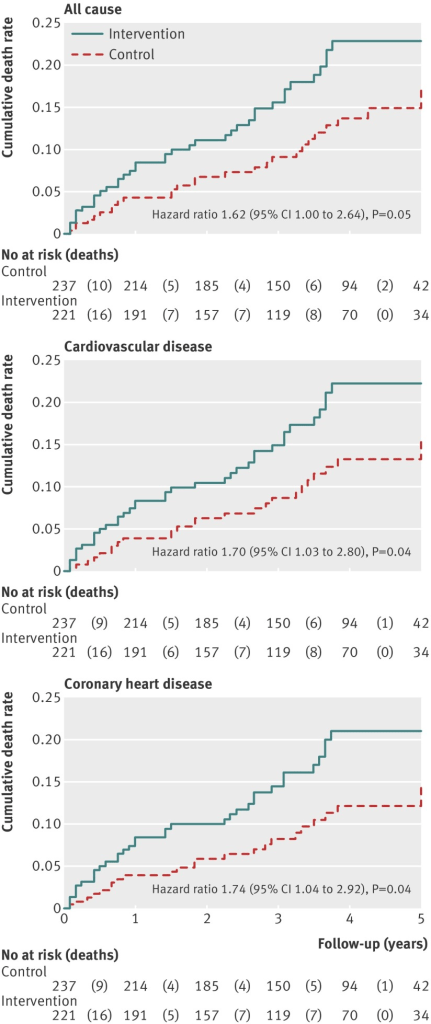
So, why on earth would you want to lower your cholesterol?  Well, you wouldn’t.  And you shouldn’t.  But, for argument’s sake, let’s say you think I’m full of shit and you do want to get (or keep) your cholesterol numbers down.  Seed oils can help you do that.  Whoop-de-doo, you know what else they can do?  Increase your risk of heart disease.  So, please take the time to think about your objective here.  Is it to lower your cholesterol, just for the arbitrary sake of it?  Or is it to have a healthy heart?  I, personally, pick Option B, but a lot of us have been fooled into thinking that high cholesterol causes heart disease, and that lowering your cholesterol helps you to avoid it.  However there isn’t a skerrick of evidence to support that hypothesis.  Not one single gold standard study has ever shown a direct cause between cholesterol and heart disease.  On the other hand, there’s plenty of evidence that consuming industrial seed oils actually does cause heart disease.  For instance, a recent meta-analysis of the Sydney Diet Heart study conducted in 1966-73 showed that the subjects who replaced the saturated fat in their diet with seed oils had a significantly higher rate of death than the control group (including from all-mortality, cardiovascular disease and coronary heart disease). 
Eww

Another study showed that “omega-6 polyunsaturated fat linoleic acid promotes oxidative stress, oxidised LDL, chronic low-grade inflammation and atherosclerosis, and is likely a major dietary culprit for causing coronary heart disease, especially when consumed in the form of industrial seed oils commonly referred to as vegetable oils”. Damning.

Yet another study, conducted in 2016, re-evaluated the data collected during the famous Minnesota Coronary Experiment and concluded that replacing butter and tallow with seed oils resulted in a 22% higher risk of death for each 30 mg/dL (0.78 mmol/L) reduction in cholesterol.  Once again, the results conclusively show that lower cholesterol equals more death.  The reason the study is so famous is that these were not the results that the scientists were looking for.  So instead of publishing them, they buried the data, hiding it in a garage where it collected dust for years. 

So, the problem with polyunsaturated fats is that they are unstable, which makes them prone to oxidation (usually occurring within days of the oil being produced).  All of those pretty, golden bottles of canola oil, soybean oil, sunflower oil, safflower oil, rice bran oil and peanut oil that you see on the supermarket shelves, with a “Heart Healthy” label slapped on them are chock-full of rancid shit.  And simply put, consuming rancid shit, i.e. oxidised oil, causes oxidative stress in your blood, which causes your blood to clot, which causes thickening and hardening of your arteries, which causes heart disease. 

Eww

So, my suggestion to you is that if you want to avoid heart disease, you might want to think about avoiding oxidative stress in your blood.  And that means avoiding things like pollution, smoking and industrial vegetable oil, which is widely used as an ingredient in most processed foods, from baby formula to salad dressing to anything that’s been deep fried. 

If we were to do a “This is Your Life” retrospective of the seed oils that we are so fanatically encouraged to shovel down our gobs, we would have to take a long trip back in time to the 1870s when William Procter, an English candle-maker, and James Gamble, an Irish soap-maker went into business together making, you guessed it, candles and soap, both of which at the time were produced using rendered pork fat.  When the price of pork fat got too expensive they started looking around for cheaper alternatives, and their enterprising gazes settled on cottonseed oil, a waste product of industrial cotton farming which had previously only been used to light lamps and lubricate industrial machinery.  It was a brilliant innovation and they started mass producing cheap bars of soap using the stuff.  Then one night, Bill and Jim obviously scored some pretty good drugs and got high as fuck, because they decided that hey man, this shit kinda looks like lard, maybe we could make a cooking oil out of it.  And thus was born Crisco, the world’s first cooking oil.  Yum, yum. 

Eww

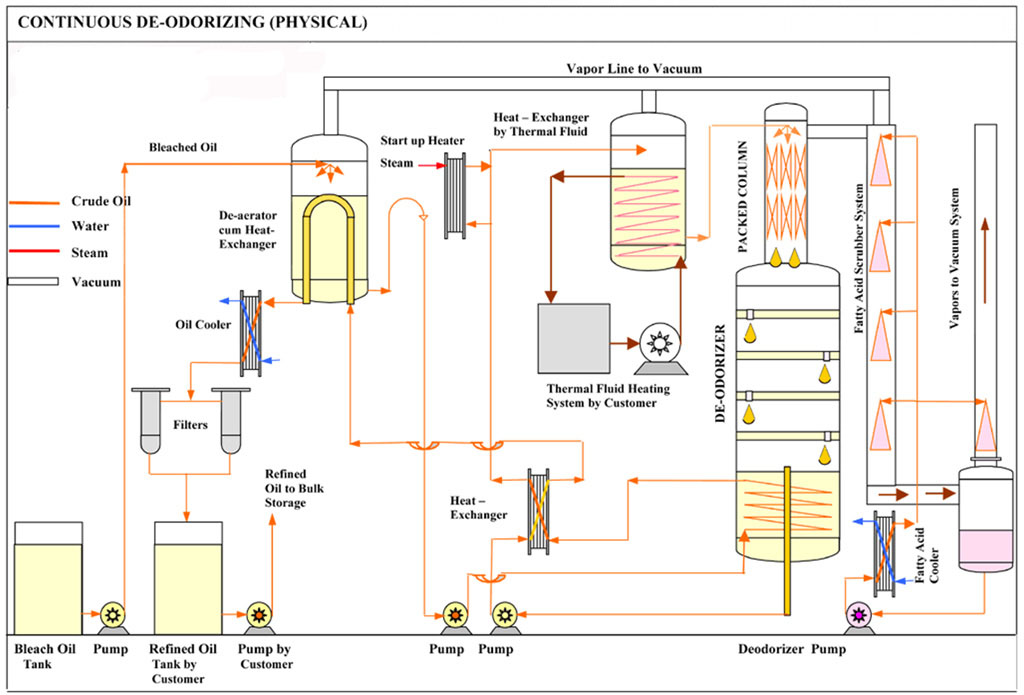
So let’s talk about why these seed oils are commonly referred to as industrial oils.  From plant to bottle, the product goes through several synthetic chemical processes that include hydrogenation, which uses high pressure, high heat and a petroleum based solvent to ensure the oil remains liquid at room temperature.  The end product of hydrogenation is a rancid oil that needs to be deodorised to remove the bad smell, it needs to be bleached to remove the sludgy colour, and it needs to be winterised to keep it all stable and to extend its shelf life.  Then they have to inject vitamins into it, because all of the above just stripped the oil of any nutritional value it might once have had.  And then you’re supposed to eat this shit. 
Eww

And let’s not forget about the dimethylpolysiloxane, which is a silicone polymer ingredient commonly used as an anti-foaming agent in frying oil.  Oh, and it’s also used in cosmetics, industrial lubrication, caulk, shampoo, condom lubricant and Play-Doh.  So healthy. 

Just knowing how these industrial oils are produced is sufficiently gross that I don’t think I really need to talk too much about their inflammatory effects.  Or that most of them are GMO, and sprayed with glyphosate, a known carcinogen.  Or that heating seed oils produces aldehydes which actually fuck with your DNA, and are associated with the development of Alzheimer’s disease.  Or that strokes are far more common in people who have diets that are low in saturated fat.  Or that they are ridiculously high in omega-6.  I’m just going to stick with the fact that they’re not even something your body recognises as food. 

But, since I mentioned it, what is this omega-6 that people are worried about, anyway?  It’s an essential fatty acid, something that we need to consume a little bit of in our diet because our body doesn’t make it.  Humans are designed to consume omega-6 and omega-3 (found in eggs, and fatty fish like salmon and tuna) in a ratio of 1:1 in order for our bodies to function properly.  But, thanks to the proliferation of seed oils, the standard human diet has seen that ratio balloon out to as high as 20:1, with seed oils making up a whopping 10% of all calories consumed in the standard American diet.  Dr. Artemis Simopoulos, President of The Center for Genetics, Nutrition and Health, in Washington, D.C. says, “A lower ratio of omega-6/omega-3 fatty acids is desirable in reducing the risk of many of the chronic diseases in Western societies.”  And she’s right.  Consumption of omega-6 fatty acids has been shown to increase cardiovascular diseases, inflammatory diseases and autoimmune diseases. 

Oh, and cancer.  Researchers have recently observed a disturbing trend in the uptick of cancer cases, especially amongst young people, with an astonishing 79% rise in diagnoses in the last thirty years.  And they estimate that the global number of new, early-onset cancer cases will increase by another hefty 31% in the next six years.  Sadly (weirdly), the British Medical Journal thinks that the cause of this cancer trend is a diet “high in red meat and salt, and low in fruit and milk”.  So, less meat and more milk would reverse this trend?  For real?  Never mind that the average consumption of red meat is down in the last thirty years.  Never mind that the production of industrial seed oils over the same period is up.  Coincidence?  Maybe.  But probably not.  Doesn’t it make sense that putting something so chemical and synthetic into your body, would do it damage? 

Kinda obvious tho?

The LA Veterans Administration Study published in 1969, was originally designed to determine whether a diet that lowers cholesterol also prevents atherosclerosis.  But what they actually found was that the group replacing animal fat with seed oils had an 82% higher chance of dying of cancer than the control group.  This result was alarmingly replicated in a number of other randomised controlled clinical trials over the years, causing the National Institutes of Health to review the data in the 1980s.  And despite the overwhelming evidence pointing to industrial seed oils as the culprit, the official conclusion from the NIH was that the mandate to lower cholesterol was of such high importance that it overrode the cancer results from the studies.  I shit you not. 

Eww

So, I have some questions.  If consuming seed oils causes all this drama, why on earth are they touted as a healthier alternative to saturated fats like butter and lard?  Well, how about $335 billion dollars?  Coz that’s the expected global market share of seed oils in 2025.  Fun fact: in 1948, Proctor & Gamble donated $1,740,000 (worth $17 million today) to the fledgling American Heart Association.  And in 1961, the AHA returned the favour by making the world’s first public health recommendation to replace animal fats with seed oils.  Ain’t capitalism grand? 

Apart from following the money trail, there is another, quite significant, reason for the widespread misconception that industrial seed oils are a healthier alternative to natural animal fat.  And his name is Walter Willett.  As head of nutrition at the Harvard T. H Chan School of Public Health from 1991 to 2017, Willett, a lifelong vegetarian, and an outspoken critic of red meat, has exerted considerable influence over the school’s curriculum, partnerships, research direction and policy advocacy. 
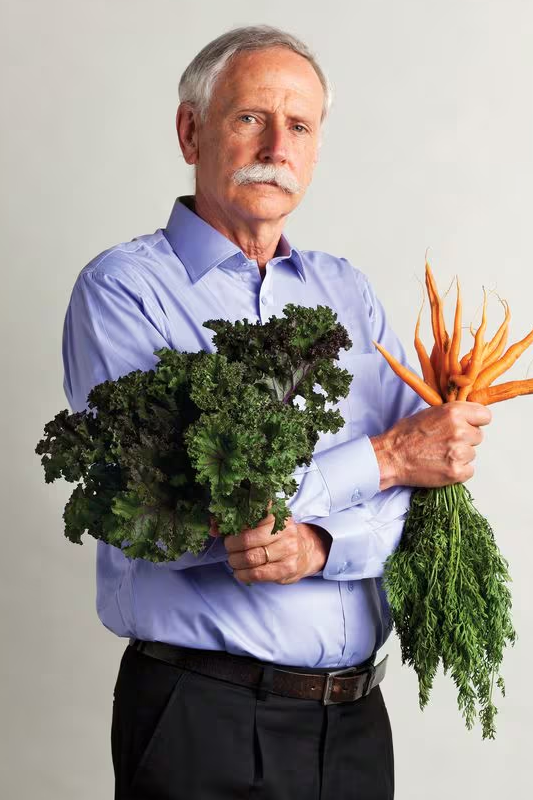
Eww

I think most of us would assume that an institution like Harvard University would practise scientific integrity, transparency and objectivity, right?  I mean, they have a reputation to uphold.  But when we scratch the surface we find that, over a period of decades, Harvard has continuously promoted Willett’s academic papers, despite none of his anti-meat hypotheses ever being confirmed or backed up by a single experiment. 

Critics argue that Willett’s research methodology lacks scientific rigor, heavily relying as it does on epidemiological studies, and regularly dismissing evidence that doesn’t suit his biased objective.  Furthermore, Willett’s personal beliefs, advocacy for a plant-based diet, financial ties to vegetarian-aligned groups, compromised objectivity and numerous conflicts of interest raise concerns about his undue influence, also calling into question the credibility of the Harvard School of Public Health.  Willett is known for aggressively pressuring scientific journals to retract opposing papers, as well as bullying his pro-meat peers and colleagues, further undermining the school’s academic integrity.  So when you see a headline from Harvard stating “Scientists Debunk Claims of Seed Oil Health Risks”, you now know not to take that at face value.  You now know that large corporations and large institutions do not necessarily have your best interests at heart.  You now know better. 

Eww

Yes, seed oils are convenient (they’re cheap, easy to cook with and readily available), but the rate of their consumption consistently parallels the increasing rates of chronic disease.  And if I’ve introduced even a shadow of a doubt in your mind about the risks of consuming these oils (and I hope I have), then my work here is done.  And you are welcome.
Ejo #168 – Just You Shut Your Mouth

When I was a kid, I always wanted to be a doctor.  I mean I didn’t really, I just thought I did.  I was obsessed with this big, fat book my parents owned, which sat on the bookshelf in our living room.  It was a medical encyclopaedia, an atlas of the body and all its wondrous processes and mysterious biological magic.  I loved that book so much.  I would pore over it for hours on end, and I knew it back to front, which is why I was able to plagiarise from it so frequently and extensively for essays and projects throughout primary school and my early years of high school.  I was so in thrall of the inner workings of the human body, that, even though not a lot of thought went into it, it kind of seemed like a no-brainer that I should, of course, go to medical school and become a doctor. 

English was my best subject in high school, closely followed by Physical Education, which I studied up until Year 12.  I loved English, because I loved writing.  And I loved PE because I loved learning about the human body.  Biomechanics, anatomy, human physiology.  I learned about how muscle fibres contract, aerobic versus anaerobic respiration, all the systems of the body including skeletal, muscular, cardiovascular, respiratory, digestive and reproductive.  I learned about stimulus-response incompatibility, the psychological-refractory period, the single-channel theory and other brain-body functions.  Learning about the human body never felt like work to me, it felt like a gift, and I suppose that added fuel to the whole doctor fantasy. 

As it turned out, however, I didn’t really want to be a doctor after all.  And I certainly wasn’t smart enough, or motivated enough, to make the grades required to get into medical school anyway.  The hours I should have spent studying maths, chemistry and biology in high school were hours I spent writing poetry, short stories and love letters instead.  So when I got my Year 12 results I wasn’t at all surprised that they were well short of the scores required for medicine.  Stubbornly and mindlessly holding onto the ridiculous notion of one day getting into med school, I applied for a Bachelor of Science degree at Monash University with the idea of excelling in my first year and then transferring to a degree in Medicine. I really should have applied for a Bachelor of Arts instead, because hahaha, I did not excel.  Not at academic pursuits anyway.  I did learn how to play a skillful game of poker though, so it wasn’t a total waste of time. 

The dream of becoming a doctor was slowly beaten out of me by reality (thank fuck), and I dropped all interest in the human body for many years.  Until about four or five years ago.  Which is when I started aching.  First it was my elbows, fingers and wrists, and then the aches migrated to my ankles, knees and hips.  I went to several doctors and they all told me that it was just good old wear and tear, and that I was at the age now where shit just all starts sliding downhill.  And I accepted that.  Coz… doctors!!  They know what they’re talking about, right?  Actually, no.  I’m going to let you in on a little secret.  They don’t know what they’re talking about.  They really don’t.  They mean well, but they are not the be-all and end-all. 

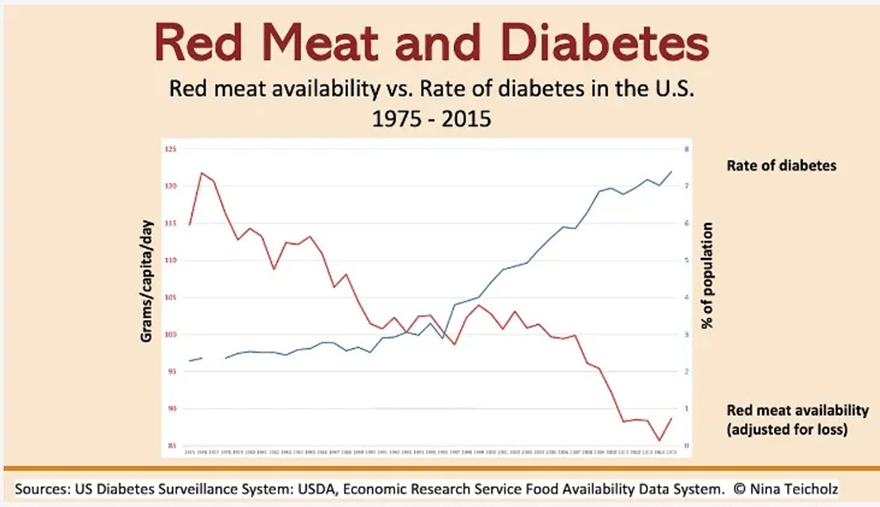
It was a bit of an epiphany when I realised that doctors are fallible because they are taught things in medical school that are either based on unchallenged junk science, or on science that hasn’t been updated in 50 years.  I think the first time my respect for doctors was seriously challenged was when I did the thirty day carnivore experiment a little over three years ago.  As always I did a metric shit tonne of research for that ejo, and what I learned shook my foundations.  I learned that the Dietary Guidelines for America (which inform those of the rest of the world) are based on very little science at all.  I learned that eating from the food pyramid actually causes rather than prevents obesity, heart attack and diabetes.  I learned that high cholesterol is not bad for you, and yet statins are the most prescribed medication in the world.  And I learned that red meat is unjustly vilified, so why on earth would I listen to a doctor who tells me I need to stop eating red meat when I look at charts like this:

Um… what’s up doc?

So I started getting interested in the body again. Especially my body. And what I’ve done since is just step off the medicine wheel.  I no longer want to do the things that allopathic medicine says I need to do in order to be healthy.  I don’t want to take medicine for high cholesterol, because I know that high cholesterol is protective, rather than something to freak out about, especially for people my age.  I don’t want to have to eat fibre, because I know that fibre is useless (and in a lot of cases, actually harmful).  I don’t want to reduce my salt intake, because I know that salt doesn’t increase blood pressure

Over the last few years I’ve really enjoyed the freedom to pursue the best health for myself by completely ignoring what doctors say, and exploring outside of the constrained realms of modern medicine.  I’m at a stage in my life where I want to experiment with improving my own health.  I want to try the kinds of things that I would have laughed and scoffed at, or just dismissed out of hand, in my youth.  Stuff that I would have considered woo-woo or as having no scientific basis.  Coz why the fuck not?  What have I got to lose?  Modern medicine has its place, for sure, but unless I’m in need of surgery or life-saving treatment I’m no longer interested in allopathy as a source of information for my general health and well-being.  I don’t want to be prescribed pills, thank you very much.  For anything.  Ever.  My health is in my own hands, and that is so empowering.    

So yeah, I’ve tried some weird shit.  The carnivore diet is pretty weird, but it works for me.  Coffee naps are weird, but they work for me.  Cold showers are very weird, but they work great for me.  Getting early morning sunlight in my eyes to help me sleep better that night is weird, but it works for me.  Putting red filters on my phone and computer at night to block out all the blue light also works.  And yes, it’s also weird.  But if it works, who cares!! 

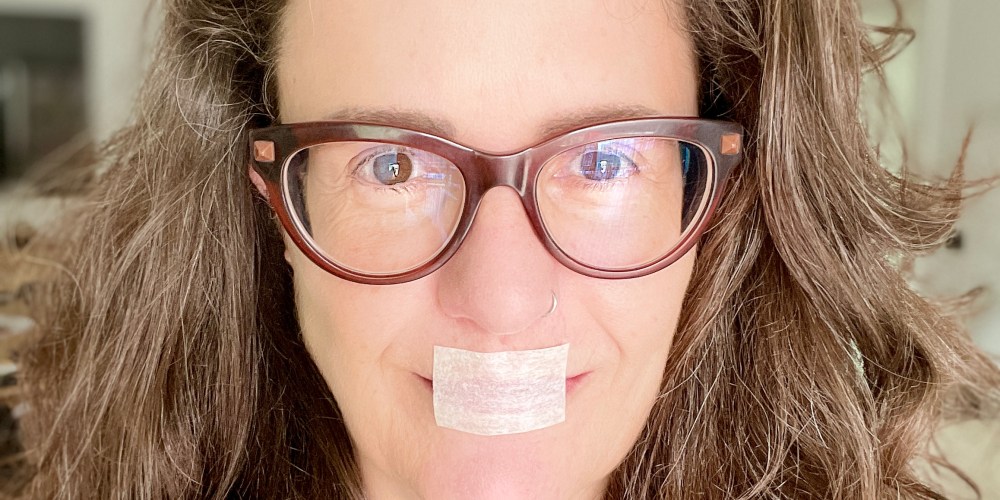
Another weird little bio-hack that I want to talk about, that I started doing a couple of years ago, was taping my mouth shut at night.  Yes, I know I’m probably getting some strange looks from some of you about this one.  But I swear there’s something about it that is very comforting and very calming, and which is amazing for helping me go to sleep.  And not only that, there is a lot of evidence to suggest that nasal breathing is far superior to mouth breathing for lots of other reasons.  Not just when you’re sleeping. 

I’ll admit I first came across mouth taping on Instagram accounts that I follow for carnivore tips.  At first I just ignored it as one of those weird, wellness, social-media fads that has no basis in science at all.  I mean, for very good reasons I do not normally get my health advice from Instagram.  But then I listened to a podcast by Dr. Andrew Huberman where he delved into the reasons why it might actually be a good idea to try it.  So I tried it.  And I slept like a baby.  In fact, the first time I taped my mouth for the whole night was the first time in a very long time that I didn’t need to get up four or five times to go to the toilet.  Two years later, I’m still sleeping like a baby.  And I tape with wild abandon.  I tape at night, I tape for my twenty minute coffee naps, and I tape at work on the night shift during my two hour breaks.  If I don’t tape my mouth before sleeping, I feel weird, I feel naked.  But you know what the funny thing is?  If I do happen to find myself without tape, I now sleep with my mouth closed anyway.  I’ve trained myself to keep my mouth shut whether it’s taped or not!  And that’s actually the goal, to become a natural nasal breather. 

Andrew Huberman, Ph.D. (@hubermanlab)

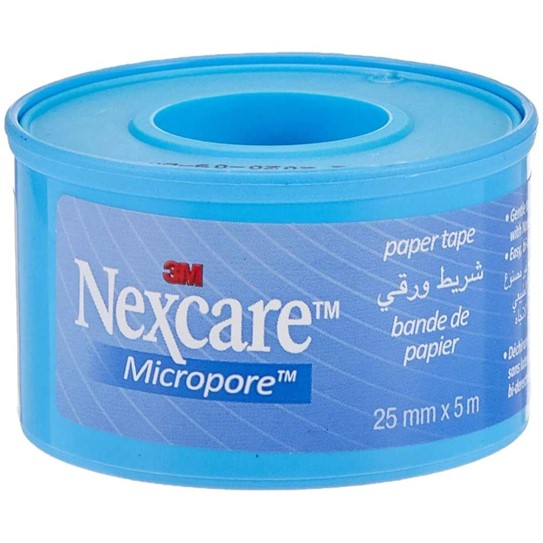
If you have any breathing issues like sleep apnoea, collapsed nostrils, chronic sinusitis or a deviated septum it’s probably a good idea to check with your doctor before trying mouth taping, but if you’re relatively healthy and just looking for a good night’s sleep I reckon you can do what I did and just give it a shot.  Make sure you get special medical tape, and don’t even think about using masking or gaffer tape unless you want to rip the skin off your face.  And you don’t have to wrap the tape all the way around your head like a mummy.  You’re not trying to seal your mouth, just keep your lips together, so a small strip is more than adequate.  David and I use 3M Nexcare Micropore (2.5cm) tape, which is recommended by people in the know.  It’s super cheap, flexible and doesn’t irritate our skin. 

You can get fancier mouth tape, but we don’t bother. 
We’re basic bitches.

So, what’s the point?  Sure, there aren’t a lot of large scale studies on the benefits of mouth taping, but there are a couple of small ones which do show significant improvement in sleep, particularly in those who suffer from obstructive sleep apnoea.  According to Dr. Huberman, nasal breathing allows for greater lung inflation by increasing resistance to breathing.  And it increases the production of nitric oxide six-fold.  Nitric oxide is a miracle molecule that you want to (naturally) produce as much of as possible. It increases oxygen uptake and lowers blood pressure.  And it does that because it’s a vasodilator, it dilates the blood vessels.  So, for those of you guys who might be having a little trouble in the trouser department (wink wink, nudge nudge), nitric oxide is the molecule that is released by Viagra to help with erections.  And you can get the same effect just by becoming a nasal breather.  I told you it was a miracle molecule!!  And if that’s not enough, nitric oxide also kills viruses.  Whaaat? Is there anything it can’t do?! 

Breathing through your nose filters out all the airborne shit flying around in the air and keeps your nasal and respiratory passages moist.  This sounds gross, but trust me you want them to be moist.  When air enters your lungs via your nose, it’s been warmed and humidified and purified, which allows for a better exchange of oxygen and CO2 when it hits your lungs.  Not only that, it helps to prevent the spread of infection, it reduces snoring (which impacts the quality of your sleep), and improves dental hygiene and facial alignment.  In contrast, chronic, habitual mouth breathing has the potential to negatively impact respiratory function and can even result in aesthetic changes to your face (psst… not for the better).  James Nestor, author of the book “Breath: The New Science of a Lost Art”, says, “Inhaling air through the mouth decreases pressure, which causes the soft tissues in the back of the mouth to become loose and flex inward, creating less space and making breathing more difficult”.  So why would you breathe through your mouth?

In 2018, Nestor participated in an experiment in which he blocked his nose for ten days in order to see what impact mouth breathing would have on his health markers and feelings of wellbeing.  Five years later he says he is still suffering PTSD from being forced to breathe through his mouth 24 hours a day.  He also says that it triggered almost immediate hypertension and obstructive sleep apnoea.  His cortisol levels skyrocketed, and his heart rate variability took a dive.  And he went from not snoring at all to progressively snoring for most of the night, which of course affected the quality of his sleep.  Immediately after that experiment, he switched to ten days of nasal breathing (helped along with mouth taping at night) and he said his health went from completely wrecked to completely normal, just by changing the pathway through which he breathed air.  In other words, breathing through your nose is the best default state for respiration.  So if you can train yourself to be a nasal breather, like I did, you’ll see lots of benefits beyond a good night’s sleep. 

It is a little scary at first, taping your mouth shut when you’re going to sleep.  Like, am I going to be able to breathe?  Am I going to die in my sleep?  The answer to that is no, you’re not going to die.  Your body is a marvellously high-tech, fine-tuned instrument and, even if you have a blocked nose, it can sense that your mouth is closed and will always clear a nasal passage for you to be able to breathe (this might not be true of everyone, but it does apply to most people).  I was even able to tape my mouth shut when I had covid, during which my nose was so blocked that absolutely no air was going in or out.  Remarkable, huh?  I’d tape up and lie down and boom, I could suddenly breathe through my nose.  Sometimes it took a few minutes to unclog and clear up properly, but it always did.  And the other great thing about taping during covid was that even though I had a terrible cough, I never coughed at night. 

If you’re a bit nervous about asphyxiating in your sleep (which I promise you, will not happen), you can place the tape vertically, rather than horizontally, which will allow you to breathe through the sides of your mouth, even as your lips are encouraged to sit together.  Another tip is to start taping while you’re awake, just to get used to the idea.  Build up to it, starting with ten minutes a day.  Then half an hour.  Whatever it takes to acclimate to it.  And then you can start taping at night, and realise all the wonderful health benefits of nasal breathing.  If you do try this, I would really love to hear about your experience so please shoot me an email and let me know how you went. 

Happy new year, goodnight and sweet dreams.

Ejo #158 – The Extraordinary People I Know: Melinda Norris (aka My Gratitude Partner)

Last month I wrote about the gratitude practise that I have shared with my beautiful friend, Dr. Melinda Norris, for over eight years.  This month the two of us sat down (virtually speaking) and had a chat about our project, its benefits, and how easy it is to incorporate an everyday gratitude practice into your own life.  Please give a very warm welcome to my close friend, and longtime gratitude partner, Mel. 

I’m still basking in the afterglow of the wonderful day we spent together when David and I were in Australia last month. After dinner at your place, I noticed a copy of your thesis for your doctorate in Psychology being used (egad!!) as a keyboard stand.  And I was absolutely blown away by it.  It’s such an impressive work.  Can you tell us a little bit about it?
Of course. My thesis was an applied PhD as part of a longitudinal project with Victoria Police.  I followed 7,000 staff over three years with a focus on wellbeing.  My research particularly looked at how people cope effectively with the daily hassles and stresses in work and life.  Which strategies are most effective?  How stable is our behaviour over time?  And, how much can be predicted by our personality, versus learnt by life lessons.  It highlighted the value of humour and seeking emotional, and practical, support as three highly effective coping strategies.  It also showed that a lot of our stable patterns of behaviour are just as much, if not more, learned rather than purely a product of our personality.  Which is great, as it means we can learn new ways, and improve how we cope with the challenges that life throws at us!  

Mel’s opus

This might be an obnoxious question, but do you ever take inspiration from our gratitude practise and incorporate it back into your work as an organisational psychologist? 
It’s really rewarding to tap into my passion, research and personal experiences to help others.  So I do take inspiration from our gratitude practice all the time, and build it into work, formally and informally.  For example, I try to explicitly express my gratitude for any support and collaboration with leaders and team members.  This builds relationships and trust quickly, leading to more effective collaboration as a result.  It also helps me to appreciate the small things every day, and to get through setbacks better.  I notice I don’t get stuck in a negative mindset anymore.  I can bounce back quicker, and find a more optimistic outlook. 

Trust me, I’m a doctor.

I think I got really lucky that you asked me to be your gratitude partner. You’re someone who’s made the wellbeing of others their life’s work, and I don’t think it gets any better than that! Do you remember how our gratitude challenge started all those years ago? 
Yes, I clearly remember how it started.  I was reading your Freedom ejo in our kitchen and getting really engrossed in your story.  I got the clear sense that you were committed to staying in Dubai for a variety of good reasons (career, travel opportunities etc.), but that you missed Australia desperately (your friends, family, the environment and climate).  And I got the sense you were struggling with the downsides of your day-to-day life.

I still miss my friends so much.

I could relate.  I too was struggling to feel the joy in my daily life, but for different reasons.  I was working in a high pressure, deadline-driven job with a lot of responsibilities.  Working four days a week, but squeezing what felt like at least five days of work into those days.  I was also a parent to two gorgeous young boys, and I wanted to be more a part of their lives.  I felt so much guilt and sadness, having to utilise before, and after, school care.  I found a solution with a nanny for a few years.  Kim picked the boys up from school, helped them with homework, and prepared dinner three days a week.  Still, I felt incredibly torn.  I wasn’t succeeding in all my roles in life like I wanted to.  And that was just the two most consuming roles.  I also wanted to be a better wife, a better friend, and a better sister.  There just weren’t enough hours in the day, the week, the year!  I was efficient like a ninja, making every minute count.  Doing so much work on my daily commute, so that I could drop everything when I got home and be fully present.  But I still couldn’t help feeling torn between my career and my family. 

I’d been trying different strategies to enhance my wellbeing and help make my life more enjoyable, and less stressful.  As a psychologist, I knew of the power and benefits of practising daily gratitude, empathy and mindfulness.  I tried writing a gratitude journal, but found it tough to stick with, so that strategy didn’t work well for me.  Something was missing.  A key ingredient.

As I read your ejo that day Chryss, I was inspired by the idea of a gratitude partner.  Adding a social component to any wellbeing strategy has an amplifying effect on the benefits.  Just like exercising with a fitness partner; you enjoy it more, you keep up the habit, and therefore you experience the full potential benefits on your wellbeing.  I was so delighted with the idea and thought that you would be the perfect gratitude partner for me.  You seemed like you’d be open to it, like you needed it too; and we were good friends.  Friends that had lost touch a bit over the years, but you were a friend I could trust, and be open with.  A friend I wanted to stay close to, but found that hard with the tyranny of distance. 

So I wrote to you then and there in my kitchen, letting you know that I’d read your ejo, and that I could relate; that I thought we’d both benefit from sharing the things we were grateful for with each other at the end of every day.  I suggested that we keep it simple.  I didn’t want it to feel hard, or like a burden for either of us.  I hoped it would help me to stick to my commitment and form a new habit.  But more importantly, I hoped that you would reciprocate, and also experience the benefits of practising daily gratitude.  What eventuated was much more than I’d ever really hoped for!  It certainly proved that my idea of adding the ingredients of social connection and reciprocation was incredibly beneficial. 

After the success of our first year of gratitude, we both decided that we wanted to keep it going.  What is it about our gratitude project that’s kept you wanting to continue, year after year? 
I’ve found it so helpful to have you as my gratitude partner.  It has definitely been the key ingredient that’s contributed to the desire to keep at it, and to continue the routine.  For me, it makes it so much more than just searching for, and noticing, all the good things that happen each day.  It makes it interesting and rewarding. And it’s the reciprocal nature of the relationship that makes it really special.  Having you, Chryss, as my gratitude partner, was a winning selection!  You care as much about it as I do, so we are well matched in our commitment to the habit.  You’re also a friend whose opinion I value, and a friend who I want to stay close to.  One precious outcome was that our old friendship was rekindled and deepened.  Actually, I don’t communicate this regularly with anyone else!  So the relationship provides me with a strong social connection, and frequent deep exchanges that I really enjoy, and need, to experience my best life.  

Another surprising benefit for me has been that I’ve felt heard, understood and even supported through some incredibly difficult times by our relationship and regular contact.  We agreed not to communicate negative things, or use it as a place to complain.  We didn’t want that to creep in.  We’ve both been very good at keeping that promise, demonstrating discipline and sticking to our commitment.  And I believe that has maximised our experience, and the benefits.  We keep each other going, encouraging each other and reinforcing the practice.  There are days, here and there, when we don’t communicate, but we always catch up.  These pauses tend to happen when we are on holidays, or deeply engrossed in a busy and challenging time.  Which is when it matters the most to keep at it.  The other partner keeps sharing and asking questions to nudge and help the other person along, but without guilt or judgement.  It has always felt supportive and uncomplicated.  Never a burden or a hassle.  Just a reminder that this helps, and that there is someone who cares and notices, in loving kindness.

It has also cultivated empathy.  You share in the other person’s triumphs and challenges. You realise that everyone has small and big struggles in their lives, regardless of how “successful” or “happy” they seem on the surface. You live through that with the other person.  Another thing Chryss, is that you always have a way of asking me very insightful questions or making thoughtful comments that trigger self-reflection, or just help me feel really understood and supported. 

Thanks Mel, I feel exactly the same way.  I always love getting your feedback, or a question probing more deeply into something I’ve shared with you.  And I think that’s another facet of our routine that has contributed to us becoming closer.  It’s never just a list of things.  It’s a real conversation. 

So, you and I have both experienced some pretty big emotional challenges over the last eight years.  Can you talk about how our gratitude practise may have helped you get through some dark times?
Our partnership started just fourteen days before Cara, one of my closest and most treasured friends, was diagnosed suddenly with terminal breast cancer.  It came out of nowhere, and at a stage that ruled out the hope for remission.  The only options were lots of treatments to prolong and preserve her life.  It was devastating news; news she only shared with me and one other close friend for a long time.  During that period I had a demanding job that required a huge amount of my energy and brain power.  And I was a mum to two beautiful primary school aged boys that needed me too.  Around the same time, my oldest son was suddenly, and frequently, hospitalised with recurring post viral myo-pericarditis.  Essentially, his heart, and the lining of his heart, became inflamed every time he became unwell with a cold or flu.  So as you can imagine, my life at that time, and for the next five years, required a lot of emotional energy each day.  It made practising daily mindfulness, gratitude and empathy critical for my own wellbeing.  Critical for sustaining myself during significant upheaval.  I think this helped establish a strong habit early on in our partnership.  I really needed it!  It got me through five incredibly hard years, and the death of a dear friend.  I coped well with this, and felt resilient, even greatly in touch with the meaning of life.  Trivial upsets, I could see clearly as being just that!

Three months before Melinda’s friend, Cara, passed away, she and some friends took a very special trip to Uluru.

Over the years, things have improved and I’ve not had so many huge challenges in front of me.  Or maybe I have, but my perspective has changed me forever!  Actually, when I reflect on this now I can see that there have been huge challenges – a global pandemic, my son having surgery on his heart in between lockdowns, and my nephew being diagnosed with leukaemia.  Mostly, I’ve come to realise that it’s like going to the gym each day to stay fit.  It’s only a habit if you keep it up; it only has the desired impact if you keep the recipe consistent.  You can’t expect to stay fit, if you don’t work out regularly!  Practising gratitude daily is the same.  It only works well if you form a rewarding habit that keeps you coming back for more!

Do you have any suggestions for people wanting to start their own gratitude project with a friend?
Find someone you feel you can share this experience with.  Someone who matches your commitment, and also desires the same outcomes.  Someone you care about and are motivated to help.  Most importantly someone you can be honest with, that won’t judge you, but simply offer support and encouragement.

Develop and agree to your own guiding principles for how you share.  Maybe you love writing in a journal each night.  You could simply photograph the page, and send the photo to your friend.  Maybe you send an email, or start a chat in Signal or WhatsApp.  You can make this your own.  But whatever you do, I’d recommend making it easy to do each day for you and your partner.

The only core element that I’d say must be included is finding and communicating at least three things each day that you were grateful for, no matter how small.  The secret is in noticing and being grateful for all the little things each day that we often take for granted.  If we only notice the big positive things in life there can be a long time between drinks!

In last month’s ejo I offered to be a gratitude partner to whoever was interested in trying it out for themselves.  A lot of people told me that they enjoyed the ejo and that they loved the idea, but so far no one has taken me up on my offer.  Why do you think that might be?  
Perhaps they need time for the idea to take hold.  I think you have to be ready for it, and really want it.  You and I had already been working up to it, so our desire and readiness was matched.  Snap!  Perfect timing; perfect partner.  I wonder if people also see that you already have partners in me and your sister, so they don’t want to add to that.  Perhaps they’d rather find their own special partner?

Fair enough.  I do hope that more people give it a shot.  But if the idea of doing a gratitude sharing project like ours feels too daunting, what is one piece of advice you can give to people right now to find more gratitude in their lives?
Even the act of thinking about what you are grateful for is beneficial!  So I would try to notice gratitude in the moment, to be mindful of it.  Most importantly, to express it then and there if another person is involved.  Express your gratitude to others explicitly in the moment, when you feel it.  They’ll appreciate it and you’ll feel better for it.  Be specific about what you’re grateful for, and why.  What’s the impact on you?  A simple wave when someone lets you in, while driving.  A clear thank you to your partner for making dinner.  Thanking your colleague for offering to buy you a coffee. It’s not that hard but it makes your day, and the day of others, so much better. 

I know you’re a super busy working woman and mother Mel, so I really appreciate you taking the time to have this awesome chat with me. I’ve really enjoyed taking a deep dive into our very special gratitude ritual, and I hope that by sharing it with the world we’ve been able to inspire others to look for, and express, more gratitude in their day-to-day lives.  And finally, at the risk of sounding terribly corny, I’d like to express how very grateful I am to you for being there with me, every day during the last eight years. And how grateful I am that I can count on you being there with me again tomorrow.

I’m grateful every time I see Mel’s megawatt smile!!!